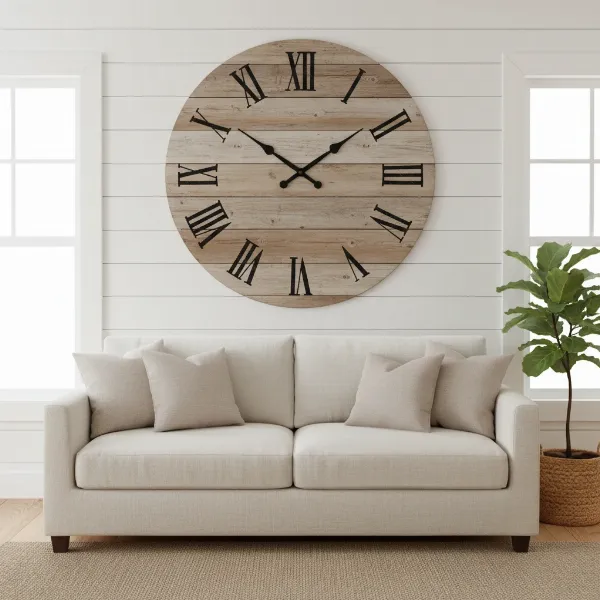
Moving house is often a whirlwind of activity, and among the many items needing careful attention, your cherished wall clock stands out. Ensuring its safe arrival requires more than just tossing it into a box. With a methodical approach and the right packing materials, you can protect your timepiece from damage during transit.
Gather Your Packing Essentials
Before you begin, assemble all the necessary materials to avoid interruptions:
- Plastic Bags: Zip-lock bags for small components and a large, clean trash bag for the clock itself.
- Bubble Wrap: Opt for a generous supply, preferably with ½-inch bubbles for larger or heavier clocks, to create ample cushioning.
- Sturdy Moving Box: Choose a corrugated box that allows at least 2-3 inches of padding on all sides of your wrapped clock.
- Packing Peanuts or Foam: These will fill voids and keep the clock secure within the box.
- Packing Tape: High-quality tape to seal the box and secure wrapping.
- Soft Padding: Materials like paper towels, newspaper, or foam sheets to protect delicate internal components.
- Cardboard Sheets: To reinforce glass panels or create internal dividers.
- Marker: For clear labeling.
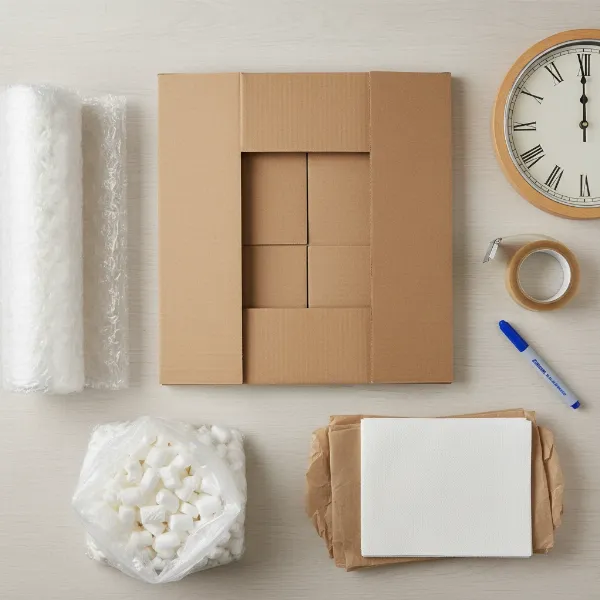 Assortment of packing materials including bubble wrap, tape, box, and peanuts for wall clock.
Step-by-Step Packing Guide
Follow these instructions carefully to prepare your wall clock for the journey to its new home:
1. Prepare the Clock Mechanism
|
Our Picks for the Best Wall clock in 2026
As an Amazon Associate I earn from qualifying purchases.
|
||
| Num | Product | Action |
|---|---|---|
| 1 | AKCISOT Wall Clock 10 Inch Silent Wall Clocks Battery Operated Non Ticking - Modern Silver Clock Decorative for Kitchen, Bathroom, Bedroom, Living Room, Office, Home(Silver) |

|
| 2 | AKCISOT Wall Clock,Boho Kitchen 10 Inch Wall Clocks Battery Operated Non Ticking,Silent Modern Clock Decorative for Bedroom,Office,Bathroom,Living Room,Home (Wood Grain) |
|
| 3 | HIIXHC Wall Clock, Modern Digital Wall Clocks Battery Operated 10 Inch, Silent Non-Ticking Kitchen Clock, Small Classic Analog Clock Decorative for Living Room Decor, Bedroom,Office, Classroom |
|
| 4 | AKCISOT Wall Clock, Modern Small Wall Clocks Battery Operated 8 Inch, Silent Non-Ticking Analog Classic for Office, Home, Bathroom, Kitchen, Bedroom, School(White) |
|
| 5 | AKCISOT Wall Clock, Modern Small Wall Clocks Battery Operated 8 Inch, Silent Non-Ticking Analog Classic for Office, Home, Bathroom, Kitchen, Bedroom, School(Black) |
|
| 6 | AKCISOT Wall Clock 10 Inch Silent Non-Ticking Modern Clocks Battery Operated - Analog Small Classic for Office, Home, Bathroom, Kitchen, Bedroom, School, Living Room(Black) |
|
| 7 | WallarGe 14.5'' Large Digital Wall Clock Battery Operated with Jumbo Numbers, Temperature and Date - Easy to Read and Set, Auto DST |
|
| 8 | AKCISOT Wall Clock, Modern Small Wall Clocks Battery Operated 8 Inch, Silent Non-Ticking Analog Classic for Office, Home, Bathroom, Kitchen, Bedroom, School(Silver) |
|
| 9 | AKCISOT Atomic 10 Inch Wall Clock Analog Clocks for Indoor Kitchen, Battery Operated Clock for Bedroom Office Classroom Living Room(Black) |
|
| 10 | AKCISOT Atomic 10 Inch Wall Clock Analog Clocks for Indoor Kitchen, Battery Operated Clock for Bedroom Office Classroom Living Room(Silver) |
|
For spring-wound clocks, allow them to completely unwind before packing. This reduces tension on the internal components.
2. Remove Detachable Parts
Carefully remove any parts that can detach or swing freely, as these are highly susceptible to damage during movement:
- Pendulum and Weights: Gently unhook the pendulum. If your clock has weights, remove them as well. Wrap each component individually in bubble wrap. For small pendulums, you can secure them to the bottom of the clock’s case with tape (ensure tape does not touch veneers). Place all these wrapped parts in a labeled zip-lock bag.
- Removable Glass Panels/Doors: If your wall clock has glass panels or a door that can be safely removed, do so. Wrap each glass piece thickly in bubble wrap and label it as fragile.
- Keys and Winding Cranks: Place any small accessories like keys or winding cranks in a small, labeled zip-lock bag. You can tape this bag to the outside of the clock or pack it with the pendulum and weights.
3. Secure Internal Components
Even if parts are not removable, they may need immobilization:
- Clock Movement: For wall clocks, gently immobilize the suspension spring with a small piece of tape to prevent it from swinging and getting damaged. For antique clocks, consulting a professional for movement removal might be wise if you are unsure.
- Chime Rods/Bells: If your clock features chime rods or bells, place soft padding, folded paper towels, or crumpled newspaper between them and the clock case to prevent vibration and contact damage.
4. Protect the Clock’s Exterior
The clock’s case, especially its face and glass, needs robust protection:
- Encase in Plastic: Place the entire clock inside a large, clean plastic trash bag and seal it. This protects the clock from dust, moisture, and prevents packing materials from entering the mechanism.
- Bubble Wrap Layer: Wrap the clock thoroughly with bubble wrap, aiming for a cushion of 4-5 inches all around. Layer the bubble wrap, turning it 90 degrees periodically to build thickness in all directions. Secure the bubble wrap to itself with small pieces of packing tape, ensuring the tape does not come into direct contact with any delicate veneers or finishes on the clock.
- Reinforce Glass: If the clock has a glass face, place a sheet of cardboard over it after bubble wrapping to provide an extra layer of impact protection.
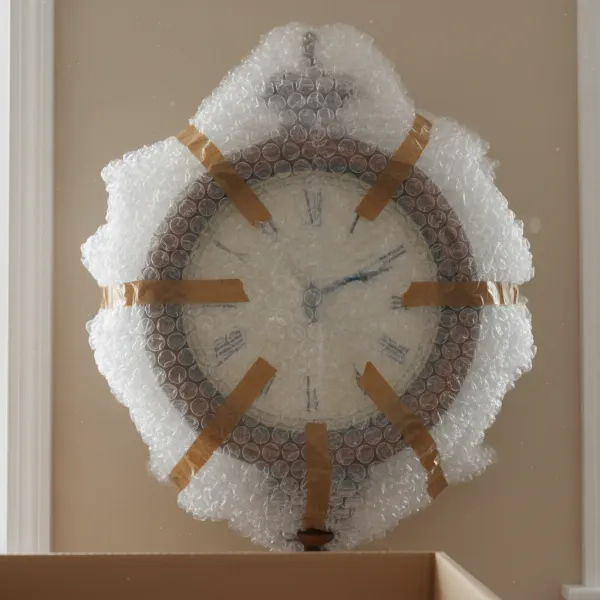 A wall clock completely encased in multiple layers of bubble wrap and secured with tape.
5. Box the Clock
The right box and proper cushioning are critical for absorbing shocks:
- Prepare the Box: Line the bottom of your chosen sturdy moving box with 2-3 inches of packing peanuts or foam.
- Position the Clock: Gently place the wrapped clock in the center of the prepared box. Ensure there’s a minimum of 2-3 inches of space between the clock and all sides of the box.
- Fill Voids: Fill all remaining empty space in the box with packing peanuts or foam, ensuring the clock is snug and cannot shift or move. The goal is to create an immobile, cushioned environment.
- Seal and Label: Securely seal the box with packing tape. Label the box clearly on multiple sides with “FRAGILE,” “THIS SIDE UP,” and its contents, such as “Wall Clock.”
By following these steps, you significantly reduce the risk of damage to your wall clock, ensuring it arrives safely and ready to adorn your new home.