Digital vs. Analog Wall Clocks: Which Suits Your Home?
In the symphony of home decor, few elements play as crucial a role as the wall clock. More than just a time-telling device, a thoughtfully chosen wall clock can be a statement piece, a source of learning, or a subtle enhancement to your living space. Yet, amidst the myriad of styles and functionalities, a fundamental choice often arises: digital or analog? This comprehensive guide will delve into the distinct characteristics, advantages, and considerations of each, helping you determine which type of wall clock will perfectly chime with your home’s aesthetic and your lifestyle.
The Enduring Allure of Analog Wall Clocks
Analog wall clocks, with their classic faces and sweeping hands, embody a timeless elegance that transcends passing trends. These traditional timepieces typically feature a numbered dial, with a short hand indicating hours and a longer hand for minutes, sometimes accompanied by a slender second hand. Their history traces back centuries, evolving from intricate mechanical marvels to the reliable, battery-powered quartz movements prevalent today.
One of the most significant advantages of analog clocks lies in their aesthetic versatility. They effortlessly integrate into a wide range of interior designs, from rustic farmhouse and vintage-inspired spaces to sophisticated traditional or even eclectic modern settings. Analog clocks often serve as decorative focal points, offering a vast array of designs, materials like wood, metal, or glass, and artistic embellishments that can enhance a room’s character. Beyond their decorative charm, analog clocks are excellent educational tools, particularly for children. They provide a visual representation of time’s progression, making it easier for young learners to grasp concepts like “quarter past” or “half-hour intervals.” Furthermore, many analog clocks, especially those with sweep movements, operate silently, creating a peaceful environment ideal for bedrooms or quiet study areas. Their simpler mechanics often translate to greater durability and longer battery life compared to feature-rich digital counterparts.
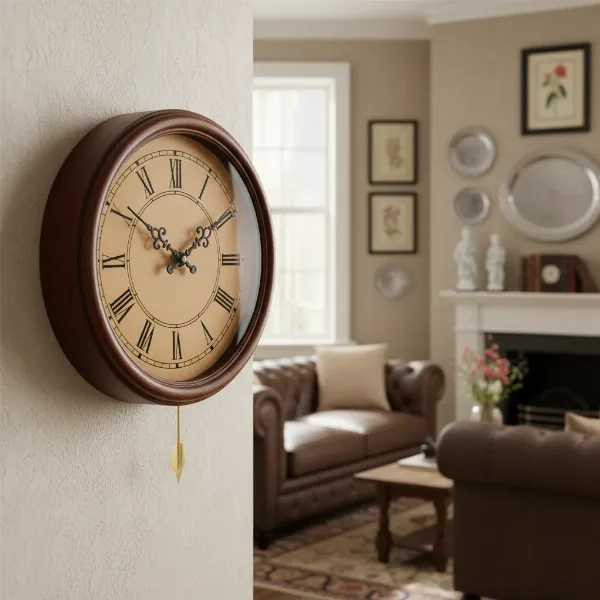 Elegant analog wall clock with dark wooden frame and classic Roman numerals on a light-colored living room wall.
While undeniably charming, analog clocks do come with their own considerations. Reading the exact time at a quick glance might require a moment of interpretation, especially for those accustomed to numerical displays. For individuals prioritizing precise, instantaneous time recognition, this could be a minor drawback. Their functionality is also typically limited to telling time, lacking the advanced features found in many digital models.
The Modern Precision of Digital Wall Clocks
Digital wall clocks represent the epitome of modern timekeeping, displaying the time in clear, unambiguous numerical figures, often on LED or LCD screens. These contemporary timepieces are a product of technological advancement, offering a blend of accuracy, functionality, and sleek design.
The primary appeal of digital clocks is their unparalleled readability. The exact time is presented instantly, making them incredibly convenient for quick glances, suitable for busy kitchens, offices, or for individuals with visual impairments or children who are still learning to read traditional clock faces. Digital clocks boast superior accuracy, often leveraging quartz crystals for precise timekeeping and some even syncing with atomic time signals for absolute precision. Beyond basic time, many digital models are packed with additional features such as alarms, countdown timers, date and temperature displays, and even humidity readings, transforming them into multi-functional gadgets. Their minimalist and streamlined aesthetics make them a perfect fit for modern, industrial, or high-tech interior designs. The integrated backlighting found in many digital clocks ensures readability even in dimly lit rooms or complete darkness, a practical advantage for bedside or hallway placement.
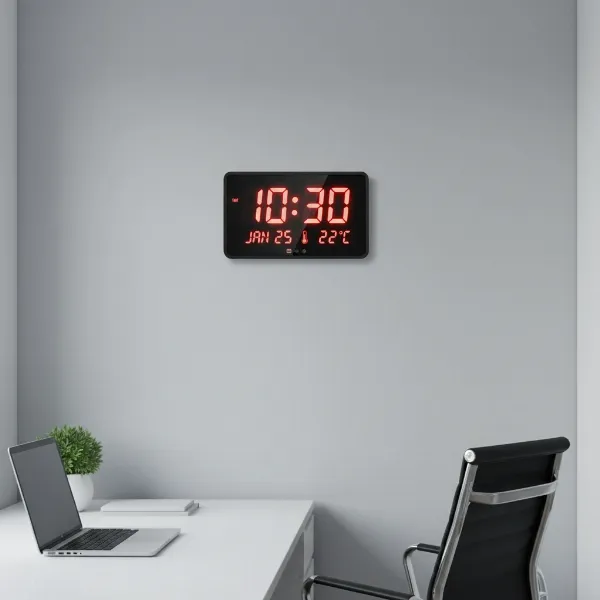 Sleek, black LED digital wall clock displaying time, date, and temperature in a modern office setting.
However, the benefits of digital clocks are balanced by certain trade-offs. Their reliance on power, whether from multiple batteries or a direct electrical connection, often means more frequent battery changes or the need for an accessible outlet. The bright light emitted by some digital displays can also be disruptive in bedrooms for light sleepers. While modern digital clocks offer various designs, their aesthetic range is generally less diverse than analog clocks, which can be a limitation for those seeking a more traditional or artful statement piece. Additionally, some digital displays can suffer from glare in bright sunlight, impacting visibility.
A Journey Through Time: The History of Wall Clocks
The evolution of timekeeping devices is a fascinating journey, mirroring humanity’s relentless quest for precision and convenience. From ancient sundials that marked time by shadows to intricate water clocks, the concept of measuring time has been central to human civilization. The advent of mechanical clocks in medieval Europe revolutionized timekeeping, introducing gears and pendulums to create more accurate devices. Over centuries, these mechanisms were refined, leading to the beautiful and complex grandfather and cuckoo clocks that became cherished heirlooms.
The 20th century brought significant innovations, particularly with the development of the quartz crystal oscillator, which dramatically improved accuracy and allowed for mass production of more affordable clocks. This paved the way for both highly accurate analog quartz clocks and the emergence of digital displays. Today, the technology continues to advance, with smart wall clocks offering connectivity and integration into smart home ecosystems, further blurring the lines between traditional timekeeping and modern convenience.
Different Styles and Mechanisms: Beyond Digital and Analog
While the digital versus analog debate forms the core, understanding the underlying mechanisms and stylistic variations further enriches your choice.
- Mechanical Clocks: These are the ancestors of modern clocks, relying on intricate gears, springs, and often a pendulum for timekeeping. They require manual winding and are prized for their craftsmanship and historical value, offering a distinctly traditional and often antique aesthetic.
- Quartz Clocks: The vast majority of both analog and digital clocks today utilize a quartz crystal oscillator for accuracy. Powered by a battery, these clocks are highly reliable and require minimal maintenance, making them incredibly popular for everyday use.
- Pendulum Clocks: Primarily analog, these clocks feature a pendulum that swings to regulate their movement. They are often chosen for their visual charm and the soothing rhythmic motion, adding a classic touch to formal living areas.
- Decorative Clocks: Many wall clocks are chosen primarily for their aesthetic appeal. These can come in an endless array of styles, from minimalist designs in metal and glass to elaborate, sculptural pieces, focusing more on artistic expression than advanced functionality.
- Smart Clocks: Representing the cutting edge of digital timekeeping, smart wall clocks can connect to Wi-Fi, display information beyond time (like weather or notifications), and even integrate with voice assistants, offering a highly connected experience.
Choosing Your Perfect Timepiece: A Comprehensive Buying Guide
Selecting the ideal wall clock involves more than just picking a design; it’s about finding a timepiece that harmonizes with your home and lifestyle.
Assess Your Needs
|
Our Picks for the Best Wall clock in 2026
As an Amazon Associate I earn from qualifying purchases.
|
||
| Num | Product | Action |
|---|---|---|
| 1 | AKCISOT Wall Clock 10 Inch Silent Wall Clocks Battery Operated Non Ticking - Modern Silver Clock Decorative for Kitchen, Bathroom, Bedroom, Living Room, Office, Home(Silver) |

|
| 2 | AKCISOT Wall Clock,Boho Kitchen 10 Inch Wall Clocks Battery Operated Non Ticking,Silent Modern Clock Decorative for Bedroom,Office,Bathroom,Living Room,Home (Wood Grain) |
|
| 3 | WallarGe 14.5'' Large Digital Wall Clock Battery Operated with Jumbo Numbers, Temperature and Date - Easy to Read and Set, Auto DST |
|
| 4 | AKCISOT Wall Clock, Modern Small Wall Clocks Battery Operated 8 Inch, Silent Non-Ticking Analog Classic for Office, Home, Bathroom, Kitchen, Bedroom, School(Black) |
|
| 5 | AKCISOT Wall Clock 10 Inch Silent Non-Ticking Modern Clocks Battery Operated - Analog Small Classic for Office, Home, Bathroom, Kitchen, Bedroom, School, Living Room(Black) |
|
| 6 | AKCISOT Wall Clock, Modern Small Wall Clocks Battery Operated 8 Inch, Silent Non-Ticking Analog Classic for Office, Home, Bathroom, Kitchen, Bedroom, School(White) |
|
| 7 | AKCISOT Atomic 10 Inch Wall Clock Analog Clocks for Indoor Kitchen, Battery Operated Clock for Bedroom Office Classroom Living Room(Silver) |
|
| 8 | AKCISOT Wall Clock, Modern Small Wall Clocks Battery Operated 8 Inch, Silent Non-Ticking Analog Classic for Office, Home, Bathroom, Kitchen, Bedroom, School(Silver) |
|
| 9 | AKCISOT Atomic 10 Inch Wall Clock Analog Clocks for Indoor Kitchen, Battery Operated Clock for Bedroom Office Classroom Living Room(Black) |
|
| 10 | HIIXHC Wall Clock, Modern Digital Wall Clocks Battery Operated 10 Inch, Silent Non-Ticking Kitchen Clock, Small Classic Analog Clock Decorative for Living Room Decor, Bedroom,Office, Classroom |
|
Begin by considering the primary purpose of your clock. Is it purely for timekeeping, a decorative accent, an educational tool for children, or do you require advanced features like alarms or temperature readings? The intended placement is also critical: a clock for a dimly lit bedroom will have different requirements than one for a brightly lit kitchen or a formal living room. Think about who will primarily use the clock—children, seniors, or adults who need quick, precise time.
Style & Aesthetics
Your wall clock should complement your home’s existing decor. For modern or minimalist interiors, a sleek digital clock or a clean-lined analog design might be perfect. Traditional or vintage spaces would benefit from an ornate analog clock or a classic pendulum style. Consider the materials—wood for warmth, metal for an industrial touch, or glass for a contemporary feel. The size and shape of the clock should also be proportionate to the wall space and other furnishings.
Functionality
Decide how much functionality you truly need. A simple analog clock is perfect for basic time-telling, while a digital clock can offer a suite of features. For bedrooms, consider silent operation and the absence of bright lights. If accuracy is paramount, especially for professional settings, a highly accurate digital or atomic clock might be preferred.
Accuracy & Maintenance
While most modern quartz clocks are quite accurate, digital clocks, particularly those with atomic synchronization, often offer superior precision. Consider the power source – battery-operated clocks offer placement flexibility, while plug-in digital clocks ensure continuous operation without battery changes. Maintenance for analog clocks might involve occasional dusting or professional servicing for intricate mechanical movements, whereas digital clocks primarily require power management.
Budget
Wall clocks vary widely in price based on brand, materials, mechanism, and features. Set a realistic budget, but also consider the long-term value. A well-made clock, whether digital or analog, can be a lasting investment.
Wall Clock Comparison Table: Digital vs. Analog
Understanding the direct comparisons can streamline your decision-making process.
| Feature | Analog Wall Clock | Digital Wall Clock |
|---|---|---|
| Display | Moving hands on a numbered dial; visual interpretation of time | Numeric figures (LED/LCD); precise, instantaneous time display |
| Readability | Visual, helps grasp time intervals and duration; may require brief interpretation | Highly precise, easy for quick glances; ideal for exact time and quick recognition |
| Aesthetics | Classic, decorative, wide design variety; complements diverse decor styles | Modern, minimalist, sleek; generally suits contemporary and high-tech interiors |
| Features | Primarily time-telling; some models include basic alarms | Alarms, timers, date, temperature, calendar, countdowns, backlighting |
| Accuracy | Stable, generally accurate; higher-end quartz models are very reliable; mechanical may drift | Highly accurate, especially quartz-based or atomic-synchronized models |
| Power Source | Often single AA battery for quartz models; mechanical models are wound | Multiple batteries (for backlit/feature-rich models), electricity, or USB |
| Maintenance | Cleaning, periodic battery replacement; mechanical models need winding/servicing | Periodic battery replacement (if applicable); less mechanical maintenance; potential for display issues over time |
| Bedroom Suitability | Quiet operation, no distracting light emission; conducive to restful sleep | Alarms, night readability (backlit); can emit light that may disturb sleep |
| Educational | Excellent for teaching children the concept of time and time intervals | Good for quick time recognition; less effective for conceptual time learning |
Tips for Integrating Wall Clocks into Your Home Decor
A wall clock is more than a functional item; it’s a design opportunity.
Placement for Impact
Consider the wall clock as a focal point in a room, perhaps above a fireplace, a sofa, or a prominent console table. Alternatively, it can be a complementary element, chosen to subtly enhance the existing decor. In a large open-plan space, multiple clocks might be used strategically to define zones or offer time at various viewpoints.
Complementing Styles
The clock you choose should resonate with your interior design theme. A large, ornate analog clock could be stunning in a traditional living room, while a minimalist LED digital clock might be perfect for a sleek, modern office. In a transitional space, you might opt for an analog clock with a contemporary frame or a digital clock with a muted display. Pay attention to the clock’s materials and colors, ensuring they blend or create a deliberate contrast with your walls and furniture. For instance, a wooden clock can bring warmth to a neutral palette, while a metallic clock can add a touch of industrial chic.
“The secret to choosing the perfect wall clock isn’t just about telling time; it’s about telling your home’s story through design and functionality.” – Jane Doe, Interior Design Expert at wallclockus.com
Buying Smart: Essential Considerations Before Purchase
Before making your final selection, keep these practical points in mind to ensure a satisfying purchase.
Online vs. In-Store
While online shopping offers convenience and a wide selection, visiting a physical store allows you to see the clock’s true size, inspect its finish, and hear any ticking sounds firsthand. If purchasing online, always check product dimensions and customer reviews thoroughly.
Brand Reputation & Warranty
Opt for reputable brands known for quality and reliability. A good warranty provides peace of mind, covering potential defects or issues post-purchase.
Reading Specifications
Always read the product specifications carefully. This includes dimensions, weight, power source requirements, and any special features. Understanding these details will prevent surprises and ensure the clock meets your expectations.
Price Comparison
Research prices from different retailers to ensure you’re getting the best value. However, be wary of unusually low prices, as they might indicate inferior quality.
Conclusion
The decision between a digital and analog wall clock ultimately hinges on a balance of personal preference, functional needs, and the aesthetic you wish to cultivate in your home. Analog clocks offer timeless beauty, a connection to traditional craftsmanship, and an intuitive understanding of time’s passage, making them ideal for decorative purposes and educational settings. Digital clocks, on the other hand, provide modern precision, effortless readability, and a suite of convenient features, perfectly suited for contemporary lifestyles and specific functional demands.
By considering your home’s style, your daily routines, and the overall ambiance you seek to create, you can confidently select a wall clock that not only keeps perfect time but also enriches your living space. What qualities do you value most in a wall clock for your home – classic charm or cutting-edge functionality?
Frequently Asked Questions
Are digital clocks more accurate than analog?
Digital clocks generally offer superior accuracy, especially those with quartz crystal movements or atomic synchronization, which constantly adjust to maintain precise time. While analog clocks can be very accurate, particularly quartz models, mechanical ones may drift and require occasional manual adjustment.
Do analog clocks have alarms?
Yes, some analog clocks feature alarm functions, typically with a small, separate hand that can be set. However, digital clocks usually offer a wider range of alarm functionalities, including multiple alarms, snooze options, and programmable settings for enhanced convenience.
Which is easier for children to learn from?
Digital clocks are often easier for children to learn for quick time recognition due to their clear numerical display. However, analog clocks are considered better for teaching the conceptual understanding of time, such as intervals like “quarter past” or “half-hour,” by visually showing the movement of hands around the dial.
Do digital clocks consume more power?
Generally, yes. Digital clocks, especially those with backlit screens, LED displays, or additional features like temperature sensors and internet connectivity, tend to consume more power than basic battery-operated analog clocks. This can mean more frequent battery replacements or the need for a direct power source.
Which type is better for a bedroom?
The “better” type for a bedroom depends on individual preference. Analog clocks are often favored for their quiet operation and absence of bright light, promoting a more restful sleep environment. Digital clocks, while offering alarms and night readability with backlighting, might be less ideal for very light sleepers due to the emitted light.