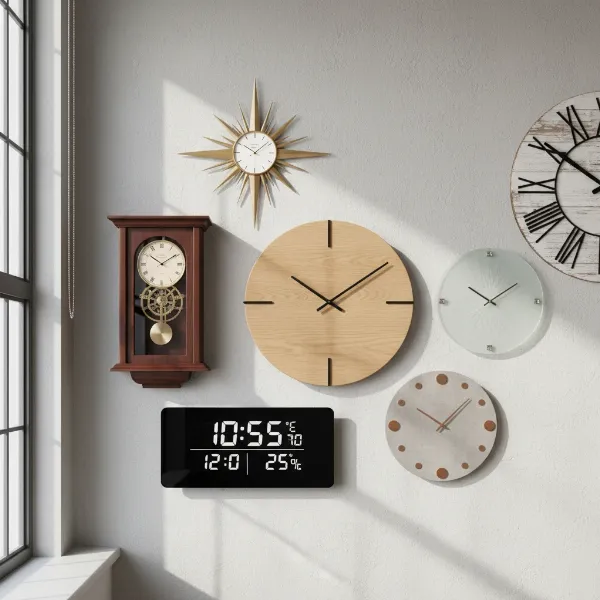
In the sprawling canvases of modern living rooms and open-plan homes, a well-chosen large wall clock transcends its primary function of timekeeping to become a monumental statement piece. It’s a design anchor, a conversation starter, and a definitive expression of your personal style. For those navigating expansive interiors, the challenge isn’t merely filling space, but enhancing it with purpose and elegance. This comprehensive guide will navigate you through selecting, styling, and maintaining the perfect oversized wall clock to harmonize with your grand living areas.
The Grand Appeal: Why Large Wall Clocks Dominate Open Spaces
Large wall clocks are more than just accessories; they are focal points that command attention and bring coherence to vast interiors. Standard decor can often appear diminutive in open-concept layouts or rooms with soaring ceilings, leading to a sense of imbalance. An oversized clock, typically measuring 24 inches or more in diameter, creates a strong visual anchor, grounding the space and preventing furniture and other decorative elements from feeling adrift. This scale helps to balance expansive proportions and guides the eye through the room, establishing a natural flow and a cohesive design narrative. Beyond their aesthetic prowess, large wall clocks offer undeniable practicality. From any vantage point in a spacious living room, you can effortlessly check the time, eliminating the need to constantly reach for a phone or tablet. This seamless integration of form and function elevates daily living, making these timepieces an indispensable element in contemporary homes.
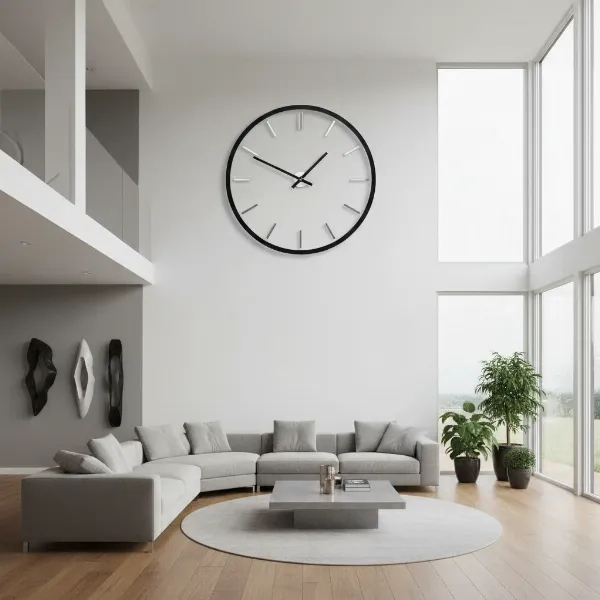 A large minimalist wall clock above a sofa in a modern living room.
A Journey Through Time: The Evolution of Wall Clocks
The story of timekeeping is a journey from rudimentary shadow markers to the intricate mechanisms of today, and wall clocks are a beautiful testament to this evolution. Early forms like sundials and water clocks paved the way for mechanical clocks, which emerged in Europe during the 13th and 14th centuries, initially housed in towers. By the 17th century, the invention of the pendulum by Christiaan Huygens brought unprecedented accuracy, allowing clocks to shrink in size and find a place within homes.
As manufacturing advanced, so did the artistry. The Baroque era introduced elaborate, ornate designs, while the Industrial Revolution brought mass production and greater accessibility. The 20th century saw the rise of quartz movements, revolutionizing accuracy and affordability. Throughout history, wall clocks have reflected prevailing architectural styles and artistic movements, from the austere elegance of Georgian designs to the bold geometric forms of Art Deco and the minimalist aesthetics of modernism. Today, large wall clocks continue this legacy, blending historical craftsmanship with contemporary design to suit every conceivable interior.
Decoding the Mechanisms: Types of Large Wall Clocks
Understanding the different types of wall clock mechanisms is key to choosing a timepiece that not only looks good but also functions optimally for your lifestyle.
- Quartz Clocks: The most prevalent type, quartz clocks are known for their exceptional accuracy and minimal maintenance. Powered by a single AA battery, they utilize an electronic oscillator regulated by a quartz crystal to keep time. Many large quartz wall clocks feature silent, non-ticking movements, making them ideal for living rooms where tranquility is desired. They offer a vast array of styles, from sleek modern designs to intricate traditional pieces.
- Mechanical Clocks: These clocks embody timeless craftsmanship, relying on a system of gears, springs, and pendulums to mark time. Mechanical clocks often feature visible gears or a pendulum, adding a captivating visual element and a soothing rhythmic tick. While they require periodic winding (manual or automatic), their heritage and intricate mechanics appeal to enthusiasts and those seeking a piece with character and history.
- Digital Clocks: For a truly modern aesthetic, digital wall clocks display time electronically using LED or LCD screens. They offer clear, easy-to-read displays and can incorporate advanced features such as temperature readings, date displays, and even smart home connectivity. Their sleek, often minimalist design fits seamlessly into contemporary and high-tech living spaces.
- Pendulum Clocks: Distinguished by their swinging pendulum, these clocks often fall under the mechanical category but stand out for their iconic visual and rhythmic movement. Large pendulum wall clocks add a touch of classic elegance and a calming presence, making them a popular choice for traditional or transitional interiors. The visible pendulum adds a dynamic element that draws the eye.
- Decorative Clocks: Many large wall clocks are primarily chosen for their artistic value, functioning as oversized pieces of wall art. These can encompass any mechanism type but prioritize aesthetics, featuring unique shapes, intricate designs, mixed materials, or bold finishes. They are designed to make a significant visual impact, often serving as the central art piece in a room.
Finding Your Perfect Match: How to Choose a Large Wall Clock
Selecting the ideal large wall clock involves a careful consideration of your space, existing decor, and personal preferences. The right clock should integrate seamlessly while making a bold statement.
Understanding Scale and Proportion: Sizing for Your Space
|
Our Picks for the Best Wall clock in 2026
As an Amazon Associate I earn from qualifying purchases.
|
||
| Num | Product | Action |
|---|---|---|
| 1 | AKCISOT Wall Clock,Boho Kitchen 10 Inch Wall Clocks Battery Operated Non Ticking,Silent Modern Clock Decorative for Bedroom,Office,Bathroom,Living Room,Home (Wood Grain) |

|
| 2 | WallarGe 14.5'' Large Digital Wall Clock Battery Operated with Jumbo Numbers, Temperature and Date - Easy to Read and Set, Auto DST |
|
| 3 | AKCISOT Atomic 10 Inch Wall Clock Analog Clocks for Indoor Kitchen, Battery Operated Clock for Bedroom Office Classroom Living Room(Silver) |
|
| 4 | AKCISOT Atomic 10 Inch Wall Clock Analog Clocks for Indoor Kitchen, Battery Operated Clock for Bedroom Office Classroom Living Room(Black) |
|
| 5 | AKCISOT Wall Clock, Modern Small Wall Clocks Battery Operated 8 Inch, Silent Non-Ticking Analog Classic for Office, Home, Bathroom, Kitchen, Bedroom, School(Silver) |
|
| 6 | AKCISOT Wall Clock, Modern Small Wall Clocks Battery Operated 8 Inch, Silent Non-Ticking Analog Classic for Office, Home, Bathroom, Kitchen, Bedroom, School(Black) |
|
| 7 | AKCISOT Wall Clock 10 Inch Silent Non-Ticking Modern Clocks Battery Operated - Analog Small Classic for Office, Home, Bathroom, Kitchen, Bedroom, School, Living Room(Black) |
|
| 8 | AKCISOT Wall Clock 10 Inch Silent Wall Clocks Battery Operated Non Ticking - Modern Silver Clock Decorative for Kitchen, Bathroom, Bedroom, Living Room, Office, Home(Silver) |
|
| 9 | HIIXHC Wall Clock, Modern Digital Wall Clocks Battery Operated 10 Inch, Silent Non-Ticking Kitchen Clock, Small Classic Analog Clock Decorative for Living Room Decor, Bedroom,Office, Classroom |
|
| 10 | AKCISOT Wall Clock, Modern Small Wall Clocks Battery Operated 8 Inch, Silent Non-Ticking Analog Classic for Office, Home, Bathroom, Kitchen, Bedroom, School(White) |
|
The “large” in large wall clock is relative to its surroundings. For most living rooms, oversized clocks typically range from 24 to 40 inches in diameter. To gauge the perfect size, consider the wall segment it will occupy. For ceilings around 9-10 feet high, a good rule of thumb is for the clock’s width to be approximately 30-40% of the wall segment, allowing for 8-12 inches of “breathing space” around its edges. A practical tip is to create a cardboard cutout or use painter’s tape on the wall to visualize different sizes and ensure the chosen clock doesn’t overwhelm or get lost in the space.
Harmonizing Style and Material: Wood, Metal, Glass, Mixed Media
The material and style of your wall clock should complement your existing interior design.
- Rustic & Farmhouse: Embrace clocks crafted from reclaimed wood, aged metals, or those with distressed finishes. Weathered Roman numeral faces and natural textures perfectly align with a cozy, country-inspired aesthetic.
- Modern & Minimalist: Opt for clocks with clean lines, matte metals (such as black, brass, or chrome), glass, or mirrored designs. Sleek sans-serif numbers or open-frame constructions enhance contemporary settings, providing a sophisticated, uncluttered look.
- Industrial & Loft: Look for clocks that incorporate raw textures, exposed gear designs, or robust metalwork like steel and iron. These styles resonate with urban loft living, offering a utilitarian yet chic appeal.
- Classic & Traditional: Choose clocks with polished wood finishes, ornate details, and traditional Roman numerals. Bronze or gold accents can add a touch of timeless elegance, suitable for more formal or heritage-inspired homes.
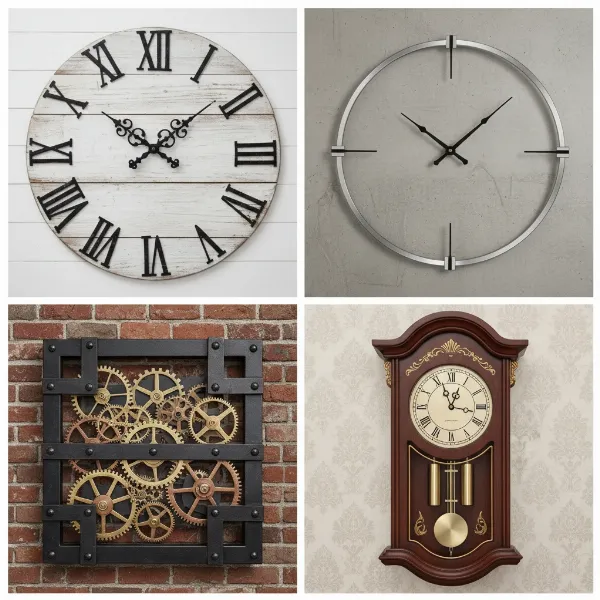 A collage of diverse large wall clocks showing different styles and materials.
Face Designs: Roman Numerals vs. Arabic, Minimalist Dials
The clock face plays a crucial role in its overall aesthetic and readability. Roman numerals evoke a sense of classical elegance and historical grandeur, making them perfect for traditional or transitional spaces. Arabic numerals offer a more straightforward, universally readable option, fitting well into modern and casual settings. Minimalist dials, often devoid of numerals or featuring only markers, prioritize clean aesthetics, aligning with contemporary and minimalist decor.
Considering Features: Silent Movement, Outdoor Durability, Smart Functions
Modern large wall clocks offer a range of features. A silent, non-ticking movement is often preferred in living rooms to maintain a peaceful ambiance. For open spaces that might extend to covered patios or sunrooms, considering outdoor-rated clocks with weather-resistant materials can be beneficial. Some contemporary digital clocks might also offer smart features like automatic time synchronization or app control.
Setting Your Budget: Value vs. Investment Pieces
Large wall clocks come at various price points. Establish a budget that aligns with your expectations for quality, craftsmanship, and design complexity. While affordable options can certainly be stylish, investing in a higher-quality piece often means superior materials, better movement longevity, and a truly unique design that can become a cherished heirloom.
Compare Top Large Wall Clock Styles
| Style Category | Key Characteristics | Best Suited For | Typical Materials |
|---|---|---|---|
| Modern Minimalist | Clean lines, sleek finishes, simple dials, often open-faced | Contemporary, urban lofts, Scandinavian | Matte metal (black, chrome), glass, acrylic |
| Rustic Farmhouse | Distressed wood, aged metal, vintage appeal, Roman numerals | Cozy, country, traditional, eclectic | Reclaimed wood, wrought iron, distressed paint |
| Industrial Chic | Bold mechanics, raw textures, exposed elements, large Arabic numerals | Lofts, workshops, modern urban, transitional | Metal (steel, iron), reclaimed wood, concrete accents |
| Classic Traditional | Roman numerals, ornate details, rich finishes, often with pendulum | Formal living rooms, heritage homes, elegant studies | Polished wood (cherry, oak), brass, bronze, glass |
Mastering Placement and Installation
The impact of your large wall clock is heavily influenced by its placement. Strategic positioning can transform it into a captivating focal point that enhances the entire room.
The Art of Positioning: Above Sofa, Fireplace, or Feature Walls
The most common and effective placements for a large wall clock are above a sofa, a fireplace mantel, or on a prominent, uncluttered wall. These locations naturally draw the eye and establish the clock as a central artistic element. In an open-plan layout, consider a wall visible from multiple areas to maximize its functional and aesthetic benefits. Avoid placing it in a cramped corner or where it competes with too many other dominant decor items.
Achieving Optimal Eye Level
For comfortable viewing and maximum visual impact, the center of your large wall clock should ideally be hung at eye level. This typically means centering it approximately 58-62 inches from the floor, especially when viewed from a seated position in a living room. However, adjust this based on your ceiling height and the surrounding furniture. The goal is a harmonious composition.
Ensuring Visual Balance: The “Breathing Space” Rule
Just as a painter leaves negative space around a subject, ensure your large wall clock has adequate “breathing space” around it. Avoid crowding it with too many small pictures, shelves, or other wall art. A good guideline is to leave at least 8-12 inches of clear wall space on all sides of the clock. This prevents the wall from feeling cluttered and allows the clock to stand out as the intended focal point.
Installation Tips: Secure Hanging for Large Timepieces
Given their size and often considerable weight, proper installation is paramount for large wall clocks. Always use appropriate wall anchors that can support the clock’s weight, not just a simple nail. For heavier clocks, consider using two anchor points or even a stud finder to secure it directly into a wall stud. Ensure the clock is level before finalizing its position, as even a slight tilt can detract from its visual appeal. If unsure, professional installation can guarantee safety and optimal presentation.
Nurturing Your Timepiece: Care and Maintenance
Proper care and maintenance will ensure your large wall clock remains a beautiful and functional part of your home for years to come.
- Battery Replacement for Quartz Clocks: Most quartz clocks run on standard AA batteries. Replace them annually, even if the clock is still running, to prevent battery leakage which can damage the movement. When replacing, always use a fresh, good-quality battery.
- Winding and Servicing Mechanical Clocks: Mechanical clocks, especially those with pendulums, require regular winding and occasional professional servicing (every 3-5 years) to keep their intricate mechanisms running smoothly and accurately. Follow the manufacturer’s instructions for winding frequency.
- Cleaning and Protecting Different Materials:
- Wood: Dust regularly with a soft, dry cloth. For a deeper clean, use a slightly damp cloth with mild wood cleaner, then buff dry. Avoid harsh chemicals and excessive moisture. Periodically apply a furniture polish suitable for your wood type.
- Metal: Dust with a soft, dry cloth. For smudges, a slightly damp cloth with mild soap can be used, but dry immediately to prevent water spots or rust. For polished metals like brass or chrome, use specialized metal cleaners if needed, following product instructions carefully.
- Glass/Acrylic: Use a glass cleaner and a microfiber cloth to prevent streaks. Spray the cloth, not the clock face directly, to avoid liquid seeping into the mechanism.
- Common Issues and Simple Fixes:
- Not keeping time: First check the battery for quartz clocks. For mechanical clocks, ensure it’s wound. Sometimes the hands can get caught; gently adjust them if they appear bent or obstructed.
- Ticking noise: If you have a quartz clock and it’s ticking loudly, consider models with a “silent sweep” or “non-ticking” movement for future purchases.
- Wobbly on wall: Re-check installation and ensure secure anchors are used.
Most minor issues can be resolved with simple steps, but for complex internal mechanism problems, consult a professional clock repair specialist.
Elevating Your Decor: Design Tips with Large Wall Clocks
A large wall clock offers immense versatility in home decor, serving as a powerful tool to enhance your living space.
- Creating a Gallery Wall Anchor: In a gallery wall arrangement, a large wall clock can act as the central anchor, providing a structural element around which smaller pieces of art, photographs, and mirrors can be creatively arranged. Its functional purpose adds an interesting dimension to the visual collection.
- Complementing Existing Art and Furniture: Choose a clock that echoes the dominant style, colors, or materials of your existing furniture and artwork. For instance, a minimalist metal clock will complement sleek, modern furniture, while a distressed wooden clock will enhance a rustic or industrial setting. The clock should harmonize, not compete, with its surroundings.
- Using Clocks as Statement Art: Sometimes, the clock itself is the artwork. Select a clock with a unique design, abstract form, or intricate detailing that stands on its own as a sculptural piece. This approach is particularly effective on a large, otherwise bare wall, transforming it into a compelling visual focus.
- Feng Shui Considerations for Placement: In Feng Shui, clocks are active elements that represent the flow of time and energy. While specific guidelines vary, generally, placing a clock where it is easily seen but not directly opposite a door or in a bedroom (where it can disrupt sleep) is often advised. Consider placing it in communal areas like the living room or dining room to promote good energy flow. The direction it faces can also be significant, with north, northeast, and northwest being auspicious for career, wisdom, and helpful people, respectively.
Buying Guide: Essential Considerations Before Purchase
Before making your final decision, take these practical steps to ensure you choose a large wall clock you’ll love for years.
- Assessing Your Space and Needs: Revisit your living room or open space. Measure the wall where the clock will hang. Consider the room’s function, lighting, and overall aesthetic. Do you need a clock that’s purely decorative, or is high readability from a distance crucial?
- Researching Brands and Reviews: Look into reputable clock manufacturers known for quality and durability. Read customer reviews for insights into actual product performance, accuracy, and customer service. Brands like Howard Miller, Uttermost, Newgate, and others often come highly recommended for their craftsmanship.
- Understanding Warranty and Return Policies: A good warranty can provide peace of mind regarding the clock’s movement and construction. Familiarize yourself with the retailer’s return policy in case the clock doesn’t quite fit your space or expectations.
- Comparing Prices and Features: Don’t just look at the price tag. Compare the materials, movement type, special features (like silent operation or unique finishes), and overall design across different models. Sometimes, spending a little more for a higher-quality movement or superior materials can be a worthwhile investment in the long run.
Conclusion
Choosing the best large wall clock for your living room or open space is an exciting opportunity to infuse grandeur, style, and practical elegance into your home. These magnificent timepieces offer far more than just minutes and hours; they serve as a definitive statement, grounding vast interiors, reflecting your unique aesthetic, and becoming a cherished part of your daily life. By thoughtfully considering scale, style, mechanism, and placement, you can select a clock that not only perfectly complements your decor but also elevates the entire ambiance of your living environment. Ready to find the perfect centerpiece that will keep your home beautifully on schedule?
Frequently Asked Questions
What is considered a “large” wall clock?
A “large” or “oversized” wall clock typically refers to any timepiece with a diameter exceeding 24 inches, with many popular models ranging from 30 to 40 inches or even larger. These dimensions allow them to create a significant visual impact and serve as a focal point in spacious rooms.
How do I ensure my large wall clock is the right size for my living room?
To determine the right size, measure the wall space where you intend to hang the clock. A common guideline suggests the clock’s width should be about 30-40% of the wall segment it occupies, leaving ample “breathing space” around it. Using a cardboard cutout or painter’s tape to visualize the size on the wall is highly recommended.
Can a large wall clock work in a smaller open space?
Yes, a large wall clock can work effectively in smaller open spaces by serving as a single, bold focal point, which can actually make the room feel more intentional and less cluttered than multiple small decor items. Opt for minimalist designs with clean lines to maintain an airy feel.
What are the benefits of a silent large wall clock?
The primary benefit of a silent large wall clock (often featuring a “sweep” quartz movement) is maintaining a peaceful and undisturbed environment. In living rooms, where relaxation and conversation are key, a non-ticking clock prevents auditory distractions, enhancing comfort and tranquility.
How do I care for a large wooden or metal wall clock?
Caring for your large wall clock depends on its material. For wooden clocks, dust regularly with a soft, dry cloth and periodically use a wood-specific polish. For metal clocks, dust with a soft cloth; for smudges, a slightly damp cloth with mild soap can be used, but dry immediately to prevent water spots or rust. Avoid harsh chemicals on all materials.