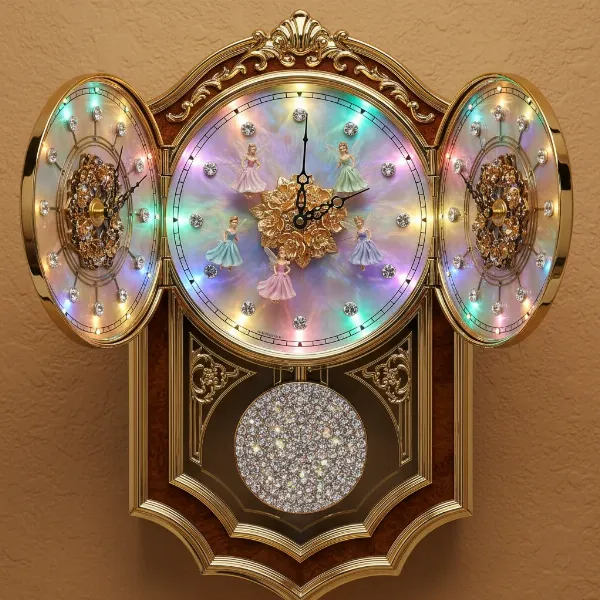
Choosing a new timepiece, especially a prominent wall clock for your home or office, involves more than just selecting a beautiful design. The true heart of any clock lies within its movement, the intricate mechanism that dictates its accuracy, maintenance, and even its character. For decades, horology enthusiasts and everyday consumers alike have debated the merits of the two primary movement types: mechanical and quartz. Understanding their fundamental differences is crucial for making an informed decision that aligns with your lifestyle, aesthetic preferences, and budget when selecting the perfect wall clock.
This comprehensive guide will delve into the rich history, intricate workings, and distinct advantages and disadvantages of both mechanical and quartz movements, ensuring you can confidently choose the ideal heart for your next wall clock.
The Enduring Legacy: A Brief History of Clock Movements
The art of timekeeping boasts a fascinating history, with mechanical movements forming its very foundation. Early mechanical clocks, tracing their origins back to medieval Europe in the 13th and 14th centuries, were marvels of engineering, relying on weights, gears, and escapements to mark the passage of time. Over centuries, these mechanisms saw numerous innovations, including the pendulum by Christiaan Huygens in the 17th century, significantly improving accuracy. This traditional approach to timekeeping reigned supreme for hundreds of years, valued for its complex artistry and enduring presence in homes and public spaces, including wall clocks.
However, the late 20th century ushered in a revolutionary shift with the advent of quartz technology. The quartz clock was first invented by Warren Marrison in 1927 in America, but it was Seiko’s introduction of the Astron, the first quartz wristwatch, in 1969 that truly democratized precise timekeeping [cite: 1 – search 3, 2 – search 3, 3 – search 3]. This innovation triggered what became known as the “Quartz Crisis” in the 1970s and 80s, an upheaval that saw the Swiss watchmaking industry, traditionally focused on mechanical movements, significantly challenged by the new, highly accurate, and affordable electronic technology [cite: 5 – search 3]. Suddenly, wall clocks and other timepieces could achieve unprecedented accuracy with minimal effort, forever changing the landscape of horology.
Understanding the Core: How Mechanical and Quartz Movements Work
The fundamental difference between mechanical and quartz movements lies in how they power and regulate time.
Mechanical Movements: The Intricate Dance of Gears
A mechanical movement is a marvel of miniature engineering, operating entirely without electrical power or batteries. Its energy source is a tightly wound mainspring, which gradually unwinds to release power. This power is then transmitted through a series of precisely cut gears, which ultimately drive the clock’s hands. The regulation of this energy flow is controlled by an escapement mechanism and a balance wheel (or pendulum in larger clocks). The balance wheel oscillates at a constant frequency, allowing the gears to advance by a fixed amount with each swing, creating the characteristic “ticking” sound and often a smooth, sweeping second hand. Mechanical movements can be either:
- Manual-wind: Requiring the owner to regularly turn a crown or wind a key to tighten the mainspring, typically every day or every few days.
- Automatic (Self-winding): A type of mechanical movement that winds itself through the natural motion of the clock’s user (in watches, via wrist movement, but for wall clocks, this often involves weights or pendulums that are set in motion).
|
Our Picks for the Best Wall clock in 2026
As an Amazon Associate I earn from qualifying purchases.
|
||
| Num | Product | Action |
|---|---|---|
| 1 | AKCISOT Wall Clock 10 Inch Silent Wall Clocks Battery Operated Non Ticking - Modern Silver Clock Decorative for Kitchen, Bathroom, Bedroom, Living Room, Office, Home(Silver) |

|
| 2 | AKCISOT Wall Clock,Boho Kitchen 10 Inch Wall Clocks Battery Operated Non Ticking,Silent Modern Clock Decorative for Bedroom,Office,Bathroom,Living Room,Home (Wood Grain) |
|
| 3 | WallarGe 14.5'' Large Digital Wall Clock Battery Operated with Jumbo Numbers, Temperature and Date - Easy to Read and Set, Auto DST |
|
| 4 | AKCISOT Atomic 10 Inch Wall Clock Analog Clocks for Indoor Kitchen, Battery Operated Clock for Bedroom Office Classroom Living Room(Black) |
|
| 5 | AKCISOT Wall Clock, Modern Small Wall Clocks Battery Operated 8 Inch, Silent Non-Ticking Analog Classic for Office, Home, Bathroom, Kitchen, Bedroom, School(White) |
|
| 6 | HIIXHC Wall Clock, Modern Digital Wall Clocks Battery Operated 10 Inch, Silent Non-Ticking Kitchen Clock, Small Classic Analog Clock Decorative for Living Room Decor, Bedroom,Office, Classroom |
|
| 7 | AKCISOT Wall Clock, Modern Small Wall Clocks Battery Operated 8 Inch, Silent Non-Ticking Analog Classic for Office, Home, Bathroom, Kitchen, Bedroom, School(Black) |
|
| 8 | AKCISOT Wall Clock 10 Inch Silent Non-Ticking Modern Clocks Battery Operated - Analog Small Classic for Office, Home, Bathroom, Kitchen, Bedroom, School, Living Room(Black) |
|
| 9 | AKCISOT Atomic 10 Inch Wall Clock Analog Clocks for Indoor Kitchen, Battery Operated Clock for Bedroom Office Classroom Living Room(Silver) |
|
| 10 | AKCISOT Wall Clock, Modern Small Wall Clocks Battery Operated 8 Inch, Silent Non-Ticking Analog Classic for Office, Home, Bathroom, Kitchen, Bedroom, School(Silver) |
|
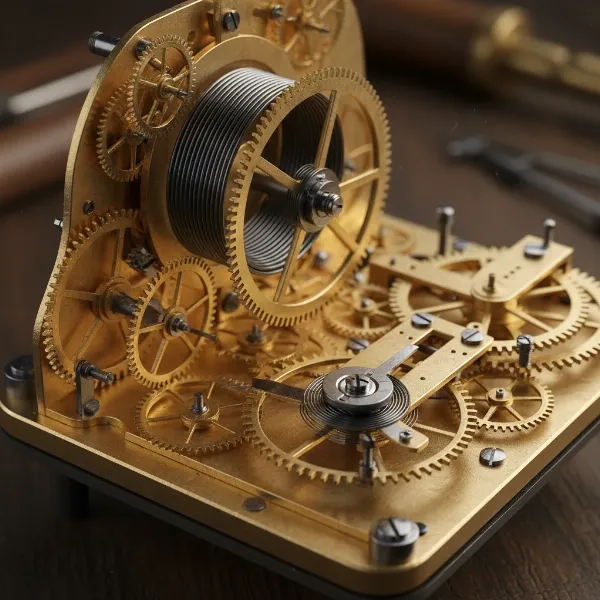 Close-up of intricate mechanical clock movement showing gears, springs, and escapement system.
Quartz Movements: The Precision of a Vibrating Crystal
Quartz movements represent a triumph of modern electronics and material science. At their heart is a small, precisely cut quartz crystal, typically shaped like a tuning fork. When an electrical current from a battery is applied to this crystal, it vibrates at an extremely consistent and high frequency, usually 32,768 times per second. An integrated circuit then counts these vibrations and converts them into a single electrical pulse every second. This pulse powers a tiny stepping motor, which in turn moves the clock’s hands in one-second increments, resulting in the distinct “tick-tock” motion of the second hand. Because the quartz crystal’s vibrations are so stable, these movements are incredibly accurate and require minimal external interference.
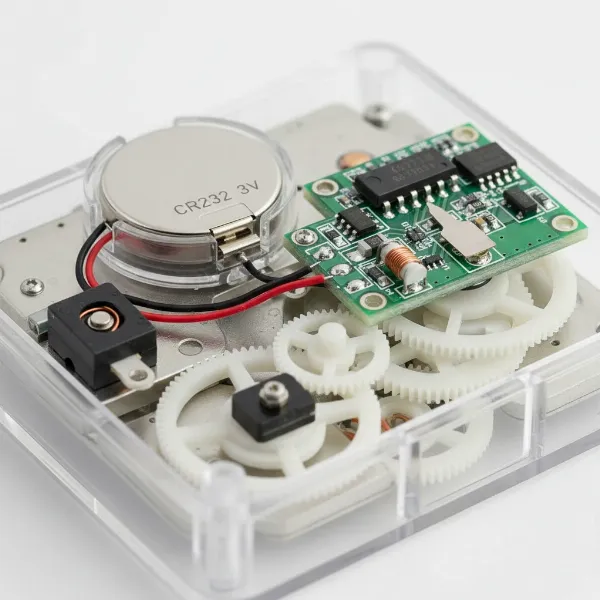 Modern quartz clock movement with battery, circuit board, and quartz crystal visible for precision.
Mechanical Wall Clocks: The Art of Traditional Horology
For those who appreciate classic craftsmanship and the intricate artistry of traditional timekeeping, mechanical wall clocks offer a unique appeal.
Pros of Mechanical Wall Clocks:
- Craftsmanship & Heritage: Mechanical movements are a testament to centuries of horological skill. The intricate arrangement of gears, springs, and levers is often visible through open-work dials or glass backs, showcasing a deep appreciation for engineering and traditional artistry. Many collectors cherish these clocks for their connection to history and the human ingenuity involved in their creation.
- Sweeping Second Hand: A hallmark of many mechanical clocks, the second hand glides smoothly around the dial, offering a continuous and elegant visual flow that many find more aesthetically pleasing than the distinct jump of a quartz second hand.
- Longevity & Heirloom Potential: With proper care and regular servicing, a high-quality mechanical wall clock can last for generations, becoming a cherished family heirloom. Their timeless appeal and robust construction mean they can potentially appreciate in value over time, offering not just a timepiece but an investment.
- No Batteries: Mechanical wall clocks operate without batteries, relying solely on kinetic energy. This appeals to those seeking a more environmentally conscious option, reducing the need for battery disposal.
- Soothing Sounds: The gentle, rhythmic ticking of a mechanical clock can be a comforting and nostalgic presence in a home, adding to its unique character.
Cons of Mechanical Wall Clocks:
- Lower Accuracy: While impressive for their mechanical complexity, these movements are inherently less accurate than quartz. They typically gain or lose several seconds per day, requiring occasional resetting to maintain precise time [cite: 2, 3 – search 1; 2, 3 – search 2]. Factors like temperature, humidity, and gravity can also influence their performance.
- Higher Maintenance: Mechanical wall clocks, especially those that are manually wound, require regular interaction. They also demand periodic professional servicing (cleaning, oiling, and adjustment) every 5-10 years to ensure optimal performance and longevity, which can be costly.
- Higher Cost: Due to the complex manufacturing process, the higher number of meticulously crafted components, and the skilled labor involved, mechanical wall clocks are generally more expensive to purchase than their quartz counterparts.
- Fragility: With many delicate moving parts, mechanical movements can be more susceptible to damage from shocks or extreme environmental conditions.
Quartz Wall Clocks: Precision and Modern Convenience
For those who prioritize unwavering accuracy, reliability, and ease of use, quartz wall clocks are an excellent choice, embodying modern timekeeping efficiency.
Pros of Quartz Wall Clocks:
- Superior Accuracy: Quartz movements are renowned for their exceptional accuracy, typically losing or gaining only a few seconds per month [cite: 1, 2, 3 – search 1; 1, 2, 3 – search 2]. This makes them ideal for anyone for whom precise timekeeping is paramount.
- Low Maintenance: Beyond replacing the battery every few years (typically 1-5 years depending on the clock and battery), quartz wall clocks require virtually no ongoing maintenance or winding. This “set it and forget it” convenience is a major draw for many.
- Affordability: The mass production of quartz movements and their simpler internal mechanisms make quartz wall clocks significantly more affordable than mechanical ones, both in initial purchase price and long-term upkeep [cite: 2, 3 – search 1; 2, 3, 5 – search 2].
- Durability & Reliability: With fewer moving parts, quartz movements are generally more robust and resistant to shocks and impacts. They are also less susceptible to environmental factors like temperature and humidity fluctuations, ensuring consistent performance.
- Wide Variety: The ease of manufacturing quartz movements allows for an enormous array of designs, styles, and functionalities in wall clocks, making it easy to find one that fits any decor.
Cons of Quartz Wall Clocks:
- Battery Dependence: The reliance on batteries means they will eventually need to be replaced. While infrequent, a dead battery will stop the clock.
- Less Traditional Appeal: For some enthusiasts, quartz movements lack the “soul” or intricate charm associated with mechanical movements. They don’t offer the visible craftsmanship that mechanical clocks do.
- Stepping Second Hand: The distinct “tick-tock” motion of the second hand in most quartz clocks, while precise, can be less appealing to those who prefer the smooth sweep of a mechanical hand, and the ticking sound can be distracting in quiet environments for some.
- Environmental Impact: While minor, the disposal of batteries contributes to electronic waste, an ongoing environmental consideration.
Choosing Your Ideal Wall Clock Movement: A Buyer’s Guide
Deciding between a mechanical and a quartz wall clock ultimately comes down to your personal priorities and preferences. Consider the following factors:
- Prioritize Accuracy vs. Craftsmanship: If absolute precision and minimal effort are your main concerns, a quartz wall clock is the clear winner. If you value the artistry, tradition, and living history of horology, and are willing to engage with its maintenance, a mechanical clock will offer profound satisfaction.
- Budget Considerations: Quartz clocks are generally more budget-friendly both upfront and in terms of ongoing maintenance. Mechanical clocks represent a greater initial investment and will incur servicing costs over their lifetime.
- Aesthetic Preferences: Do you prefer the smooth, continuous sweep of a second hand or are you content with the distinct “tick-tock”? Do you enjoy seeing the intricate gears at work, or do you prefer a sleek, minimalist dial?
- Maintenance Commitment: Are you prepared for the ritual of winding a manual mechanical clock and arranging periodic professional servicing? Or do you prefer the simplicity of a battery-powered, low-maintenance timepiece?
- Room & Style: Consider where the wall clock will reside. A quiet study might benefit from the subtle ticking of a mechanical clock, while a bustling kitchen might be better served by a robust and accurate quartz model. The style of the clock should also complement your interior design, whether it’s a rustic wooden mechanical piece or a modern metal quartz design.
Comparison Table: Mechanical vs. Quartz Wall Clock Movements
| Feature | Mechanical Movement | Quartz Movement |
|---|---|---|
| Accuracy | +/- seconds per day [cite: 2, 3 – search 1; 1, 2, 3 – search 2] | +/- seconds per month [cite: 1, 2, 3 – search 1; 1, 2, 3 – search 2] |
| Power Source | Mainspring (manual/automatic winding) [cite: 3 – search 1, 5 – search 1; 2, 3 – search 2] | Battery & Quartz Crystal [cite: 3, 5 – search 1; 2, 3 – search 2] |
| Maintenance | Regular winding (manual), periodic servicing [cite: 1, 2, 3 – search 1; 2, 3, 5 – search 2] | Battery replacement (every 1-5 years) [cite: 1, 2, 3 – search 1; 2, 3 – search 2] |
| Cost | Higher (due to craftsmanship, complexity) [cite: 1, 2, 3 – search 1; 3, 4, 5 – search 2] | Lower (mass-produced, simpler) [cite: 2, 3 – search 1; 2, 3, 5 – search 2] |
| Second Hand | Smooth, sweeping [cite: 5 – search 1; 4 – search 3] | Stepping (“tick-tock”) [cite: 4 – search 3] |
| Appeal | Heritage, artistry, visible gears, heirloom [cite: 1, 2, 3, 5 – search 1; 2, 3 – search 2] | Precision, convenience, modern, reliability [cite: 1, 2, 3 – search 1; 2, 3 – search 2] |
| Durability | Robust but more sensitive to shock/environment [cite: 5 – search 1] | Generally more shock-resistant, fewer parts [cite: 2 – search 2] |
| Longevity | Can last for generations with proper care [cite: 3 – search 1; 3, 5 – search 2] | Many years, but often not considered heirloom [cite: 3 – search 1; 3 – search 2] |
Caring for Your Wall Clock: Usage and Maintenance Tips
Proper care ensures the longevity and performance of any wall clock, regardless of its movement type.
- Mechanical Wall Clocks:
- Winding Schedules: If you have a manual-wind mechanical wall clock, adhere to its specific winding schedule, usually daily or weekly, to keep it running smoothly.
- Regular Professional Servicing: Much like a fine automobile, mechanical clocks benefit from professional servicing every 5-10 years. This involves cleaning, oiling, and adjusting the intricate components to prevent wear and maintain accuracy.
- Proper Placement: Ensure your mechanical wall clock is hung on a level, stable surface, away from direct sunlight, extreme temperatures, and high humidity, which can affect its delicate mechanism.
- Cleaning: Gently dust the exterior regularly with a soft cloth. Avoid using harsh chemicals or sprays directly on the clock.
- Quartz Wall Clocks:
- Battery Replacement: Pay attention to the recommended battery replacement frequency for your specific clock, typically every 1 to 5 years. Use the correct type and size of battery. Remove dead batteries promptly to prevent leakage.
- Avoid Extremes: While generally more robust, avoid exposing quartz wall clocks to extreme temperatures or humidity, which can impact battery life and component function.
- General Cleaning: Dust the clock regularly. If needed, wipe the case with a slightly damp cloth, ensuring no moisture enters the movement.
Expert Insights: The Horologist’s Perspective
“The choice between mechanical and quartz for a wall clock isn’t about one being definitively ‘better,’ but rather about aligning the clock’s heart with the owner’s heart. A mechanical movement offers a tangible connection to history and meticulous craftsmanship, a piece of art that lives and breathes. Quartz, on the other hand, provides unmatched precision and effortless reliability, fitting seamlessly into the demands of modern life. Both have their rightful place in horology, offering distinct values.” – Alexei Petrova, Master Horologist, Wall Clock Restorations
Conclusion: Finding Your Perfect Wall Clock
Whether you’re drawn to the intricate artistry and historical resonance of a mechanical wall clock or the unparalleled accuracy and effortless convenience of a quartz model, both movements offer unique advantages for your home. Your decision hinges on what you value most in a timepiece: the captivating, living mechanism and traditional charm of mechanical timekeeping, or the modern, precise, and low-maintenance functionality of quartz.
Both types provide reliable timekeeping, but they deliver it through fundamentally different philosophies. By understanding these distinctions, you are well-equipped to select a wall clock that not only tells time but also reflects your personal style and appreciation for horology. Which movement will you choose to grace your space and mark your moments? Explore the diverse range of options available to find the perfect wall clock for your needs.
Frequently Asked Questions
What is the “Quartz Crisis”?
The “Quartz Crisis” refers to the significant upheaval in the watchmaking industry during the 1970s and early 1980s. The introduction of highly accurate, mass-produced, and affordable quartz watches by Japanese manufacturers like Seiko challenged the dominance of traditional mechanical watchmakers, particularly in Switzerland, leading to a major restructuring of the industry [cite: 5 – search 3].
Are mechanical wall clocks more valuable?
Mechanical wall clocks are often considered more valuable in terms of craftsmanship, heritage, and potential for appreciation as collector’s items or family heirlooms. Their intricate, hand-assembled mechanisms and the skilled labor involved contribute to their higher cost and perceived artistic value.
Do quartz wall clocks need winding?
No, quartz wall clocks do not need winding. They are powered by a small battery that sends an electrical current through a quartz crystal, which vibrates to regulate time. The only maintenance related to power is replacing the battery every few years.
Which movement is more durable for a wall clock?
Generally, quartz movements are considered more durable in everyday use due to having fewer moving parts and being less susceptible to shock or environmental factors like temperature changes. Mechanical movements, while robust, can be more delicate and require careful handling.
Can I convert a mechanical wall clock to quartz?
Yes, it is often possible to convert a mechanical wall clock to a quartz movement. This is a common practice for those who prefer the accuracy and low maintenance of quartz but wish to retain an antique or aesthetically pleasing clock case. However, it alters the clock’s original character and value as a mechanical timepiece.