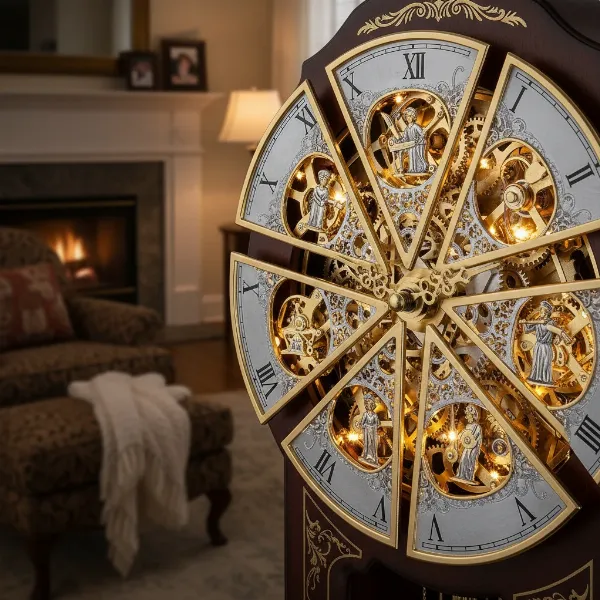
Few timepieces capture the imagination quite like the cuckoo clock. With its distinctive call and charming bird, it’s more than just a device for telling time; it’s a piece of living history, a blend of intricate craftsmanship and whimsical artistry. Whether you’re drawn to the rustic charm of traditional designs or the sleek lines of modern interpretations, understanding the journey of these remarkable clocks can deepen your appreciation. This comprehensive guide will explore the captivating history of cuckoo clocks, demystify their inner workings, and showcase the diverse options available today, helping you find the perfect one for your space.
The Enchanting History of Cuckoo Clocks
The story of the cuckoo clock is deeply intertwined with the scenic Black Forest region of Germany. While the exact inventor remains a subject of historical debate, the consensus among horologists points to the mid-17th century for early references to cuckoo mechanisms, with significant development and popularization occurring in the Black Forest around the mid-1700s. Early iterations were often crafted entirely from local linden wood, showcasing the resourcefulness and artistic talent of the region’s artisans.
These initial clocks featured rudimentary yet ingenious mechanisms, using twin bellows to produce the iconic “coo-coo” sound. This sound was designed to mimic the common cuckoo bird (Cuculus canorus), a beloved harbinger of spring in Europe. Early designs also incorporated “automatons” – small moving figures of dancers and animals that would spring to life alongside the cuckoo. As the craft evolved, different villagers in the Black Forest specialized in various aspects, from carving intricate cases to assembling delicate gears, fostering a collaborative environment that propelled the cuckoo clock to global recognition by the mid-1850s. Though often mistakenly associated with Switzerland, Germany proudly claims the cuckoo clock as a cherished cultural icon.
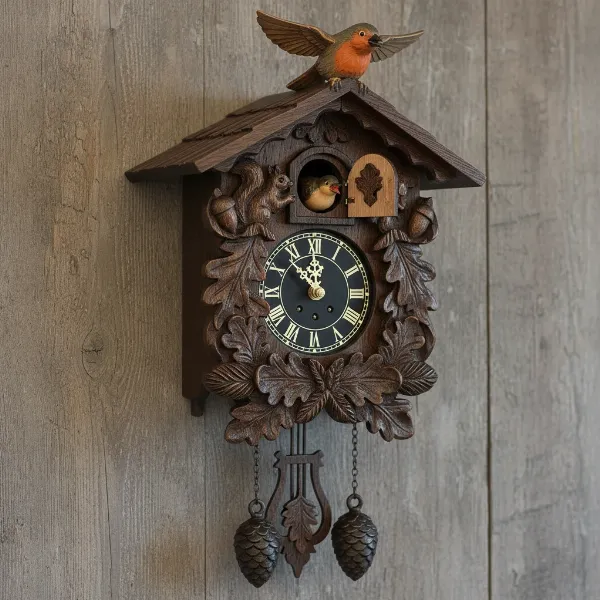 A finely detailed traditional Black Forest cuckoo clock with intricate carvings.
How the Magic Works: The Mechanics of a Cuckoo Clock
At its heart, a cuckoo clock is a marvel of traditional horology, typically powered by a pendulum-driven movement. The magical appearance and call of the cuckoo bird are achieved through a time-honored mechanical process that has remained largely unchanged since the 18th century.
- Pendulum Movement: Like many traditional clocks, a cuckoo clock relies on a pendulum to regulate its timekeeping. The rhythmic swing of the pendulum ensures accuracy.
- The Cuckoo Mechanism: The characteristic “coo-coo” sound is generated by a system of two small bellows. As the clock prepares to strike the hour (and sometimes the half-hour), air is pushed through these bellows and into specially tuned pipes, creating the two distinct notes of the cuckoo’s call.
- Automated Bird: Synchronized with the sound, a small, automated cuckoo bird emerges from a tiny trap door on the clock’s face. Depending on the design, the bird may simply lean forward, or its wings might flap and its beak open and close, adding to the charm.
- Movement Types: Cuckoo clocks come with two primary mechanical movements:
- One-day (30-hour) movements: These require daily winding, where weights are pulled up to restart the clock’s operation.
- Eight-day movements: These offer greater convenience, needing to be wound only once a week.
- Musical Features: Many cuckoo clocks, particularly the larger, more elaborate models, also feature musical movements. After the cuckoo call, a Swiss music box typically plays a charming melody, often accompanied by rotating dancers or other animated figures.
Traditional Cuckoo Clock Styles: A Journey Through Artistry
For centuries, cuckoo clocks have been crafted in distinct styles, each telling a unique story through its design and ornamentation. These traditional designs showcase the incredible artistry and woodworking skills of the Black Forest region.
Traditional Carved Cuckoo Clocks (Jagdstück)
These clocks embody a deep connection to nature and the hunting traditions of the Black Forest. Characterized by elaborate hand-carved motifs, they often feature:
- Themes: Dominant themes include hunting scenes, forest animals such as stags (often crowning the clock with impressive antlers), rabbits, hawks, and birds.
- Details: Intricate carvings of oak leaves, pine trees, and hunting paraphernalia like rifles and game bags are common.
- Aesthetics: These clocks often evoke a sense of rustic elegance and a reverence for the natural world.
|
Our Picks for the Best Wall clock in 2026
As an Amazon Associate I earn from qualifying purchases.
|
||
| Num | Product | Action |
|---|---|---|
| 1 | AKCISOT Atomic 10 Inch Wall Clock Analog Clocks for Indoor Kitchen, Battery Operated Clock for Bedroom Office Classroom Living Room(Silver) |

|
| 2 | AKCISOT Atomic 10 Inch Wall Clock Analog Clocks for Indoor Kitchen, Battery Operated Clock for Bedroom Office Classroom Living Room(Black) |
|
| 3 | AKCISOT Wall Clock, Modern Small Wall Clocks Battery Operated 8 Inch, Silent Non-Ticking Analog Classic for Office, Home, Bathroom, Kitchen, Bedroom, School(White) |
|
| 4 | AKCISOT Wall Clock,Boho Kitchen 10 Inch Wall Clocks Battery Operated Non Ticking,Silent Modern Clock Decorative for Bedroom,Office,Bathroom,Living Room,Home (Wood Grain) |
|
| 5 | WallarGe 14.5'' Large Digital Wall Clock Battery Operated with Jumbo Numbers, Temperature and Date - Easy to Read and Set, Auto DST |
|
| 6 | AKCISOT Wall Clock, Modern Small Wall Clocks Battery Operated 8 Inch, Silent Non-Ticking Analog Classic for Office, Home, Bathroom, Kitchen, Bedroom, School(Black) |
|
| 7 | AKCISOT Wall Clock, Modern Small Wall Clocks Battery Operated 8 Inch, Silent Non-Ticking Analog Classic for Office, Home, Bathroom, Kitchen, Bedroom, School(Silver) |
|
| 8 | HIIXHC Wall Clock, Modern Digital Wall Clocks Battery Operated 10 Inch, Silent Non-Ticking Kitchen Clock, Small Classic Analog Clock Decorative for Living Room Decor, Bedroom,Office, Classroom |
|
| 9 | AKCISOT Wall Clock 10 Inch Silent Wall Clocks Battery Operated Non Ticking - Modern Silver Clock Decorative for Kitchen, Bathroom, Bedroom, Living Room, Office, Home(Silver) |
|
| 10 | AKCISOT Wall Clock 10 Inch Silent Non-Ticking Modern Clocks Battery Operated - Analog Small Classic for Office, Home, Bathroom, Kitchen, Bedroom, School, Living Room(Black) |
|
Chalet Style Cuckoo Clocks
The Chalet style is arguably the most recognizable and beloved form of the cuckoo clock, designed to resemble traditional alpine homes found in Germany, Switzerland, and Austria.
- Architectural Influence: These clocks feature an A-frame roof and detailed facades, mirroring the quaint chalets nestled in mountain valleys.
- Scenes of Daily Life: Unlike the hunt-themed clocks, Chalet styles often depict idyllic scenes of mountain life, including animated figures of woodchoppers, mill wheels, bell ringers, and dancers celebrating.
- Vibrant Details: These clocks often incorporate splashes of color and intricate small details that bring the miniature scenes to life.
Bahnhäusle (Railway House) Cuckoo Clocks
Emerging in the mid-19th century, the Bahnhäusle style was inspired by the gatekeeper’s houses found along Germany’s railway lines.
- Distinctive Shape: These clocks typically have a more architectural, rectangular form with a gabled roof, resembling a small railway station building.
- Design Elements: They often feature painted faces, grapevines, and sometimes even miniature railway scenes or guards. They share a similar charm to the Chalet style but with a different structural inspiration.
Shield Cuckoo Clocks
Representing an older and more simplistic design, Shield clocks are less common today but hold historical significance.
- Minimalist Form: These clocks are characterized by a flat, shield-like or square wooden board, often with an arched top.
- Painted Decoration: Instead of deep carvings, Shield clocks feature delicate, often brightly colored paintings, typically floral lacquer designs.
- Absence of Cuckoo: Interestingly, many original Shield clocks did not include a cuckoo bird mechanism, focusing instead on decorative artistry.
Modern Cuckoo Clocks: Contemporary Twists on a Classic
While traditional cuckoo clocks celebrate heritage and detailed craftsmanship, the modern era has seen a fascinating evolution in design. Contemporary cuckoo clocks retain the iconic bird and call but reinterpret the aesthetic for 21st-century interiors.
These clocks often feature:
- Minimalist Aesthetics: Clean lines, geometric shapes (squares, rectangles), and pared-down ornamentation replace the elaborate carvings of their predecessors.
- Diverse Materials: While wood remains popular, modern cuckoos might incorporate metal, plastic, or composite materials, sometimes in bold colors.
- Innovative Interpretations: Some designers play with transparency, abstract forms, or unexpected placements, turning the cuckoo clock into a piece of avant-garde art. They seamlessly blend the charm of the past with cutting-edge design, making them suitable for contemporary and urban living spaces.
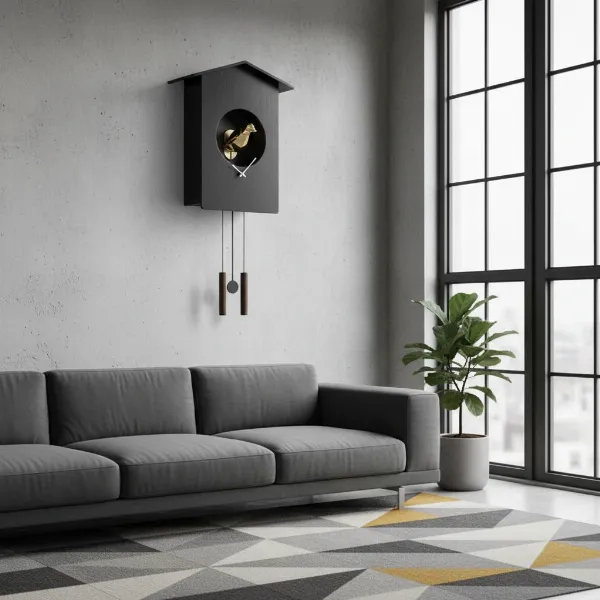 A sleek, minimalist cuckoo clock in a contemporary living space with clean lines.
Choosing Your Cuckoo Clock: A Buyer’s Guide
Selecting a cuckoo clock is an exciting journey, offering a chance to bring a piece of history and artistry into your home. Here’s what to consider to ensure you choose the perfect timepiece:
- Authenticity: For traditional Black Forest cuckoo clocks, look for certification from reputable associations. These ensure genuine craftsmanship and origin.
- Movement Type: Decide between a “one-day” (30-hour) movement, which requires daily winding, or an “eight-day” movement, offering the convenience of weekly winding. Quartz (battery-operated) versions are also available for those who prefer minimal maintenance.
- Style Preference: Do you prefer the rich, detailed carvings of a Traditional Carved clock, the charming village scenes of a Chalet style, or the sleek simplicity of a Modern design?
- Features: Consider if you desire additional features like musical movements, rotating dancers, or an automatic night shut-off function for the cuckoo call.
- Material and Craftsmanship: Examine the quality of the wood (typically linden wood for traditional clocks) and the detail of the carvings or finishes. Hand-carved details signify superior craftsmanship.
- Size and Placement: Measure your intended space carefully. Cuckoo clocks come in various sizes, from small decorative pieces to grand statement clocks.
- Budget: Cuckoo clocks vary widely in price based on complexity, size, and features. Establish a budget before you begin your search.
Caring for Your Cuckoo Clock: Maintenance Tips
A well-maintained cuckoo clock can become a cherished family heirloom. Proper care ensures its longevity and keeps its intricate mechanisms running smoothly.
- Placement: Hang your clock on a sturdy wall, away from direct sunlight, heat sources, and high humidity, which can affect the wood and movement. Ensure it’s level to allow the pendulum to swing freely and the weights to drop without obstruction.
- Winding: For mechanical clocks, consistency is key. Wind one-day clocks every 24 hours and eight-day clocks once a week, gently pulling the chains until the weights reach the top.
- Cleaning: Dust the clock’s exterior gently with a soft cloth. Never use harsh chemicals or abrasive cleaners, especially on carved details or painted surfaces. For internal cleaning or repairs, always consult a professional clockmaker.
- Bird Mechanism: Avoid interfering with the cuckoo bird or its door. If it jams, check for obstructions before attempting any gentle adjustments.
- Professional Servicing: Like any fine mechanical instrument, a cuckoo clock benefits from professional servicing every few years (typically 3-5 years) to clean, oil, and adjust the movement, preventing wear and ensuring accurate timekeeping.
Tips for Decorating Your Home with a Cuckoo Clock
A cuckoo clock can be a stunning focal point, adding character and warmth to any room. Here are some ideas to integrate it harmoniously into your home decor:
- Focal Point: Position the clock on a prominent wall in a living room, dining area, or entryway to draw the eye and spark conversation.
- Complementary Styles:
- Traditional: A classic carved or Chalet style clock pairs beautifully with rustic, farmhouse, or European-inspired interiors.
- Modern: A minimalist cuckoo clock can provide a striking contrast or seamlessly blend into contemporary, Scandinavian, or industrial decor.
- Gallery Wall Inclusion: Integrate a smaller cuckoo clock into a gallery wall arrangement, mixing it with framed art, photographs, and other decorative objects for an eclectic display.
- Color Coordination: Choose a clock whose wood finish or accent colors complement your existing furniture and wall tones. Modern clocks often come in vibrant hues that can add a pop of color.
- Lighting: Highlight your cuckoo clock with subtle accent lighting to draw attention to its intricate details, especially in the evening.
Buying Guide: Essential Considerations for Your Cuckoo Clock Purchase
Navigating the market for a cuckoo clock requires a discerning eye. Here are crucial factors to consider for a confident purchase:
- Set Your Budget: Cuckoo clocks range from affordable quartz models to expensive, meticulously hand-carved mechanical pieces. Knowing your budget beforehand will narrow your choices effectively.
- Reputable Seller: Purchase from established dealers or specialized clock shops known for their expertise and quality. Check for customer reviews and testimonials.
- Warranty and Return Policy: Ensure the seller offers a comprehensive warranty on the movement and mechanism, along with a clear return or exchange policy.
- Read Specifications: Always scrutinize the product description. Understand the movement type (1-day, 8-day, quartz), materials used, dimensions, and any special features like music or night shut-off.
- Compare Options: Don’t rush. Compare models from different brands and retailers. Look at design, features, and price points to ensure you’re getting the best value for your investment.
“A cuckoo clock is more than just a time-teller; it’s a testament to enduring craftsmanship and a delightful link to a rich cultural heritage. Its charm lies not just in its accurate ticking, but in the story it tells and the joy it brings with every hourly call.” – Johann Schmidt, Master Horologist, Black Forest Clockmakers Guild
Conclusion
From its humble beginnings in the heart of Germany’s Black Forest to its evolution into a diverse range of artistic expressions, the cuckoo clock stands as a timeless symbol of craftsmanship and tradition. Whether you are captivated by the intricate carvings of a historical piece or the sleek simplicity of a modern design, these unique timepieces offer a blend of functional artistry and enchanting nostalgia. By understanding their rich history, precise mechanics, and varied styles, you can confidently choose a cuckoo clock that not only tells time but also adds a distinctive charm and character to your home. Which cuckoo clock will you choose to bring its unique melody into your life?
Frequently Asked Questions
Where do cuckoo clocks primarily originate?
Cuckoo clocks are primarily associated with and originated in the Black Forest region of southwestern Germany. This area played a pivotal role in their development, popularization, and export worldwide, making them a significant cultural icon of Germany.
How often do mechanical cuckoo clocks need to be wound?
Mechanical cuckoo clocks typically come with either a one-day (30-hour) movement, requiring daily winding, or an eight-day movement, which only needs to be wound once a week. The frequency depends on the specific model’s mechanism.
Can I turn off the cuckoo sound on my clock?
Many modern and some traditional cuckoo clocks are equipped with a manual or automatic night shut-off feature. This allows you to silence the cuckoo call during certain hours or entirely, providing flexibility for those who prefer quiet during specific times.
What makes a Black Forest cuckoo clock authentic?
An authentic Black Forest cuckoo clock is typically handmade in the Black Forest region of Germany and often carries a certificate of authenticity from the Black Forest Clock Association (VdS). These clocks adhere to strict quality and craftsmanship standards.
Do modern cuckoo clocks still use traditional mechanical movements?
Yes, many modern cuckoo clocks still feature traditional mechanical movements (either one-day or eight-day), honoring their heritage. However, contemporary designs also offer quartz (battery-operated) movements for ease of maintenance, alongside their fresh aesthetics.