The melodious chimes of a mechanical clock can be a charming addition to any home, marking the passage of time with a classic elegance. Yet, there are moments when even the most cherished melodies become a distraction—perhaps during quiet study, while guests are sleeping, or simply when you desire a moment of peace. If you own a mechanical clock and wish to silence its chimes without compromising its intricate timekeeping, you’re in the right place. This comprehensive guide will walk you through various methods, from the simplest adjustments to more nuanced mechanical interventions, ensuring you can enjoy your timepiece on your terms.
Understanding Your Mechanical Clock’s Chimes
Before attempting to silence your clock, it’s helpful to understand how its chiming mechanism operates. Mechanical clocks typically have two distinct power trains: one for keeping time and another for the chiming or striking function. These are often powered by separate weights or springs. The chime mechanism usually involves a series of hammers that strike metal rods or bells to produce their characteristic sound. Knowing this distinction is key to silencing the chimes while allowing the clock to continue telling accurate time.
The Easiest Fix: Locating the Chime Selector Lever
Many modern and even some older mechanical clocks are equipped with a convenient chime selector or silence lever. This is always the first place to look as it offers the quickest and safest way to manage your clock’s sound.
Where to Find It
The chime selector is typically a small lever or switch that can be found in one of a few common locations:
- On the Clock Face: Sometimes, a small lever is visible on the dial, often near the “3” or “9” o’clock position. It might be labeled “Silent,” “Chime On/Off,” or offer various chime melody selections (e.g., Westminster, Whittington).
- Inside the Clock Case: For many mantel, wall, or grandfather clocks, you may need to open the front or back door of the case. Look for a lever on the movement itself, near the hammers or chime rods.
- Automatic Night Shut-Off: Some advanced mechanical clocks feature an automatic night shut-off mechanism. This clever function allows the chimes to silence themselves during pre-set hours, typically overnight, and resume automatically in the morning. Check your clock’s manual or look for a setting explicitly labeled for this feature.
|
Our Picks for the Best Wall clock in 2026
As an Amazon Associate I earn from qualifying purchases.
|
||
| Num | Product | Action |
|---|---|---|
| 1 | AKCISOT Wall Clock, Modern Small Wall Clocks Battery Operated 8 Inch, Silent Non-Ticking Analog Classic for Office, Home, Bathroom, Kitchen, Bedroom, School(Black) |

|
| 2 | AKCISOT Wall Clock,Boho Kitchen 10 Inch Wall Clocks Battery Operated Non Ticking,Silent Modern Clock Decorative for Bedroom,Office,Bathroom,Living Room,Home (Wood Grain) |
|
| 3 | AKCISOT Wall Clock 10 Inch Silent Wall Clocks Battery Operated Non Ticking - Modern Silver Clock Decorative for Kitchen, Bathroom, Bedroom, Living Room, Office, Home(Silver) |
|
| 4 | AKCISOT Atomic 10 Inch Wall Clock Analog Clocks for Indoor Kitchen, Battery Operated Clock for Bedroom Office Classroom Living Room(Black) |
|
| 5 | AKCISOT Wall Clock, Modern Small Wall Clocks Battery Operated 8 Inch, Silent Non-Ticking Analog Classic for Office, Home, Bathroom, Kitchen, Bedroom, School(White) |
|
| 6 | AKCISOT Wall Clock 10 Inch Silent Non-Ticking Modern Clocks Battery Operated - Analog Small Classic for Office, Home, Bathroom, Kitchen, Bedroom, School, Living Room(Black) |
|
| 7 | HIIXHC Wall Clock, Modern Digital Wall Clocks Battery Operated 10 Inch, Silent Non-Ticking Kitchen Clock, Small Classic Analog Clock Decorative for Living Room Decor, Bedroom,Office, Classroom |
|
| 8 | AKCISOT Wall Clock, Modern Small Wall Clocks Battery Operated 8 Inch, Silent Non-Ticking Analog Classic for Office, Home, Bathroom, Kitchen, Bedroom, School(Silver) |
|
| 9 | AKCISOT Atomic 10 Inch Wall Clock Analog Clocks for Indoor Kitchen, Battery Operated Clock for Bedroom Office Classroom Living Room(Silver) |
|
| 10 | WallarGe 14.5'' Large Digital Wall Clock Battery Operated with Jumbo Numbers, Temperature and Date - Easy to Read and Set, Auto DST |
|
If your clock has such a lever, simply moving it to the “Silent” position should immediately stop the chimes. Always make this adjustment gently and never force the lever.
 Hand adjusting a mechanical clock's chime silence lever to turn off the sound.
Strategic Winding: Silencing Without Stopping Time
For clocks that lack a dedicated silence lever, strategically managing the winding process is often the most straightforward solution to stop the chimes while maintaining accurate timekeeping. The method differs slightly between weight-driven and spring-driven clocks.
For Weight-Driven Clocks (e.g., Grandfather Clocks)
Most weight-driven clocks, particularly grandfather clocks, have multiple weights. One weight powers the timekeeping movement, while others power the chimes and the hourly strike.
- Identify the Chime Weight: Observe your clock while it is chiming. The weight that is visibly descending during the chiming sequence is the one powering the chimes. If there are multiple chime melodies, there might be two weights associated with chiming.
- Only Wind the Timekeeping Weight: To silence the chimes, simply stop winding the weight(s) identified in the previous step. Continue to wind only the weight responsible for keeping time (often the center weight). The chime mechanism will eventually run down and stop, leaving the clock to continue telling time silently.
- Observation is Key: If you’re unsure which weight controls which function, let all weights run down completely. Then, wind one at a time to determine its purpose. The timekeeping weight will keep the pendulum swinging and the hands moving, while the chime weights will enable the hourly and quarter-hourly sounds.
For Spring-Driven Clocks (e.g., Mantel Clocks, Wall Clocks)
Spring-driven clocks typically have winding holes on the clock face, usually two or three.
- Identify the Chime Winding Hole: If your clock has two winding holes, one is for timekeeping and the other is for the chime. The chime winding hole is often located on the left side. If there are three holes, the middle one usually winds the timekeeping mechanism, and the outer two wind the chime and strike functions.
- Only Wind the Timekeeping Spring: Similar to weight-driven clocks, simply do not wind the spring(s) that power the chimes. Continue to wind only the timekeeping spring. The chime mechanism will cease functioning once its spring has unwound, allowing the clock to keep time quietly.
This method is reversible and causes no damage to the clock’s movement, making it a popular choice for temporary or semi-permanent silencing.
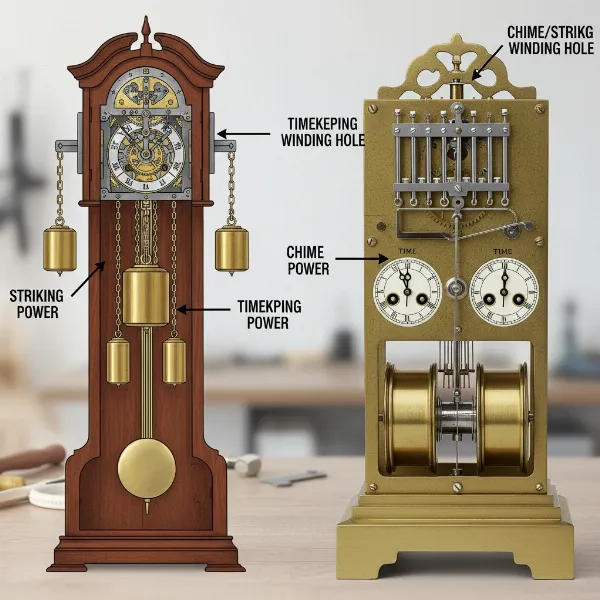 Diagram illustrating winding mechanisms for mechanical clock weights and springs.
Gentle Muffling: Reducing Chime Volume
If you don’t want to completely silence the chimes but prefer a softer, more subdued sound, sound-dampening materials can be very effective. This technique requires access to the clock’s interior, specifically the chime rods or bells and their corresponding hammers.
- Access the Chime Mechanism: Carefully open the front or back door of your clock to expose the movement. You will see a series of metal rods (chime rods) or bells and small hammers designed to strike them.
- Apply Dampening Material: Gently place small pieces of soft, lint-resistant material onto the chime rods or directly onto the tips of the chime hammers.
- Felt Pads or Small Foam Pieces: These are excellent for reducing the impact sound. Cut them to size and carefully position them.
- Microfiber Cloth: A small strip of microfiber cloth draped over the chime rods can effectively muffle the sound. Ensure it doesn’t interfere with the movement of the hammers or other delicate parts.
- Band-Aid Gauze: Some enthusiasts have reported success using sticky gauze pieces from Band-Aids cut into small pads and applied to the hammer tips. These are often easy to apply and remove without residue.
- Test the Sound: Close the clock case and listen to the chimes. Adjust the amount and placement of the dampening material until you achieve the desired volume reduction.
Important Note: Avoid using materials that shed lint, such as toilet paper, as small fibers could potentially get into the delicate gear train and cause damage or impede the clock’s function over time. Always ensure the material does not obstruct the hammer’s full range of motion, only its impact.
Advanced Adjustments: Disengaging Chime Hammers
For clocks without a silence lever and where winding control isn’t feasible or desired, a more direct mechanical adjustment to the chime hammers might be an option. This method requires a delicate touch and a good understanding of the clock’s internal workings.
- Access the Movement: Open the clock case to gain clear access to the chime hammers and rods/bells.
- Carefully Bend Hammers: With extreme caution, gently bend each chime hammer back just enough so that it no longer makes contact with its corresponding chime rod or bell when the mechanism attempts to strike. You might use small needle-nose pliers, but often, careful finger pressure is sufficient for the brass wire hammers. The goal is to create a tiny gap so the hammer no longer strikes.
- Utilize a Transport Bar: Some mechanical clocks, particularly mantel clocks, have a small bar designed to hold the chime hammers away from the rods during transport. If your clock has this, simply engaging the bar will silence the chimes. This is a reversible and safe method if available.
“When working directly with clock movements, precision is paramount. Even a slight misstep can cause lasting damage. If in doubt, always prioritize the health of your clock over a DIY fix.” – John Smith, Master Clockmaker
This method should only be attempted by individuals comfortable with delicate mechanical work. Excessive force or incorrect bending can permanently damage the chime hammers or other components of the movement.
Temporary Silence: Stopping the Pendulum
As a last resort for very short periods of desired silence, you can temporarily stop the pendulum of your mechanical clock.
- Gently Stop the Pendulum: Reach into the clock case and carefully hold the pendulum bob to bring it to a complete stop.
- Understand the Consequence: Stopping the pendulum will halt all clock functions, including timekeeping, ticking, and chiming. The clock will effectively “pause.”
- Restarting: To restart the clock, gently push the pendulum to one side and release it, allowing it to swing freely. You will then need to reset the time.
This method is suitable for brief periods, such as an hour or two during a phone call, but it is not a practical long-term solution as it stops the clock from fulfilling its primary function of telling time.
What to Avoid When Silencing Chimes
To ensure the longevity and proper functioning of your cherished mechanical timepiece, it’s crucial to be aware of what not to do:
- Forcing Parts: Never apply excessive force when adjusting levers, winding springs, or bending hammers. Mechanical clocks are intricate and delicate.
- Using Abrasive or Lint-Shedding Materials: As mentioned, avoid materials like toilet paper that can shed fibers into the movement, leading to blockages or wear.
- Applying Lubricants or Cleaners: Unless you are a trained clockmaker, do not attempt to lubricate or clean internal mechanisms with sprays or oils. This can attract dust and cause more harm than good.
- Ignoring the Timekeeping Power Source: If your goal is to silence chimes only, ensure you continue to wind the timekeeping weight or spring to keep the clock functioning accurately.
When to Call a Professional Clockmaker
While many silencing methods are accessible to clock owners, there are times when professional intervention is the wisest course of action.
- Lack of Confidence: If you feel uncomfortable performing any of the mechanical adjustments, or fear damaging your clock, a professional can handle it safely.
- Complex Movements: Some antique or highly complex movements may require specialized tools or knowledge to access and adjust correctly.
- Persistent Issues: If the chimes won’t silence despite your efforts, or if other clock functions seem affected, a clockmaker can diagnose underlying problems.
- Maintaining Value: For valuable antique clocks, it’s often best to have any adjustments, even silencing, performed by a certified expert to preserve their integrity and resale value.
A professional clockmaker has the expertise, tools, and understanding of various clock movements to safely silence chimes or perform any necessary repairs without causing damage.
Conclusion
Silencing the chimes on your mechanical clock doesn’t have to be a daunting task. From checking for a simple silence lever to carefully managing the winding process, or even gently muffling the sound with soft materials, there are several effective methods available. Remember to always approach your clock with patience and a gentle hand, prioritizing the preservation of its delicate mechanics. By following these guidelines, you can enjoy the quiet elegance of your mechanical timepiece whenever you desire, maintaining its beauty and function for years to come. What method will you try first to reclaim your tranquility?
Frequently Asked Questions
Can silencing my mechanical clock chimes damage the clock?
No, if done correctly using the methods described (e.g., using a dedicated silence lever, not winding the chime mechanism, or gently muffling), silencing the chimes should not damage your mechanical clock. However, improper force or incorrect adjustments can cause harm, so always proceed with caution.
My clock only has one winding hole; can I still silence the chimes?
If your mechanical clock has only one winding hole, it typically means the same mainspring powers both the timekeeping and the chiming functions. In this case, you cannot silence the chimes by only winding one part. You would need to look for a physical silence lever, consider muffling the chimes, or consult a professional for a mechanical adjustment to the hammers.
Will stopping the pendulum damage my mechanical clock?
Stopping the pendulum itself will not damage the clock. However, it will stop the clock from keeping time entirely. This method is only suitable for very temporary silencing when you don’t need the clock to function as a timepiece. Always restart the pendulum gently.
How often should I wind my mechanical clock if I’ve silenced the chimes?
You should continue to wind the timekeeping mechanism as frequently as your clock requires (e.g., weekly or every eight days) to ensure it continues to tell accurate time. If you’ve silenced the chimes by not winding their specific weight or spring, you only need to focus on the timekeeping power source.