Have you ever looked up at your wall clock, expecting to see the correct time, only to find it lagging, stopped, or displaying a faded digital readout? For many, a wall clock is more than just a time-telling device; it’s a piece of decor, a family heirloom, or a functional necessity. Yet, its consistent operation hinges on one often-overlooked component: the battery. Understanding how long clock batteries last and when to replace them is crucial not only for accurate timekeeping but also for safeguarding your cherished timepiece from potential damage. This guide will walk you through everything you need to know about wall clock batteries, from expected lifespan and warning signs to replacement tips and maintenance best practices.
Understanding Wall Clock Battery Lifespan
The lifespan of a wall clock battery can vary significantly, but most standard quartz movements powered by AA or AAA alkaline batteries are designed to run efficiently for approximately 12 to 18 months. However, this is a general guideline, and several factors can influence how often you’ll find yourself needing to swap out old cells for new ones. Proactive battery management is key to preventing unexpected stoppages and, more importantly, avoiding the costly damage that can result from neglected, leaking batteries.
Many clock experts recommend a more frequent replacement schedule, such as twice a year, often coinciding with Daylight Saving Time changes. This semi-annual replacement strategy acts as a preventative measure, ensuring the battery is always performing optimally and significantly reducing the risk of battery leakage, which can severely corrode and damage the delicate internal mechanisms of your wall clock. Even if your clock appears to be keeping perfect time, an aging battery can still pose a threat through internal degradation that leads to leaks.
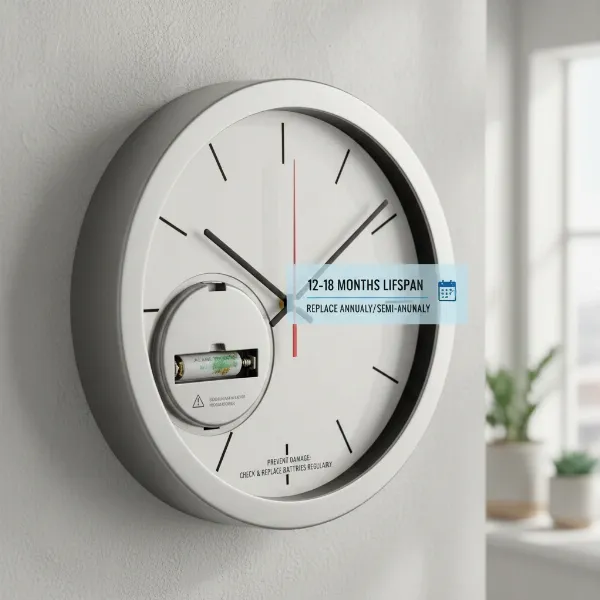 A wall clock with a battery compartment, illustrating typical lifespan and recommended replacement intervals.
Factors Influencing Battery Longevity in Wall Clocks
The humble battery powers the intricate dance of gears and hands within your wall clock, but not all clocks or environments are created equal. Several key factors dictate how long your wall clock battery will truly last:
Clock Movement Complexity and Features
|
Our Picks for the Best Wall clock in 2026
As an Amazon Associate I earn from qualifying purchases.
|
||
| Num | Product | Action |
|---|---|---|
| 1 | AKCISOT Wall Clock 10 Inch Silent Wall Clocks Battery Operated Non Ticking - Modern Silver Clock Decorative for Kitchen, Bathroom, Bedroom, Living Room, Office, Home(Silver) |

|
| 2 | HIIXHC Wall Clock, Modern Digital Wall Clocks Battery Operated 10 Inch, Silent Non-Ticking Kitchen Clock, Small Classic Analog Clock Decorative for Living Room Decor, Bedroom,Office, Classroom |
|
| 3 | AKCISOT Wall Clock, Modern Small Wall Clocks Battery Operated 8 Inch, Silent Non-Ticking Analog Classic for Office, Home, Bathroom, Kitchen, Bedroom, School(Black) |
|
| 4 | WallarGe 14.5'' Large Digital Wall Clock Battery Operated with Jumbo Numbers, Temperature and Date - Easy to Read and Set, Auto DST |
|
| 5 | AKCISOT Wall Clock 10 Inch Silent Non-Ticking Modern Clocks Battery Operated - Analog Small Classic for Office, Home, Bathroom, Kitchen, Bedroom, School, Living Room(Black) |
|
| 6 | AKCISOT Atomic 10 Inch Wall Clock Analog Clocks for Indoor Kitchen, Battery Operated Clock for Bedroom Office Classroom Living Room(Silver) |
|
| 7 | AKCISOT Wall Clock, Modern Small Wall Clocks Battery Operated 8 Inch, Silent Non-Ticking Analog Classic for Office, Home, Bathroom, Kitchen, Bedroom, School(Silver) |
|
| 8 | AKCISOT Wall Clock, Modern Small Wall Clocks Battery Operated 8 Inch, Silent Non-Ticking Analog Classic for Office, Home, Bathroom, Kitchen, Bedroom, School(White) |
|
| 9 | AKCISOT Atomic 10 Inch Wall Clock Analog Clocks for Indoor Kitchen, Battery Operated Clock for Bedroom Office Classroom Living Room(Black) |
|
| 10 | AKCISOT Wall Clock,Boho Kitchen 10 Inch Wall Clocks Battery Operated Non Ticking,Silent Modern Clock Decorative for Bedroom,Office,Bathroom,Living Room,Home (Wood Grain) |
|
The more a wall clock “does,” the more power it consumes. A simple, silent sweep movement that only moves the hands will draw less power than a clock with additional features. For instance, clocks equipped with chimes, pendulums, multiple digital displays, backlighting, or other advanced functionalities demand a higher energy output, leading to a shorter battery life. Each additional feature requires a portion of the battery’s energy, accelerating its depletion.
Battery Type and Quality
The type and brand of battery you choose play a substantial role in its longevity and performance.
- Alkaline Batteries: These are the most common and generally recommended for wall clocks. High-quality alkaline batteries (like Duracell or Energizer) provide a steady voltage and reliable performance for their expected 12-18 month lifespan. Cheaper, no-name alkaline batteries may offer inconsistent power, leading to erratic timekeeping or premature failure.
- Lithium Batteries: While more expensive, lithium batteries offer superior longevity, often lasting multiple years. They also perform better in extreme temperatures. However, it’s crucial not to mix alkaline and lithium batteries in the same device, as this can lead to performance issues, leakage, or even rupturing due to differing chemical reactions.
- Rechargeable Batteries: Many rechargeable batteries (NiMH) have a lower nominal voltage (typically 1.2V) compared to alkaline (1.5V). This lower voltage can sometimes cause quartz clocks to run slow or stop prematurely, as the clock mechanism may not receive sufficient power to function optimally. It’s generally best to stick to high-quality disposables for most wall clocks.
Environmental Conditions
Where you hang your wall clock can have a surprisingly significant impact on battery life and clock mechanism health.
- Temperature Extremes: Both very high and very low temperatures can affect battery performance. Batteries tend to drain faster in cold environments, while excessive heat can also degrade their chemical composition, reducing their overall capacity and lifespan.
- Humidity and Dust: High humidity can accelerate corrosion of battery terminals and internal clock components. Dust and debris can accumulate within the clock mechanism, creating friction that forces the motor to work harder, thereby draining the battery more quickly. A stable, dry, and clean environment is ideal for both the clock and its battery.
Battery Shelf Life
Even new batteries aren’t always “fresh.” Batteries stored for extended periods, especially in unfavorable conditions, can gradually lose their charge. Always check the expiration date on battery packaging and choose reputable brands from stores with high turnover to ensure you’re getting fresh stock.
Recognizing the Signs of a Dying Wall Clock Battery
Your wall clock typically doesn’t just stop without warning. It offers several subtle (and not-so-subtle) cues that its power source is dwindling. Learning to recognize these indicators can help you replace the battery before your clock entirely ceases to function or, worse, suffers damage from a leaking cell.
- Inaccurate Timekeeping: This is often the first and most common sign. If your wall clock starts losing minutes (or even hours) over a day or week, running consistently slow, or occasionally jumping ahead, a weak battery is almost certainly the culprit. The mechanism isn’t receiving enough stable power to maintain precise movement.
- Erratic Hand Movement or Stoppage: For analog clocks, you might notice the second hand hesitating, moving with a jerky motion, or even stopping for short periods before resuming. Eventually, the hands may stop completely. In digital clocks, this manifests as a fading, dim, or flickering display, or the screen going blank altogether.
- Weak or Absent Chimes/Sounds: If your wall clock features chimes, melodies, or other sound functions, these will often be the first to suffer. Chimes might sound distorted, become very faint, or stop altogether, as the sound mechanism requires more power than simply moving the hands.
- Unusual Ticking Sounds: While many quartz clocks are designed to be silent or very quiet, an older or malfunctioning clock might start making irregular or louder-than-usual ticking noises as the mechanism struggles with insufficient power.
- Complete Stop: The most obvious sign is when your wall clock simply ceases to operate. Before assuming a mechanical failure, always try replacing the battery first. It’s the most common reason for a clock to stop entirely.
- Battery Drains Quickly (Frequent Replacement): If you find yourself replacing your clock battery every few months, significantly sooner than the 12-18 month average, it could indicate that the battery is failing prematurely, or, more seriously, that the clock’s internal mechanism is drawing excessive power. If a fresh, quality battery still drains quickly, it’s a sign of a deeper issue requiring investigation.
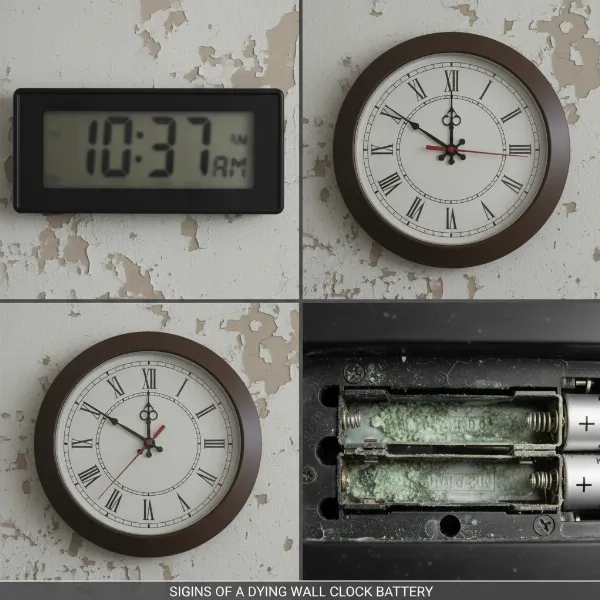 Visual indicators of a wall clock experiencing battery depletion and potential leakage.
Step-by-Step Guide to Changing Wall Clock Batteries
Replacing a wall clock battery is usually a straightforward task, but doing it correctly can prevent damage and ensure reliable operation.
- Gather Your Tools: You’ll typically need a fresh battery of the correct size (AA, AAA, C, D, or sometimes button cells) and possibly a small screwdriver if the battery compartment has a cover.
- Remove the Clock from the Wall: For safety and ease of access, always take the clock down.
- Locate the Battery Compartment: This is usually on the back of the clock movement. Some decorative clocks might require opening a back panel.
- Remove the Old Battery: Carefully remove the depleted battery. If you notice any signs of leakage (a powdery or crystalline substance), wear gloves and gently clean the compartment with a cotton swab dampened with vinegar or lemon juice, then wipe dry. This removes corrosive residue that can interfere with electrical contact.
- Clean Contacts: Even without visible leakage, it’s good practice to gently wipe the metal contacts inside the battery compartment with a clean, dry cloth to ensure good electrical conductivity.
- Insert the New Battery: Pay close attention to the polarity markings (+ and -) inside the compartment and on the battery itself. Incorrect insertion is a common reason for a clock not working post-replacement. If your clock uses multiple batteries, replace all of them with new ones at the same time; mixing old and new, or different brands, can lead to uneven discharge and reduced performance.
- Secure the Compartment: Close any battery covers or panels securely.
- Test the Clock: Observe the clock for a few moments to ensure the hands are moving smoothly or the digital display is active and correct. Set the time using the adjustment knob on the back of the movement (never manually move the hands, as this can damage the delicate gears).
- Re-hang the Clock: Carefully place the clock back on its designated spot.
Best Practices for Maximizing Wall Clock Battery Life and Longevity
Extending the life of your wall clock’s battery and ensuring its long-term accuracy goes beyond just replacing the battery when it dies. Thoughtful care and maintenance can make a significant difference.
- Choose the Right Battery Type and Quality: As discussed, high-quality alkaline batteries are generally best for most quartz wall clocks. Invest in reputable brands, and consider lithium for clocks in hard-to-reach places or those with high power demands. Avoid mixing battery types.
- Set a Regular Replacement Schedule: Don’t wait for your clock to stop. Adopt a proactive approach. Changing batteries annually (e.g., at the start of a new year) or semi-annually (during Daylight Saving Time changes) is an excellent habit.
- Mark Replacement Dates: Use a small sticker or permanent marker to note the battery replacement date inside the clock’s battery compartment or on the clock’s back. This helps you track performance and anticipate future changes.
- Proper Battery Storage: Store spare batteries in a cool, dry place at room temperature. Avoid exposing them to extreme heat or cold, which can degrade their shelf life. Keep them in their original packaging to prevent short-circuits.
- Mind the Environment: Position your wall clock in a location with stable temperatures and moderate humidity. Avoid direct sunlight, which can fade finishes and impact internal components, and steer clear of bathrooms or areas above radiators where humidity and temperature fluctuations are common.
- Handle with Care and Set Time Correctly: When setting the time, always use the designated adjustment knob on the back of the clock movement. Manually moving the hands can put undue stress on the delicate gears and potentially cause misalignment or damage, leading to increased battery drain as the mechanism struggles.
- Regular Cleaning: Periodically dust the exterior of your wall clock. While internal cleaning is best left to professionals, keeping the clock face and hands free of dust can prevent debris from entering the movement and causing friction.
- Remove Batteries for Extended Storage: If you plan to store your wall clock for a long period (e.g., during a move or redecoration), always remove the batteries to prevent any potential leakage and corrosion damage.
“Proper battery selection and proactive replacement are the simplest, yet most crucial, steps homeowners can take to extend the life of their wall clocks and avoid unnecessary repairs from battery corrosion.” – John Smith, Master Clock Technician, wallclockus.com
When to Consider Professional Clock Service
While battery issues are the most common cause of a wall clock malfunction, sometimes the problem runs deeper. If you’ve replaced the battery with a fresh, high-quality one, cleaned the contacts, and ensured correct installation, but your clock still exhibits issues, it might be time to seek professional help.
- Persistent Inaccuracy or Stoppage: If your clock continues to run slow, fast, or stops even with a new battery, it could indicate a worn-out or damaged internal mechanism. Gears might be stripped, misaligned, or experiencing excessive friction.
- Rapid Battery Drain: A clock that consistently “eats” batteries (draining new ones every few months) suggests an internal fault that is drawing too much power. This often points to a failing movement that needs repair or replacement.
- Extensive Battery Corrosion: If you discover significant battery acid leakage that has spread beyond the terminals into the clock’s movement, a professional can assess the damage and determine if the mechanism can be salvaged or needs replacement. DIY cleaning might only address surface corrosion.
- Unusual Noises or Physical Damage: Any grinding sounds, persistent scraping, or visible damage to the clock’s internal components warrants a professional inspection. Clock mechanisms are intricate, and attempted self-repair without the right tools and expertise can often lead to further damage.
A professional clock technician can diagnose mechanical issues, clean and lubricate delicate gears, repair or replace movements, and ensure your wall clock is restored to optimal working condition, saving you frustration and potentially costly future repairs.
Conclusion
The battery is the silent workhorse behind every reliable wall clock. While it’s easy to overlook, understanding battery life, recognizing the signs of depletion, and adopting smart maintenance habits are essential for preserving the accuracy and longevity of your timepiece. From choosing the right battery and setting a regular replacement schedule to mindful placement and proper handling, these proactive steps ensure your wall clock remains a cherished and functional element of your home for years to come. Don’t let a dying battery dictate your schedule or damage your clock. Take charge of your clock’s power source, and enjoy uninterrupted, accurate time.
What are your go-to strategies for remembering to change your clock batteries?
Frequently Asked Questions
How long do AA batteries typically last in a wall clock?
Standard AA alkaline batteries in most wall clocks typically last between 12 to 18 months. However, this can be influenced by the clock’s features, the quality of the battery, and environmental conditions. Some experts recommend changing them every six to twelve months as a preventative measure.
What are the earliest signs that my clock battery is dying?
The earliest signs of a dying clock battery often include inconsistent timekeeping, such as the clock running slightly slow or fast. You might also notice the second hand making jerky movements, or, for clocks with chimes, a weakening or irregular sound.
Can a dying battery damage my wall clock?
Yes, a dying battery can damage your wall clock, particularly if it’s left in the clock for too long. Depleted batteries are prone to leakage, releasing corrosive acid that can severely damage the battery terminals, electrical contacts, and even the clock’s internal mechanism, often leading to irreversible damage.
Should I replace my clock batteries annually, even if the clock is still working?
Yes, it is highly recommended to replace your clock batteries annually, or even semi-annually, regardless of whether the clock is still functioning. This proactive approach significantly reduces the risk of battery leakage and corrosion, which can cause irreparable damage to your clock’s movement.
What type of battery is best for wall clocks?
For most wall clocks, high-quality alkaline batteries (like AA or AAA) are the best choice. They provide a steady 1.5V output and good lifespan. Lithium batteries offer longer life but are more expensive and should not be mixed with alkaline batteries. Avoid cheap or old rechargeable batteries that may have lower voltage.
Why does my clock’s battery drain so quickly?
If your clock’s battery drains unusually quickly (e.g., every few months), it could indicate a few issues. It might be due to a faulty battery, excessive features in the clock, or, more seriously, a problem with the clock’s internal mechanism that is drawing too much power. If new, quality batteries continue to drain fast, seek professional help.
Is it okay to use rechargeable batteries in my wall clock?
It’s generally not recommended to use standard rechargeable (NiMH) batteries in most quartz Wall Clocks. They typically provide 1.2V, which is lower than the 1.5V supplied by alkaline batteries. This voltage difference can cause the clock to run slow or stop prematurely, as the mechanism may not receive adequate power.