Teaching children to tell time is a fundamental skill that fosters independence and improves time management. But let’s be honest, it can feel like a daunting task for both kids and parents. The abstract concept of hours, minutes, and seconds often proves tricky for young minds to grasp. This is where a specially designed kids’ learning wall clock becomes an invaluable tool, transforming a complex lesson into an engaging and visual experience right in your child’s own space. Choosing the right clock can make all the difference, turning frustration into a fun journey of discovery as your child masters this essential life skill.
The Evolution of Time-Telling Tools for Children
The journey of teaching children about time has evolved significantly. Historically, children learned using standard analog clocks, often with limited visual aids. However, educational psychology has brought new insights, recognizing that visual and interactive learning methods are far more effective for young learners. This understanding has led to the development of child-friendly clocks that simplify the process, moving beyond simple numbers to incorporate color-coding, clear minute markings, and engaging designs. These innovations aim to make the abstract concept of time more concrete and accessible, building a strong foundation for future time management skills.
Popular Types of Kids’ Learning Wall Clocks
When exploring learning wall clocks for children, you’ll encounter a variety designed to cater to different learning stages and preferences. Each type offers unique benefits in helping children grasp the concept of time.
- Analog Learning Clocks: These are perhaps the most common and effective for teaching traditional time-telling. They feature two hands (hour and minute) and often include extra markings to guide children. Key features to look for include:
- Color-coding: Often, one side of the clock face is marked “past” and the other “to” the hour, sometimes with different colors for clarity.
- Clearly Labeled Minutes: Inner and outer rings with minute numbers (0-59) or even 5-minute intervals make it easier for children to count and understand elapsed time.
- 12/24-Hour Markings: Some clocks include both 12-hour (AM/PM) and 24-hour (military time) numbers, introducing advanced concepts as the child progresses.
- Movable Hands: While more common on demonstration clocks, some wall clocks feature easily adjustable hands for interactive learning.
These clocks excel at helping children visualize how time moves, making the connection between the hands’ positions and the numbers on the dial.
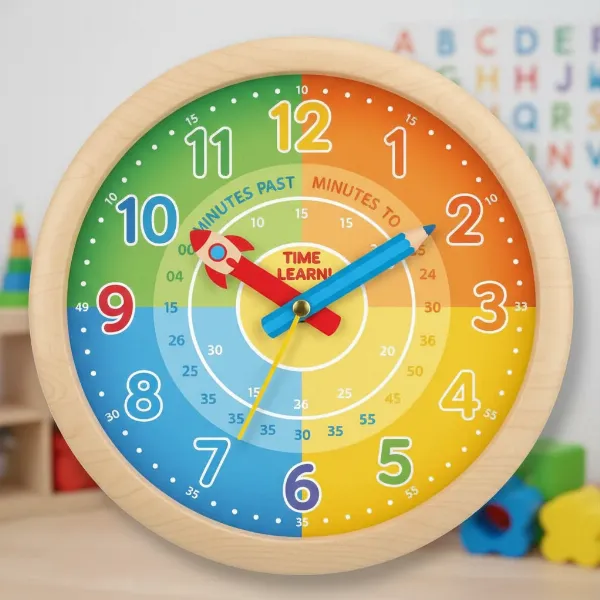 Close-up of a child's analog learning wall clock with color-coded sections and clear minute markings.
-
Digital Learning Clocks: While digital clocks offer instant time readings, they are less effective for teaching the concept of time movement and the relationship between hours and minutes on a dial. They are better suited for reinforcing numerical time recognition once the analog concept is understood. Modern digital clocks may offer features like alarms and timers, but their primary role in “learning to tell time” is often secondary to analog models.
-
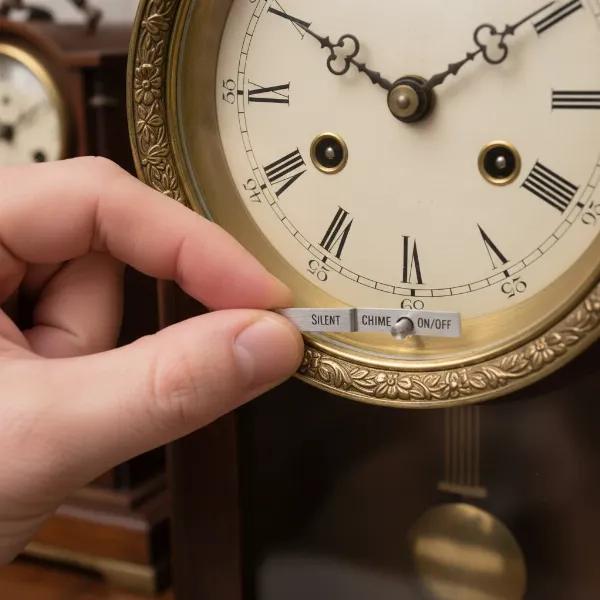
Pendulum Clocks (Educational Context): Traditional pendulum clocks, with their rhythmic swing, offer a visual representation of continuous time flow. While not specifically designed as “learning clocks,” their aesthetic and historical value can be engaging. If adapted with clear, simplified faces, they can be part of a broader discussion about time’s passage. They typically fit well in classic or whimsical room themes.
-
Decorative Learning Clocks: Many learning clocks are designed with vibrant colors, playful themes, and engaging characters to capture a child’s attention. These clocks seamlessly blend into a child’s room decor while serving their educational purpose. From animal themes to space adventures, these clocks make learning a natural part of their environment. Materials often include child-safe wood, plastic, or durable metal.
How to Choose the Right Learning Wall Clock for Your Child
Selecting the ideal learning wall clock involves considering several factors to ensure it aligns with your child’s age, learning style, and your household’s needs.
-
Identify Learning Needs:
- Age: Younger children (ages 3-5) might benefit from simpler clocks with only hour markings and bold numbers, while older children (5-7) are ready for minute markings and color-coded sections for “past” and “to” the hour.
- Current Understanding: Assess what your child already knows. Are they familiar with numbers? Can they count to 60?
- Specific Functions: Do you need a silent clock to avoid distractions? (Many parents prefer non-ticking clocks for bedrooms and study areas.) A night light feature might be beneficial for a bedside clock.
-
Material Selection: Choose durable and child-safe materials.
- Wood: Often offers a classic look and sturdy construction.
- Plastic: Lightweight, often more colorful, and easy to clean.
- Metal: Can offer a more modern or industrial aesthetic but might be heavier.
- Glass/Acrylic: Ensure the face cover is shatter-resistant for safety.
-
Style and Design: The visual appeal plays a huge role in keeping a child engaged.
- Engaging Themes: Animal, space, nature, or cartoon themes can make the clock a fun addition to the room.
- Clear Numbering: Large, easy-to-read numbers are paramount.
- Color-Coding: As mentioned, distinct colors for “minutes past” and “minutes to” the hour, or for hour and minute hands, significantly aid understanding.
-
Color Scheme: A vibrant and appealing color scheme can enhance engagement. Bright, contrasting colors for numbers, hands, and sections of the clock face can help differentiate information and make the clock more attractive to children.
-
Brand Reputation: Research brands known for producing quality educational toys and children’s products. Look for those with good reviews regarding durability, accuracy, and educational effectiveness. Brands like Easy Read Time Teacher, ZazzyKid, and Bernhard are often mentioned for their effective learning clocks. A good warranty or return policy is also a plus.
Comparison Table: Top-Rated Kids’ Learning Wall Clocks
| Brand | Model Name | Key Features | Pros | Cons | Estimated Price |
|---|---|---|---|---|---|
| Easy Read Time Teacher | ERTT Wall Clock | Color-coded “past/to,” clearly labeled minutes, silent. | Highly effective teaching method, clear design, non-ticking. | May look overly “educational” for some decor. | $30 – $45 |
| ZazzyKid | Time Learning Analog Clock | Large, colorful numbers, separate minute markings, durable. | Excellent for visual learners, good value (often multi-packs), robust. | Aesthetics might be too simple for some. | $25 – $40 |
| OWLCONIC | Non-Ticking Analog Clock | Silent sweep movement, distinct hour/minute hand colors, inner minute track. | Promotes focus with no ticking, clear visual differentiation, modern look. | Smaller size might be harder to read from a distance. | $20 – $35 |
| Bernhard | Colorful Kids Wall Clock | Bright, engaging colors, large numerals, basic minute markers. | Visually appealing, good for early learners, decorative. | Less detailed minute guidance than dedicated teaching clocks. | $25 – $40 |
Using and Maintaining Your Child’s Learning Wall Clock
Once you’ve chosen the perfect learning clock, proper installation and maintenance will ensure it serves its purpose effectively for years to come.
- Correct Installation: Hang the clock at a height where your child can easily see and interact with it, ideally at eye level from their typical sitting or standing position in their play or study area. Ensure it’s securely fastened to the wall.
- Battery Replacement: For most quartz and digital clocks, regular battery replacement (typically AA batteries every 6-12 months) is crucial for accurate timekeeping. Follow the manufacturer’s instructions, and always supervise young children around batteries.
- Winding for Mechanical Clocks: If you opt for a mechanical or pendulum clock (less common for dedicated learning clocks), follow the specific winding instructions to keep it running.
- Cleaning and Maintenance: Dust the clock regularly with a soft, dry cloth. For smudges or fingerprints on the face, use a slightly damp cloth with mild soap, then wipe dry immediately. Avoid harsh chemicals that could damage the clock face or casing. Protecting the clock from direct sunlight and extreme temperatures will also help prolong its life.
- Common Issues and Troubleshooting: If your clock stops working, first check the battery. If it’s still not functioning, ensure the hands aren’t stuck or touching each other. For persistent issues, consult the manufacturer’s troubleshooting guide or customer support.
Creative Ideas for Decorating with Kids’ Learning Wall Clocks
A learning wall clock can be more than just a time-telling device; it can be a central element in your child’s room decor, enhancing both aesthetics and functionality.
-
Optimal Placement:
- Eye-Level: As mentioned, ensure it’s at your child’s eye level for easy viewing and interaction.
- Study Nook: Place it prominently in a study or play area to encourage time awareness during activities.
- Feng Shui: While not strictly educational, some believe hanging clocks in specific directions (e.g., East for new beginnings) can be auspicious. The most important factor, however, is practical visibility for your child.
-
Integrating with Other Decor:
- Gallery Wall: Incorporate the clock into a gallery wall featuring educational posters, artwork, or family photos.
- Themed Room: Choose a clock that complements the existing theme of your child’s room, whether it’s a jungle, space, or fairy tale theme.
- Learning Station: Create a dedicated learning station with the clock, a calendar, a whiteboard, and other educational tools.
-
Creating a Focal Point: A large, colorful learning clock can serve as an instant focal point, drawing attention and sparking curiosity about time. Use it to break up a plain wall or add a splash of color to a neutral room.
-
Matching Interior Styles:
- Modern Minimalist: Opt for clocks with clean lines, simple colors, and clear numbers.
- Bohemian: Choose clocks made from natural materials like wood, with intricate designs or handcrafted elements.
- Playful & Whimsical: Embrace clocks with fun shapes, cartoon characters, and bright, contrasting colors.
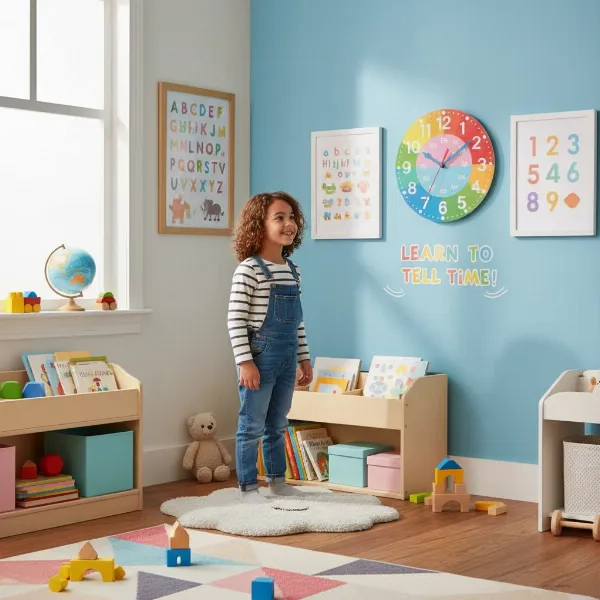 A young child interactively learning time with a vibrant wall clock integrated into their colorful room decor.
Buying Guide: Essential Considerations for Kids’ Learning Clocks
Before making a purchase, a few final considerations will help you make an informed decision and ensure you get the best value and quality.
- Projected Budget: Learning clocks are available across a range of price points. Determine how much you’re willing to spend, keeping in mind that quality and specific educational features often correlate with price. However, many excellent options exist for every budget.
- Reputable Purchasing Locations: Buy from established retailers, educational supply stores, or trusted online platforms. These sources are more likely to offer authentic products, reliable customer service, and secure transactions.
- Warranty and Return Policies: Always check the warranty offered by the manufacturer and the return policy of the seller. This provides peace of mind in case of defects or if the clock doesn’t meet your expectations.
- Technical Specifications: Read the product description carefully. Look for details on size, material, movement type (e.g., silent quartz), battery requirements, and any special educational features.
- Price and Feature Comparison: Don’t hesitate to compare several models from different brands. Look for a balance between features, quality, and price. Sometimes, a slightly higher investment in a clock with superior educational design can pay off in your child’s learning journey.
Conclusion
Empowering your child to tell time independently is a rewarding milestone, and a thoughtfully chosen learning wall clock can be a powerful ally in this journey. By considering the various types, essential features, and how to integrate it into their learning environment, you can select a clock that not only teaches but also inspires. From understanding the minute hand’s sweep to grasping the difference between “past” and “to” the hour, these clocks transform abstract concepts into tangible lessons. Ultimately, the best kids’ wall clocks for learning to tell time are those that make the process engaging, clear, and fun, fostering a valuable life skill that will serve them for years to come.
What exciting time-telling adventures will your child embark on with their new learning clock?
Frequently Asked Questions
What features make a wall clock good for teaching kids time?
|
Our Picks for the Best Wall clock in 2026
As an Amazon Associate I earn from qualifying purchases.
|
||
| Num | Product | Action |
|---|---|---|
| 1 | AKCISOT Wall Clock, Modern Small Wall Clocks Battery Operated 8 Inch, Silent Non-Ticking Analog Classic for Office, Home, Bathroom, Kitchen, Bedroom, School(White) |

|
| 2 | AKCISOT Wall Clock 10 Inch Silent Non-Ticking Modern Clocks Battery Operated - Analog Small Classic for Office, Home, Bathroom, Kitchen, Bedroom, School, Living Room(Black) |
|
| 3 | AKCISOT Wall Clock 10 Inch Silent Wall Clocks Battery Operated Non Ticking - Modern Silver Clock Decorative for Kitchen, Bathroom, Bedroom, Living Room, Office, Home(Silver) |
|
| 4 | WallarGe 14.5'' Large Digital Wall Clock Battery Operated with Jumbo Numbers, Temperature and Date - Easy to Read and Set, Auto DST |
|
| 5 | AKCISOT Wall Clock, Modern Small Wall Clocks Battery Operated 8 Inch, Silent Non-Ticking Analog Classic for Office, Home, Bathroom, Kitchen, Bedroom, School(Silver) |
|
| 6 | AKCISOT Wall Clock,Boho Kitchen 10 Inch Wall Clocks Battery Operated Non Ticking,Silent Modern Clock Decorative for Bedroom,Office,Bathroom,Living Room,Home (Wood Grain) |
|
| 7 | AKCISOT Wall Clock, Modern Small Wall Clocks Battery Operated 8 Inch, Silent Non-Ticking Analog Classic for Office, Home, Bathroom, Kitchen, Bedroom, School(Black) |
|
| 8 | AKCISOT Atomic 10 Inch Wall Clock Analog Clocks for Indoor Kitchen, Battery Operated Clock for Bedroom Office Classroom Living Room(Black) |
|
| 9 | HIIXHC Wall Clock, Modern Digital Wall Clocks Battery Operated 10 Inch, Silent Non-Ticking Kitchen Clock, Small Classic Analog Clock Decorative for Living Room Decor, Bedroom,Office, Classroom |
|
| 10 | AKCISOT Atomic 10 Inch Wall Clock Analog Clocks for Indoor Kitchen, Battery Operated Clock for Bedroom Office Classroom Living Room(Silver) |
|
A good teaching clock features clearly marked hours and minutes, often with distinct numbers for both, and color-coded sections for “minutes past” and “minutes to” the hour. Silent, non-ticking movements are also beneficial for focus. Large, easy-to-read numerals and hands with clear differentiation (e.g., hour hand shorter and thicker than the minute hand) are crucial for young learners.
At what age should a child start learning to tell time with a wall clock?
Children typically begin to grasp the concept of telling time between the ages of 5 and 7. However, readiness varies, so observe your child’s interest in numbers and counting. Starting with a simple learning clock around kindergarten or first grade can provide a fun and visual introduction to the concept.
Are silent wall clocks better for a child’s room?
Yes, silent Wall Clocks, also known as non-ticking clocks, are generally preferred for a child’s room. The absence of a constant ticking sound helps create a quieter and more focused environment, which can be beneficial for sleep, concentration during playtime, and study activities.
How can I make learning to tell time fun for my child?
Incorporate the learning clock into daily routines and games. Ask your child “What time is it?” at different points of the day, or “What time will it be in 10 minutes?” Use visual aids like drawing clocks. Make it a positive, low-pressure experience, celebrating small achievements as they gradually master the skill.
What’s the difference between 12-hour and 24-hour markings on a kids’ clock?
12-hour markings typically display numbers 1-12, often with a distinction for AM and PM. 24-hour markings, sometimes called military time, continue counting past 12 (e.g., 1 PM is 13, 2 PM is 14, up to 24). Learning clocks often include both to introduce children to different ways of expressing time as they progress.