Stepping outside should be an experience, not a guessing game of time and weather. Imagine effortlessly glancing at a stylish timepiece that not only tells you the hour but also precisely informs you about the temperature and humidity, allowing you to dress perfectly or decide if it’s the ideal time for a barbecue. This comprehensive guide will navigate you through the world of outdoor wall clocks equipped with temperature and humidity displays, helping you select the perfect blend of functionality, durability, and style for your cherished outdoor spaces.
The Historical Evolution of Outdoor Wall Clocks
The journey of outdoor timepieces is one rooted in both necessity and aesthetic desire. Early forms of outdoor timekeeping often relied on sundials, marking the passage of hours with the sun’s movement. As mechanical clockwork advanced, the concept of placing clocks outdoors for public viewing emerged, primarily on church towers and town halls. These formidable structures were built for endurance, braving the elements to serve communities.
Over centuries, clock technology refined, leading to more compact and precise mechanisms. The integration of thermometers and hygrometers into these outdoor clocks is a relatively modern innovation, reflecting a growing desire for accessible environmental data. Initially, these instruments were separate, but the convenience of combining them with a clock face revolutionized how we interact with our immediate outdoor environment. Modern advancements have focused on creating robust, weather-resistant designs that can withstand diverse climates, from scorching summers to freezing winters, ensuring consistent performance and accurate readings year-round.
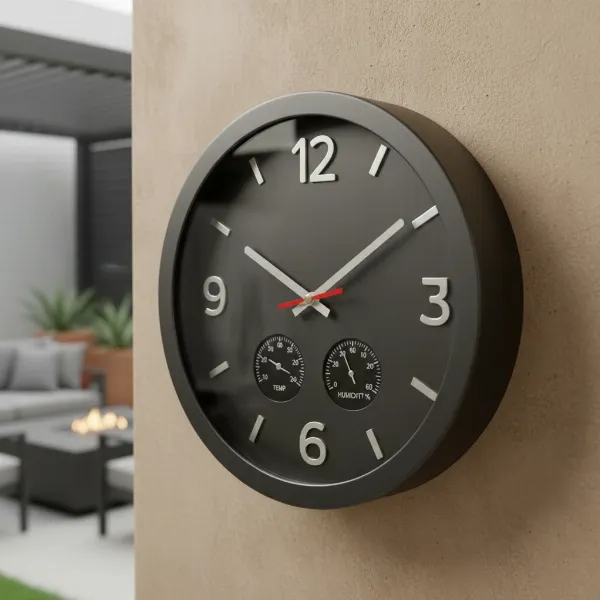 A stylish outdoor wall clock displaying time, temperature, and humidity on a modern patio.
Popular Types of Outdoor Wall Clocks Today
When choosing an outdoor wall clock with temperature and humidity, understanding the different types of movements and features is key to finding one that suits your practical needs and aesthetic preferences.
- Quartz Clocks: These are by far the most common type of outdoor clock. Driven by a battery-powered crystal oscillator, quartz movements offer excellent accuracy and reliability without the need for frequent winding. They are generally more affordable and require minimal maintenance, typically just a battery change every year or so. Their sealed designs make them ideal for outdoor environments, providing consistent timekeeping and weather readings.
- Digital Clocks: Offering a modern aesthetic, digital outdoor clocks often come with an array of features beyond just time, temperature, and humidity. Many include backlights for night visibility, atomic synchronization for ultimate accuracy, and even wireless sensors to monitor conditions from multiple outdoor locations. While they offer precise digital readouts, their reliance on batteries can be higher, and direct sunlight might sometimes affect screen visibility.
- Atomic Clocks: For those who prioritize absolute precision, atomic outdoor clocks are an excellent choice. These clocks automatically synchronize with a national atomic clock radio signal, ensuring that the time is always accurate to the second, including automatic adjustments for daylight saving. While the core timekeeping is atomic, the integrated thermometer and hygrometer typically function independently, providing real-time local conditions.
- Decorative Clocks: Beyond their utilitarian functions, many outdoor clocks are designed to be significant decorative elements. These can range from rustic farmhouse styles with wrought iron finishes and oversized numerals to sleek, minimalist designs made from stainless steel or weatherproof resin. The emphasis here is on how the clock enhances the overall ambiance of your patio, garden, or pool area, often incorporating unique artistic details and materials chosen for both visual appeal and outdoor durability. While true pendulum clocks are rarely found in outdoor settings due to environmental exposure, some decorative wall clocks might feature design elements reminiscent of classic styles.
How to Choose the Perfect Outdoor Clock with Temperature and Humidity
Selecting the ideal outdoor clock requires careful consideration of several factors, ensuring it performs reliably and complements your outdoor decor.
- Determining Your Needs: Start by thinking about where the clock will be placed. Is it for a large garden where visibility from a distance is crucial, or a cozy patio where aesthetic integration is paramount? Consider the primary function you seek: precise timekeeping, accurate weather monitoring, or primarily decorative appeal. The required size and specific features, such as illumination for nighttime viewing or atomic synchronization for perfect time, will flow from these considerations.
- Material Selection: Durability against the elements is non-negotiable for outdoor clocks. Look for materials that can withstand UV exposure, rain, humidity, and temperature fluctuations. Common choices include robust metals like aluminum or stainless steel, UV-resistant plastics, and durable resins. A good outdoor clock will feature sealed casings and protective glass lenses to prevent moisture and dust ingress, ensuring the internal mechanisms and sensors remain protected. Corrosion-resistant finishes are also essential for longevity, especially in humid or coastal environments.
- Design and Style: Your outdoor clock should seamlessly blend with or enhance your existing outdoor decor. Whether your space is modern, traditional, rustic, or eclectic, there’s a clock design to match. Consider the color palette, numeral style (Roman, Arabic, or abstract), and overall shape. A well-chosen clock acts as a focal point, adding character and sophistication to your outdoor living area.
- Readability: An outdoor clock is only useful if you can read it easily. Opt for a size appropriate for the viewing distance. Large, clear numerals and contrasting hands are crucial for quick glances, especially in varying light conditions. For areas where you’ll be present after dusk, consider clocks with backlighting or luminous hands and markers to ensure readability in the dark.
- Accuracy and Reliability: The primary purpose of these clocks is to provide accurate information. Ensure the clock movement (typically quartz) is reliable. For temperature and humidity, look for models with quality sensors. While analog gauges are common, some digital models may offer more precise readings. Reviews often highlight the accuracy of these integrated instruments.
- Power Source & Battery Life: Most outdoor clocks are battery-operated for convenience and safety. Assess the battery type required (AA, D, etc.) and the estimated battery life. Longer battery life reduces the frequency of maintenance, which is a significant advantage for wall-mounted clocks.
Top-Rated Outdoor Clocks with Temperature and Humidity
The market offers a wide array of outdoor clocks designed to meet diverse needs, each combining robust construction with accurate environmental readings. Highly-rated models often feature durable metal or resin casings that are specifically treated for UV and weather resistance, ensuring they withstand the rigors of outdoor life without fading or deteriorating. Large, easy-to-read dials with prominent Arabic or Roman numerals are a common characteristic, making time and weather information legible from across a patio or garden.
Many popular choices integrate reliable quartz movements for precise timekeeping, complemented by accurate analog thermometers and hygrometers that display temperature in both Fahrenheit and Celsius, alongside relative humidity percentages. Some premium outdoor clocks also offer atomic synchronization for effortless time setting, while others boast illuminated dials that automatically light up at dusk, providing visibility throughout the night. Whether you’re looking for a classic, vintage-inspired piece or a sleek, modern design, the best outdoor clocks prioritize a harmonious blend of aesthetic appeal, steadfast durability, and precise environmental monitoring to enhance any exterior space.
Installation and Maintenance for Longevity
To ensure your outdoor clock provides years of reliable service, proper installation and routine maintenance are essential.
- Proper Installation: Choose a location that is easily visible but also offers some protection from the most extreme elements. While outdoor clocks are designed to be weather-resistant, placing them under an overhang, porch, or covered patio can extend their lifespan by shielding them from direct torrential rain, strong winds, and intense, prolonged direct sunlight. Use sturdy mounting hardware appropriate for your wall material to secure the clock firmly. Ensure it’s level for accurate timekeeping and aesthetic appeal.
- Battery Replacement: Most outdoor quartz clocks are battery-operated. Typically, a single AA battery powers the clock mechanism. Battery life can vary, but generally, you can expect to replace it every 6 to 12 months. Digital clocks, especially those with backlights or atomic features, might require more frequent battery changes or multiple batteries. Always use high-quality, weather-appropriate batteries to prevent leakage and ensure consistent performance.
- Cleaning and Care: Periodically wipe down the clock face and casing with a soft, damp cloth to remove dust, pollen, and grime. Avoid harsh chemical cleaners, as they can damage finishes or acrylic/glass covers. For the thermometer and hygrometer sensors, gently clean around them to ensure no debris obstructs accurate readings. If your clock has a glass lens, a standard glass cleaner can be used carefully.
- Troubleshooting Common Issues: If your clock stops, the first step is always to replace the battery. For inaccurate temperature or humidity readings, ensure the sensors are clean and not exposed to abnormal conditions (e.g., direct heat from a grill or excessive condensation). If an atomic clock isn’t setting correctly, try repositioning it to get a clearer signal or manually set the time if that option is available. Most issues are minor and easily resolved with basic care.
Decorating Your Outdoor Space with a Functional Clock
An outdoor clock with temperature and humidity is more than just a utility; it’s a statement piece that can significantly enhance the aesthetics and functionality of your exterior living areas.
- Placement for Aesthetics and Function: Strategic placement is key. Position the clock where it’s easily visible from your main seating areas, pool deck, or garden path, making it convenient to check the time and weather at a glance. Consider it as a focal point on a blank wall, adding interest and depth to your outdoor design. For instance, a large clock can anchor an outdoor dining area, while a smaller, more intricate design might complement a cozy reading nook.
- Complementing Outdoor Decor: The vast range of styles available means you can find a clock that perfectly harmonizes with your existing outdoor furniture and landscaping. A clock with a distressed metal finish and Roman numerals might be perfect for a rustic garden, while a sleek, modern design with bold, simple markers could elevate a contemporary patio. Match the materials and color palette to create a cohesive look.
- Enhancing Different Zones: Use clocks to define and enhance specific outdoor zones. A durable, weather-resistant clock near your pool can help swimmers keep track of time, while one near your outdoor kitchen or BBQ station ensures you’re on schedule for meal prep. In a garden, a tastefully designed clock can blend with natural elements, providing both beauty and practicality amidst the foliage.
- Creating a Visual Statement: Don’t shy away from using an oversized clock to create a dramatic visual impact, particularly in larger outdoor spaces. Alternatively, a cluster of smaller, complementary outdoor instruments (clock, thermometer, hygrometer) can form an interesting gallery wall. The interplay of time and weather data, elegantly displayed, adds a layer of sophistication and thoughtful design to your outdoor environment.
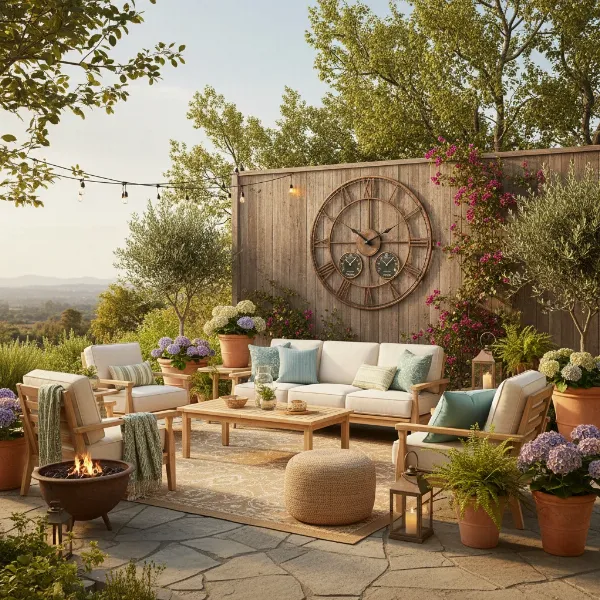 An elegant outdoor wall clock serves as a focal point in a beautifully decorated patio setting.
Buying Guide: Key Considerations Before Your Purchase
Before making your final selection, consider these crucial aspects to ensure you invest in the best outdoor clock for your needs.
- Budget Projected: Outdoor clocks with temperature and humidity come in a wide price range, from budget-friendly options to high-end, feature-rich models. Determine how much you’re willing to spend, keeping in mind that higher price points often correlate with more durable materials, advanced features (like atomic time or backlighting), and superior craftsmanship.
- Reputable Retailers: Purchase your outdoor clock from well-known retailers or specialized clock stores. This ensures you’re getting a genuine product and often comes with the benefit of better customer service and return policies. Online reviews of specific retailers can also provide insights into their reliability.
- Warranty and Returns: Always check the manufacturer’s warranty. A good warranty indicates the company stands behind its product’s quality and durability. Understand the return policy of the retailer as well, in case the clock doesn’t meet your expectations or arrives damaged.
- Reading Specifications: Pay close attention to the product specifications. These details will outline key features such as materials used, temperature and humidity ranges, power requirements, dimensions, and whether it’s truly waterproof or just weather-resistant. Understanding these specifics helps you compare different models accurately.
- Comparative Shopping: Don’t settle for the first clock you find. Compare several models across different brands and price points. Look at customer reviews for insights into real-world performance, accuracy, and longevity. This allows you to find the best balance of features, quality, and value for your investment.
Conclusion
Choosing the best outdoor clock with temperature and humidity is a decision that combines practical utility with personal style. These versatile timepieces do more than just mark the hours; they provide valuable environmental data, helping you connect with and better enjoy your outdoor spaces. By considering the various types, material durability, aesthetic designs, and essential features, you can confidently select an outdoor wall clock that offers both precise timekeeping and accurate weather insights. Transform your garden, patio, or pool area into a fully equipped and elegant haven. What kind of ambiance will your new outdoor clock help you create?
Frequently Asked Questions
What makes an outdoor clock weather-resistant?
|
Our Picks for the Best Wall clock in 2026
As an Amazon Associate I earn from qualifying purchases.
|
||
| Num | Product | Action |
|---|---|---|
| 1 | AKCISOT Wall Clock,Boho Kitchen 10 Inch Wall Clocks Battery Operated Non Ticking,Silent Modern Clock Decorative for Bedroom,Office,Bathroom,Living Room,Home (Wood Grain) |

|
| 2 | WallarGe 14.5'' Large Digital Wall Clock Battery Operated with Jumbo Numbers, Temperature and Date - Easy to Read and Set, Auto DST |
|
| 3 | HIIXHC Wall Clock, Modern Digital Wall Clocks Battery Operated 10 Inch, Silent Non-Ticking Kitchen Clock, Small Classic Analog Clock Decorative for Living Room Decor, Bedroom,Office, Classroom |
|
| 4 | AKCISOT Wall Clock 10 Inch Silent Non-Ticking Modern Clocks Battery Operated - Analog Small Classic for Office, Home, Bathroom, Kitchen, Bedroom, School, Living Room(Black) |
|
| 5 | AKCISOT Wall Clock, Modern Small Wall Clocks Battery Operated 8 Inch, Silent Non-Ticking Analog Classic for Office, Home, Bathroom, Kitchen, Bedroom, School(White) |
|
| 6 | AKCISOT Wall Clock, Modern Small Wall Clocks Battery Operated 8 Inch, Silent Non-Ticking Analog Classic for Office, Home, Bathroom, Kitchen, Bedroom, School(Silver) |
|
| 7 | AKCISOT Atomic 10 Inch Wall Clock Analog Clocks for Indoor Kitchen, Battery Operated Clock for Bedroom Office Classroom Living Room(Silver) |
|
| 8 | AKCISOT Wall Clock 10 Inch Silent Wall Clocks Battery Operated Non Ticking - Modern Silver Clock Decorative for Kitchen, Bathroom, Bedroom, Living Room, Office, Home(Silver) |
|
| 9 | AKCISOT Wall Clock, Modern Small Wall Clocks Battery Operated 8 Inch, Silent Non-Ticking Analog Classic for Office, Home, Bathroom, Kitchen, Bedroom, School(Black) |
|
| 10 | AKCISOT Atomic 10 Inch Wall Clock Analog Clocks for Indoor Kitchen, Battery Operated Clock for Bedroom Office Classroom Living Room(Black) |
|
Outdoor clocks achieve weather resistance through durable materials like UV-treated plastics, corrosion-resistant metals, and sealed casings that protect internal components from moisture, dust, and extreme temperatures. These features ensure longevity and accurate performance in varying outdoor conditions.
How accurate are humidity readings on outdoor clocks?
The accuracy of humidity readings on outdoor clocks can vary. While most provide a good general indication of relative humidity, high-precision digital hygrometers are typically more accurate than analog dials. Factors like direct sunlight or placement in extremely sheltered, stagnant air can affect readings.
Can outdoor clocks be left out all year round?
Many outdoor clocks are designed for year-round outdoor use, especially those labeled as “all-weather” or “waterproof.” However, placing them in a somewhat sheltered location, like under a porch or eaves, can significantly extend their lifespan by reducing direct exposure to the harshest elements.
What’s the ideal size for an outdoor clock?
The ideal size depends on the viewing distance and the size of your outdoor space. For large gardens or expansive patios, a clock 18-24 inches in diameter ensures readability. For smaller balconies or cozy nooks, a 10-14 inch clock might be more appropriate and aesthetically balanced.
Do outdoor clocks require special batteries?
Most outdoor clocks operate on standard AA or D batteries. Some models with additional features like backlighting or atomic synchronization might require multiple batteries or specific types. Always check the product specifications for battery requirements and consider using high-quality alkaline or lithium batteries for better performance and longer life.