A wall clock is far more than a simple instrument for telling time; it is a powerful design element that can elevate the aesthetic of any room. It reflects your personal taste and the character of your home, acting as a focal point or a subtle accent. However, even the most beautiful clock can fall flat if it’s not the right size for its designated wall. Many homeowners underestimate or overestimate the visual impact of a clock, leading to a space that feels either unfinished or overwhelmed. This comprehensive guide will help you master the art and science of selecting the ideal wall clock size, ensuring it always fits perfectly, both functionally and decoratively.
Why Wall Clock Size Matters: The Impact of Proportion
The size of your wall clock profoundly influences the overall harmony and balance of a room. An undersized clock on a large, empty wall will appear lost and insignificant, failing to command attention or contribute meaningfully to the decor. Conversely, a massive clock crammed into a small space can dominate the room, making it feel cluttered and unbalanced.
The right proportion ensures that your clock enhances the space without overpowering it. Size directly influences its visual impact, determining how much attention it attracts as a focal point. It dictates the clock’s relationship with nearby furniture and other decor, creating a cohesive look. Furthermore, size affects functionality, as a properly scaled clock is easily readable from different vantage points within the room. Achieving this balance is key to transforming a mere timepiece into a statement piece that truly complements your home’s interior design.
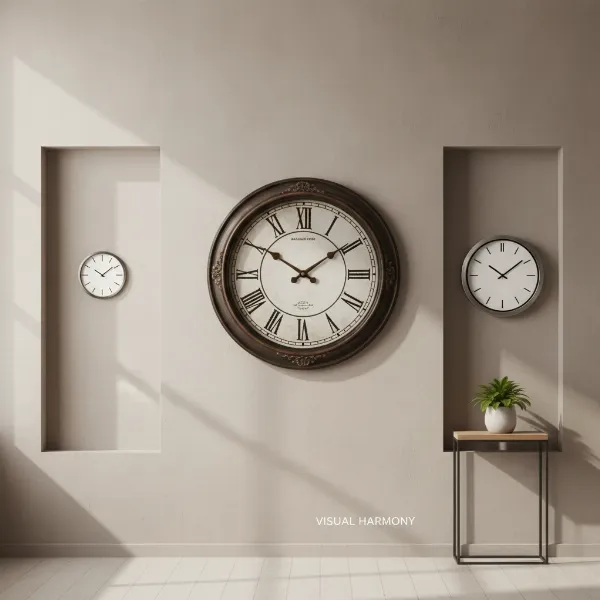 Illustration of wall clocks with different proportions on a wall, showing too small, too large, and ideal sizes.
The Golden Rule of Wall Clock Sizing: Two-Thirds to Three-Quarters
To ensure your wall clock looks intentional and well-balanced, a simple yet effective rule of thumb guides your selection: your wall clock should occupy approximately two-thirds to three-quarters (60-75%) of the empty wall space it hangs on. This method helps prevent the common mistake of choosing a clock that looks either too tiny or aggressively oversized once installed.
Here’s how to apply it practically:
- Measure the Wall Space: First, identify the specific empty wall area where you intend to hang the clock. Measure its width and height. If the clock is going above a piece of furniture (like a sofa or console table), measure the width of the wall space above that furniture.
- Calculate Ideal Diameter: Multiply the width of your available wall space by 0.60 and 0.75 to get a range for your clock’s ideal diameter. For instance, if your empty wall space is 40 inches wide, an ideal clock diameter would be between 24 inches (40 * 0.60) and 30 inches (40 * 0.75). This range provides a starting point, allowing flexibility for style and personal preference.
Remember, this rule applies to the empty space the clock will inhabit, not necessarily the entire wall, especially if other elements like windows or doorways break up the wall.
Room-by-Room Wall Clock Size Guide
Every room in your home serves a different purpose, has varying wall spaces, and different viewing distances. Choosing the right clock size requires balancing these factors to ensure both aesthetics and functionality.
Living Room: The Statement Piece
The living room is often the heart of your home, a place for gathering, relaxation, and conversation. Here, a wall clock frequently serves as a significant centerpiece, drawing the eye and making a statement.
- Ideal Sizes: For most living rooms, especially those with large, open walls or high ceilings, a clock with a diameter of 24-32 inches (60-80 cm) creates a stunning focal point. For standard living rooms, 14-24 inches works well. If your living room has lower ceilings or more intimate proportions, a 25cm clock can offer elegant timekeeping without overwhelming the space.
- Pro Tip: Position your clock above a sofa, fireplace, or main seating area. Consider the surrounding furniture and artwork to ensure the clock complements, rather than competes with, other decor.
|
Our Picks for the Best Wall clock in 2026
As an Amazon Associate I earn from qualifying purchases.
|
||
| Num | Product | Action |
|---|---|---|
| 1 | AKCISOT Wall Clock, Modern Small Wall Clocks Battery Operated 8 Inch, Silent Non-Ticking Analog Classic for Office, Home, Bathroom, Kitchen, Bedroom, School(Silver) |

|
| 2 | AKCISOT Atomic 10 Inch Wall Clock Analog Clocks for Indoor Kitchen, Battery Operated Clock for Bedroom Office Classroom Living Room(Silver) |
|
| 3 | WallarGe 14.5'' Large Digital Wall Clock Battery Operated with Jumbo Numbers, Temperature and Date - Easy to Read and Set, Auto DST |
|
| 4 | AKCISOT Wall Clock 10 Inch Silent Non-Ticking Modern Clocks Battery Operated - Analog Small Classic for Office, Home, Bathroom, Kitchen, Bedroom, School, Living Room(Black) |
|
| 5 | AKCISOT Wall Clock,Boho Kitchen 10 Inch Wall Clocks Battery Operated Non Ticking,Silent Modern Clock Decorative for Bedroom,Office,Bathroom,Living Room,Home (Wood Grain) |
|
| 6 | HIIXHC Wall Clock, Modern Digital Wall Clocks Battery Operated 10 Inch, Silent Non-Ticking Kitchen Clock, Small Classic Analog Clock Decorative for Living Room Decor, Bedroom,Office, Classroom |
|
| 7 | AKCISOT Wall Clock, Modern Small Wall Clocks Battery Operated 8 Inch, Silent Non-Ticking Analog Classic for Office, Home, Bathroom, Kitchen, Bedroom, School(Black) |
|
| 8 | AKCISOT Wall Clock 10 Inch Silent Wall Clocks Battery Operated Non Ticking - Modern Silver Clock Decorative for Kitchen, Bathroom, Bedroom, Living Room, Office, Home(Silver) |
|
| 9 | AKCISOT Wall Clock, Modern Small Wall Clocks Battery Operated 8 Inch, Silent Non-Ticking Analog Classic for Office, Home, Bathroom, Kitchen, Bedroom, School(White) |
|
| 10 | AKCISOT Atomic 10 Inch Wall Clock Analog Clocks for Indoor Kitchen, Battery Operated Clock for Bedroom Office Classroom Living Room(Black) |
|
Kitchen: Functionality Meets Style
Kitchens are busy, functional areas where readability is paramount. The clock should be easy to see at a glance but not so large that it interferes with cabinets, open shelving, or other kitchen elements.
- Ideal Sizes: Medium-sized clocks, typically around 12-20 inches (30-50 cm), often work best. A 25cm clock is also a popular choice for excellent visibility without clutter.
- Pro Tip: Hang it above the breakfast nook, a dining corner, or near a refrigerator wall. Avoid spots directly above stoves or near steam sources to preserve the clock’s mechanisms and finish.
Bedroom: Subtle Serenity
Bedrooms are restful sanctuaries, and the clock should contribute to a calm atmosphere rather than dominating it. The goal is subtle elegance and quiet functionality.
- Ideal Sizes: Clocks ranging from 16-24 inches (40-60 cm) are usually ideal.
- Pro Tip: Place the clock opposite the bed or above the headboard. This provides visibility without constant motion in your direct line of sight if the clock has visible moving parts. Opt for muted finishes like soft bronze, brushed metal, or whitewashed wood for a cozy, peaceful look.
Entryway & Hallway: A Welcoming Accent
Entryways and hallways often feature narrower walls or smaller vestibules, requiring careful scaling to avoid a cramped feeling. A clock here serves as a welcoming touch and a practical reminder as you come and go.
- Ideal Sizes: Medium-sized clocks, around 12-20 inches (30-50 cm), add charm without overwhelming the area.
- Pro Tip: Combine your clock with a console table, a small framed mirror, or a vase to create a curated vignette. A slim-profile clock is ideal, as it won’t project too far into walking spaces.
Home Office/Studio: Productivity & Inspiration
In a home office or studio, a wall clock serves both a functional purpose—helping you manage time—and an aesthetic one, contributing to an inspiring workspace.
- Ideal Sizes: A clock between 16-24 inches (40-60 cm) often strikes the right balance.
- Pro Tip: Hang the clock where it’s easily visible from your desk. Choose a design that reflects your creative or professional style, enhancing focus without overwhelming the workspace.
Beyond Diameter: Considering Visual Weight and Style
While diameter provides a quantitative measure, the visual weight of a clock is equally important. Two clocks with the same diameter can appear drastically different in size due to their design elements.
- Bold Designs: Clocks with thick frames, dark colors, large numbers, intricate gears, or metallic details tend to have a heavier visual presence and will appear larger than their actual dimensions. They are ideal for creating a dramatic focal point.
- Minimalist Designs: Lighter-toned clocks with thin frames, simple numerals, or an open, skeletal design have less visual weight. They can blend more seamlessly into a subtle decor scheme or be part of a larger gallery wall without overpowering it.
- Material and Finish: The material (wood, metal, acrylic, glass) and finish (glossy, matte, distressed) also contribute to how a clock is perceived. A rustic wooden clock might feel heavier than a sleek metal one of the same size.
Always consider how the clock’s style will interact with the overall aesthetic of your room. A very delicate, ornate clock blown up too large might lose its charm, as fine details can become blurred. Conversely, a rugged, minimalist clock scaled down too much might feel out of balance.
Practical Tips for Visualizing and Placement
Even with rules of thumb, visualizing a clock’s size and placement can be challenging. Here are some practical tips to help you make the right choice:
Test Before You Buy
- Painter’s Tape or Paper Cutouts: Before committing to a purchase, cut out a paper circle or square (or whatever shape your desired clock is) to match the clock’s dimensions. Tape it to your wall. Step back and observe it from different angles and distances. This allows you to visualize the clock’s true impact and confirm it feels balanced in your space.
- Photo Reference: Take a photo of your wall with the paper cutout. This can give you a fresh perspective and help you decide if the size feels right.
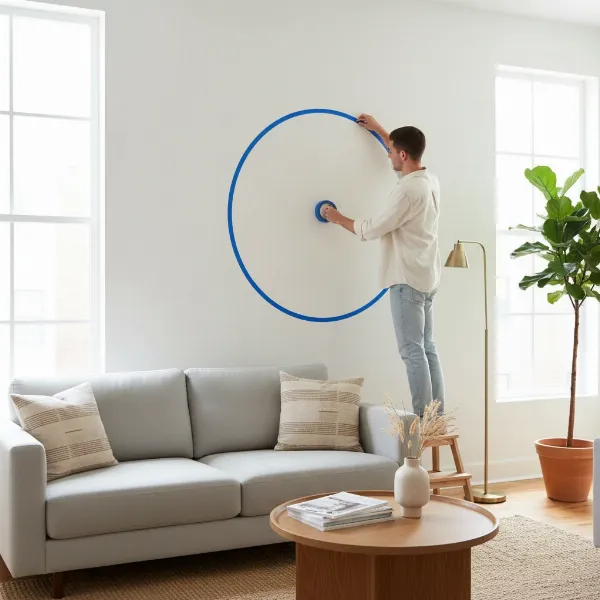 Person using painter's tape to visualize the ideal size and placement of a wall clock on a living room wall.
Optimal Hanging Height
- Eye Level Rule: Generally, the center of your wall clock should sit at eye level, typically between 57 to 60 inches (145-152 cm) from the floor. This ensures comfortable viewing without straining your neck.
- Adjust for Seating: If the clock is in a room where people will primarily be sitting (like a living room), consider hanging it slightly lower so it’s easily viewable from a seated position. For areas where people are mostly standing (kitchens, hallways), a slightly higher placement might be more appropriate.
- Above Furniture: If hanging above furniture, leave a comfortable gap, usually 8-10 inches (20-25 cm), between the top of the furniture and the bottom of the clock.
Spacing and Visibility
- Breathing Room: For larger clocks intended as focal points, allow at least 6-8 inches of empty space around the clock. This “breathing room” prevents it from feeling cramped and allows its design to stand out.
- Surrounding Decor: If your clock is part of a gallery wall or near other art/furniture, ensure there are 4 to 6 inches of space between the clock and these surrounding elements.
- Avoid Glare: Consider light sources in the room. Hang the clock where glare or reflections on its face won’t impede readability.
- Functionality: In quiet spaces like bedrooms or home offices, consider non-ticking clocks to maintain a peaceful environment. Ensure the clock is visible from the primary functional areas (e.g., from your bed, desk, or kitchen counter).
Avoiding Common Sizing Pitfalls
Even with all the guidelines, it’s easy to stumble into common mistakes. Being aware of these pitfalls can save you time and frustration:
- Ignoring Room Function: Don’t put a huge, intricate statement clock in a cozy bedroom where calm is key, or a minuscule clock in a vast living room that requires visitors to squint to read the time. The clock should match the room’s purpose and atmosphere.
- Mismatching Style and Size: A very delicate, ornate clock blown up too large can lose its intricate charm, while a rugged, minimalist design might look awkward if scaled too small.
- Skipping Measurements: “Eyeballing it” is a recipe for disappointment. Always measure your wall space and compare it to the clock’s dimensions.
- Overlooking Surrounding Decor: A clock never exists in a vacuum. Always consider how it interacts with nearby furniture, artwork, windows, and architectural features.
Conclusion
Choosing the right size wall clock is a delicate balance of spatial awareness, aesthetic preference, and practical considerations. By understanding the importance of proportion, utilizing the two-thirds rule, and tailoring your choice to each room’s unique characteristics, you can transform your space. Remember that the clock’s visual weight, style, and thoughtful placement are just as crucial as its diameter.
With these expert tips, you are well-equipped to select a wall clock that doesn’t just tell time but truly enhances your home’s interior design, becoming a timeless statement piece. How will you apply these insights to find the perfect wall clock for your space?
Frequently Asked Questions
How do I know what size clock is right for my wall?
To determine the right size, measure the empty wall space where you plan to hang the clock. A good rule of thumb is for the clock’s diameter to be between 60% and 75% of that wall space’s width. For example, if your available wall is 40 inches wide, look for a clock between 24 and 30 inches in diameter.
What is the 2/3 rule for wall decor?
The 2/3 rule suggests that a piece of wall decor, including a wall clock, should ideally cover approximately two-thirds of the width of the furniture it hangs above, or two-thirds of the available empty wall space it occupies. This creates a visually balanced and appealing arrangement.
Can a wall clock be too big for a room?
Yes, a wall clock can definitely be too big. If a clock is disproportionately large for the wall or the room, it can overwhelm the space, making the room feel smaller, cluttered, or out of balance. Always consider the overall scale of the room and surrounding furniture.
Where is the best place to hang a wall clock?
The best place to hang a wall clock is typically at eye level, with its center approximately 57 to 60 inches (145-152 cm) from the floor. Adjust this height if hanging above furniture (allowing an 8-10 inch gap) or in rooms where people are mostly seated. Ensure it’s visible from key areas and free from glare.
Should my wall clock match my decor?
While not strictly necessary for a perfect match, your wall clock should harmonize with your existing decor. Consider the room’s style, color palette, and other materials. A clock can either complement the decor subtly or serve as a contrasting focal point, as long as it feels intentional and balanced within the space.