Stepping into a space where time feels not merely measured but celebrated, one often encounters design that transcends fleeting trends. The Arne Jacobsen Station Wall Clock is one such icon, a testament to Danish modernism that continues to captivate. But does this piece of design history truly live up to its legendary status in a modern home? This comprehensive review delves into every aspect of the Arne Jacobsen Station Wall Clock, helping you decide if this classic timepiece is the perfect addition to your curated interior.
The Enduring Legacy of Arne Jacobsen’s Station Clock
The story of the Arne Jacobsen Station Wall Clock is a fascinating journey through Danish design history. Conceived by the eminent architect and designer Arne Jacobsen around 1941, this clock face was originally created for Lauritz Knudsen (LK), a prominent Danish electrical appliance manufacturer. The need was for a universal, highly legible clock design suitable for a variety of public buildings, including railway stations – hence its evocative name. Jacobsen, known for his holistic approach to design where he often oversaw every detail of a project, from the architecture itself down to the fixtures and fittings, imbued the Station clock with his signature stringent, minimalist aesthetic. It was a design meant to replace an earlier, Bauhaus-inspired LK table clock, signaling a clear shift towards an even more refined simplicity. Today, Rosendahl faithfully manufactures the clock, ensuring that Jacobsen’s original vision, complete with his distinctive typeface, lives on, echoing a design philosophy that champions functionality, precision, and an understated elegance.
Design Unpacked: A Study in Minimalist Elegance
The Arne Jacobsen Station Wall Clock is a masterclass in minimalist design, where every element serves a purpose without superfluous ornamentation. Its aesthetic is characterized by a clean, monochrome face, typically white with bold black hour markers and slender hands, ensuring maximum legibility from a distance. The iconic, stark graphic design is encased within a sleek aluminum frame, presenting a subtle yet sophisticated profile that integrates seamlessly into diverse interior styles. Protecting this elegant dial is a mineral glass lens, known for its clarity and durability.
At its heart, the Station Wall Clock is powered by a precision quartz movement. This choice of mechanism is crucial, as it delivers exceptional accuracy while operating with a whisper-quiet, silent sweep. Unlike many traditional clocks, the Arne Jacobsen Station Wall Clock is designed to be free from any distracting ticking sounds, making it an ideal choice for serene living rooms, peaceful bedrooms, or focused workspaces where quiet is paramount. The meticulous selection of materials—from the robust aluminum casing to the clear mineral glass and reliable quartz movement—underscores a commitment to superior craftsmanship that ensures the clock not only looks exceptional but also functions with unwavering precision year after year. This blend of form and function solidifies its status as a timeless piece of art and engineering.
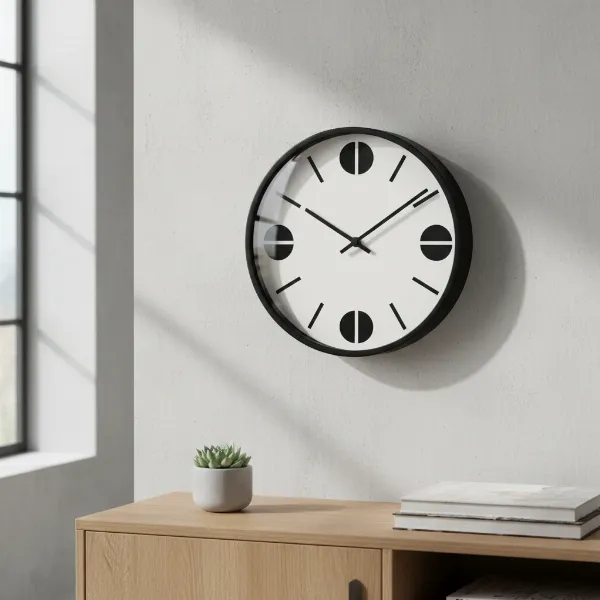 Close-up of Arne Jacobsen Station Wall Clock with minimalist white dial and black hands.
Is the Station Clock Right for Your Space?
Choosing the right wall clock goes beyond simply telling time; it’s about making a design statement that complements and enhances your living environment. The Arne Jacobsen Station Wall Clock, with its versatile minimalist aesthetic, is exceptionally suited for a broad range of interior styles. Whether your home leans towards a sleek, contemporary look, a raw industrial vibe, an eclectic mix of elements, or even a more traditional Scandinavian setup, the Station clock integrates effortlessly. Its unembellished, monochrome design ensures it never overwhelms but rather provides a sophisticated focal point.
The clock is available in various sizes, offering flexibility to suit different room dimensions and desired visual impact. A smaller diameter might serve as a subtle accent in a cozy study or kitchen, while larger versions can command attention as a central design feature in a spacious living area or entryway. Consider the scale of your wall and existing furniture to select a size that maintains balance and harmony. For optimal placement, consider open wall spaces where its clean lines can truly shine. Some design enthusiasts even consider its placement through the lens of feng shui, often suggesting locations that promote calm and flow, such as in a main living area or office, avoiding direct placement above a door or in chaotic spaces. Ultimately, the Station clock is more than a time-teller; it’s a piece that allows for thoughtful curation, elevating your decor with its enduring appeal.
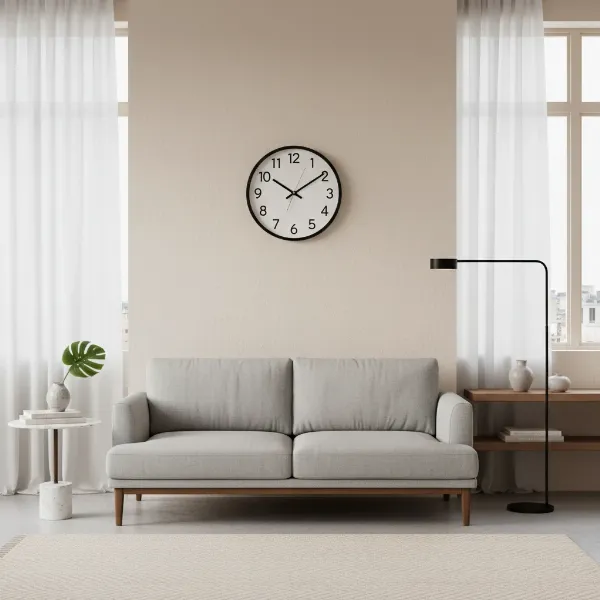 Arne Jacobsen Station Wall Clock hanging in a modern, minimalist living room.
Arne Jacobsen Station Wall Clock: A Closer Look
| Feature | Description | Benefits | Considerations |
|---|---|---|---|
| Design | Iconic minimalist face with clear hour markers and hands. | Timeless aesthetic, excellent legibility, fits diverse interiors. | Less suitable for ornate or highly traditional decor. |
| Materials | Black aluminum case, mineral glass lens. | Durable, premium feel, resists scratches and wear. | Heavier than plastic alternatives, requires secure mounting. |
| Movement | Precision quartz movement. | Highly accurate timekeeping, completely silent (no ticking). | Battery-operated, requires occasional battery replacement. |
| Sizes Available | Ranges from smaller diameters (e.g., 16cm) to larger statement pieces (e.g., 29cm, 48cm, etc.). | Versatile for different room sizes and aesthetic preferences. | Larger sizes command a higher price point. |
| Legacy | Designed by Arne Jacobsen in 1941, an icon of Danish modernism. | Own a piece of design history, adds intellectual depth to decor. | Higher price reflects its designer status and heritage. |
Caring for Your Timeless Piece
Maintaining the pristine condition and accurate functionality of your Arne Jacobsen Station Wall Clock is straightforward, ensuring it remains a cherished part of your home for years. As it typically features a quartz movement, the primary maintenance involves replacing the battery. Most models will use standard AA batteries. When the clock begins to lose time or the second hand stutters, it’s a clear indicator that the battery needs to be changed. Simply remove the clock from the wall, access the battery compartment on the back, and insert fresh batteries, ensuring correct polarity.
For cleaning, a soft, dry microfiber cloth is usually sufficient for both the mineral glass face and the aluminum case. Avoid abrasive cleaners or harsh chemicals, which could scratch the glass or damage the finish of the aluminum. For any stubborn marks on the glass, a slightly damp cloth with a mild, non-abrasive cleaner specifically designed for glass can be used, followed immediately by a dry wipe. Ensure no moisture seeps into the clock mechanism. When hanging the clock, ensure it is securely mounted on a sturdy hook or screw appropriate for its weight and size to prevent accidental falls and potential damage. Regular, gentle dusting will keep your Station Wall Clock looking as elegant as the day it was first hung.
The Verdict: Is it Worth the Investment?
The Arne Jacobsen Station Wall Clock stands as a beacon of minimalist design and enduring quality. Its appeal lies not just in its ability to tell time with precision, thanks to its silent quartz movement, but in its powerful aesthetic statement. It’s a design icon that adds a layer of sophistication and Scandinavian elegance to any interior, harmonizing with modern, industrial, or even eclectic styles. While the initial investment might be higher than that of an average wall clock, you are not merely purchasing a timepiece; you are acquiring a piece of design history, a functional artwork crafted from premium materials like aluminum and mineral glass.
However, like any premium product, it’s essential to set expectations. Some user feedback occasionally mentions concerns regarding perceived flimsiness relative to the price point or minor cosmetic issues upon delivery, though these appear to be less common. The true value of the Station clock comes from its timeless design, its expert craftsmanship, and its ability to elevate a space without overpowering it. It’s a choice for those who appreciate understated luxury, historical significance, and a commitment to quality that stands the test of time. If you seek a wall clock that acts as a subtle yet impactful centerpiece, offering both reliable functionality and unparalleled design heritage, the Arne Jacobsen Station Wall Clock is undoubtedly a worthwhile investment for its enduring charm and sophisticated presence.
Frequently Asked Questions
What makes the Arne Jacobsen Station Wall Clock a design icon?
|
Our Picks for the Best Wall clock in 2026
As an Amazon Associate I earn from qualifying purchases.
|
||
| Num | Product | Action |
|---|---|---|
| 1 | AKCISOT Wall Clock,Boho Kitchen 10 Inch Wall Clocks Battery Operated Non Ticking,Silent Modern Clock Decorative for Bedroom,Office,Bathroom,Living Room,Home (Wood Grain) |

|
| 2 | AKCISOT Atomic 10 Inch Wall Clock Analog Clocks for Indoor Kitchen, Battery Operated Clock for Bedroom Office Classroom Living Room(Silver) |
|
| 3 | AKCISOT Wall Clock 10 Inch Silent Wall Clocks Battery Operated Non Ticking - Modern Silver Clock Decorative for Kitchen, Bathroom, Bedroom, Living Room, Office, Home(Silver) |
|
| 4 | AKCISOT Wall Clock, Modern Small Wall Clocks Battery Operated 8 Inch, Silent Non-Ticking Analog Classic for Office, Home, Bathroom, Kitchen, Bedroom, School(Black) |
|
| 5 | AKCISOT Wall Clock, Modern Small Wall Clocks Battery Operated 8 Inch, Silent Non-Ticking Analog Classic for Office, Home, Bathroom, Kitchen, Bedroom, School(White) |
|
| 6 | WallarGe 14.5'' Large Digital Wall Clock Battery Operated with Jumbo Numbers, Temperature and Date - Easy to Read and Set, Auto DST |
|
| 7 | AKCISOT Wall Clock, Modern Small Wall Clocks Battery Operated 8 Inch, Silent Non-Ticking Analog Classic for Office, Home, Bathroom, Kitchen, Bedroom, School(Silver) |
|
| 8 | AKCISOT Wall Clock 10 Inch Silent Non-Ticking Modern Clocks Battery Operated - Analog Small Classic for Office, Home, Bathroom, Kitchen, Bedroom, School, Living Room(Black) |
|
| 9 | AKCISOT Atomic 10 Inch Wall Clock Analog Clocks for Indoor Kitchen, Battery Operated Clock for Bedroom Office Classroom Living Room(Black) |
|
| 10 | HIIXHC Wall Clock, Modern Digital Wall Clocks Battery Operated 10 Inch, Silent Non-Ticking Kitchen Clock, Small Classic Analog Clock Decorative for Living Room Decor, Bedroom,Office, Classroom |
|
The Station Wall Clock is a design icon due to its creation by renowned Danish architect Arne Jacobsen in 1941. Its minimalist, highly legible design, originally for public spaces like railway stations, embodies the core principles of Danish modernism: functionality, simplicity, and superior craftsmanship. It remains relevant and celebrated for its timeless aesthetic.
What materials are used in the construction of the Station Wall Clock?
The Arne Jacobsen Station Wall Clock typically features a robust black aluminum case and a clear, durable mineral glass lens covering its elegant dial. These high-quality materials contribute to its premium feel, longevity, and resistance to everyday wear.
Is the Arne Jacobsen Station Wall Clock silent?
Yes, the Arne Jacobsen Station Wall Clock is equipped with a precision quartz movement that ensures completely silent operation. This means you will not hear any ticking sounds, making it perfect for quiet environments like bedrooms, studies, or living areas where tranquility is desired.
Does the Station Wall Clock come in different sizes?
Yes, the Arne Jacobsen Station Wall Clock is available in various sizes to accommodate different spaces and design preferences. You can find it in smaller diameters for subtle accents or larger sizes to create a prominent focal point on a wall, allowing for versatile integration into your home decor.