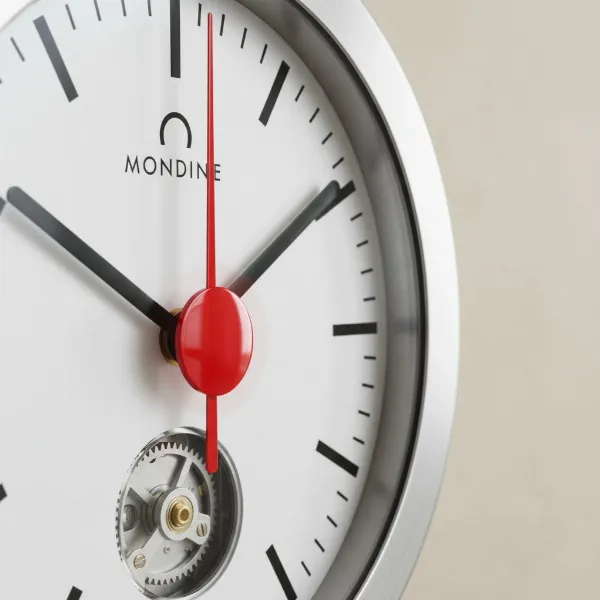
Few things disrupt a peaceful environment quite like the insistent “tick-tock” of a wall clock. Whether you’re trying to concentrate, meditate, or simply enjoy a quiet evening, that rhythmic sound can quickly become an unwelcome distraction. This is where silent sweep movements enter the picture, promising tranquility and seamless timekeeping. But are these modern marvels truly silent, or is there more to their hushed operation than meets the ear?
What is a Silent Sweep Movement?
A silent sweep movement is a specialized quartz clock mechanism designed to eliminate the traditional, audible ticking sound commonly associated with analog clocks. Instead of the second hand advancing in distinct, jerky steps, it glides smoothly and continuously around the clock face. This continuous motion is not only visually elegant but also creates a significantly quieter time-telling experience. It’s often referred to as a “continuous sweep” or “non-ticking” movement, bringing a sense of calm to any space.
How Silent Sweep Movements Work
Traditional quartz clock movements typically operate by moving the second hand once every second, causing the characteristic “tick” sound. This stepping motion is a result of the internal gear train advancing in discrete increments. Silent sweep movements, however, employ a different approach. While still utilizing a quartz crystal for accuracy, they break down each second into multiple, much smaller micro-steps. For instance, some silent sweep motors operate at 8 Hertz, meaning the internal motor makes 16 tiny steps per second, compared to the 0.5 Hertz (one step per second) of a regular ticking quartz clock. This rapid series of minuscule movements creates the optical illusion of a seamless, continuous glide, effectively muffling the individual “ticks” into an almost imperceptible hum.
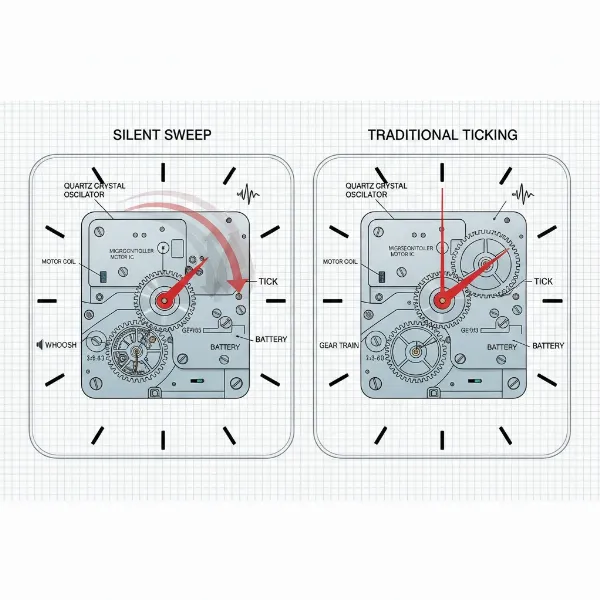 Internal mechanisms of a silent sweep clock versus a traditional ticking clock, highlighting smooth vs. jerky motion.
Is It Truly Silent? The Nuance of “Quiet”
The promise of a silent sweep movement is largely fulfilled: it successfully eradicates the loud, rhythmic ticking that can be so bothersome. However, labeling them as “100% silent” might be an overstatement for the most sensitive ears. When positioned very close to a silent sweep clock, you might detect a subtle whirring, a low hum, or a faint electrical circuit-like sound. This is due to the continuous operation of the motor and the rapid micro-steps of the gear train.
The perceived “silence” often depends on ambient noise levels and your distance from the clock. In a quiet bedroom, for example, a subtle hum might be noticeable up close, but from a typical viewing distance, the clock will appear and sound utterly silent. Higher quality movements, often found in clocks from reputable manufacturers, are engineered to minimize even these faint operational sounds, making the experience exceptionally quiet.
Pros and Cons of Silent Sweep Wall Clocks
Like any technology, silent sweep movements come with their own set of advantages and disadvantages. Understanding these can help you decide if this type of clock is the right choice for your home or office.
Pros:
- Noise Reduction: The most significant benefit is the elimination of the disruptive ticking sound, fostering a more serene and peaceful environment.
- Aesthetic Appeal: The smooth, continuous motion of the second hand offers a modern, elegant, and sophisticated look that many prefer over the jerky movement of traditional clocks.
- Perceived Reliability: Some experts suggest that the continuous motion, with fewer sudden starts and stops, can lead to less wear and tear on the internal components, potentially extending the movement’s lifespan.
- Ideal for Quiet Zones: Perfect for bedrooms, nurseries, home offices, libraries, or meditation spaces where absolute quiet is paramount.
|
Our Picks for the Best Wall clock in 2026
As an Amazon Associate I earn from qualifying purchases.
|
||
| Num | Product | Action |
|---|---|---|
| 1 | AKCISOT Atomic 10 Inch Wall Clock Analog Clocks for Indoor Kitchen, Battery Operated Clock for Bedroom Office Classroom Living Room(Silver) |

|
| 2 | AKCISOT Atomic 10 Inch Wall Clock Analog Clocks for Indoor Kitchen, Battery Operated Clock for Bedroom Office Classroom Living Room(Black) |
|
| 3 | HIIXHC Wall Clock, Modern Digital Wall Clocks Battery Operated 10 Inch, Silent Non-Ticking Kitchen Clock, Small Classic Analog Clock Decorative for Living Room Decor, Bedroom,Office, Classroom |
|
| 4 | AKCISOT Wall Clock 10 Inch Silent Wall Clocks Battery Operated Non Ticking - Modern Silver Clock Decorative for Kitchen, Bathroom, Bedroom, Living Room, Office, Home(Silver) |
|
| 5 | AKCISOT Wall Clock, Modern Small Wall Clocks Battery Operated 8 Inch, Silent Non-Ticking Analog Classic for Office, Home, Bathroom, Kitchen, Bedroom, School(Silver) |
|
| 6 | AKCISOT Wall Clock,Boho Kitchen 10 Inch Wall Clocks Battery Operated Non Ticking,Silent Modern Clock Decorative for Bedroom,Office,Bathroom,Living Room,Home (Wood Grain) |
|
| 7 | WallarGe 14.5'' Large Digital Wall Clock Battery Operated with Jumbo Numbers, Temperature and Date - Easy to Read and Set, Auto DST |
|
| 8 | AKCISOT Wall Clock, Modern Small Wall Clocks Battery Operated 8 Inch, Silent Non-Ticking Analog Classic for Office, Home, Bathroom, Kitchen, Bedroom, School(White) |
|
| 9 | AKCISOT Wall Clock, Modern Small Wall Clocks Battery Operated 8 Inch, Silent Non-Ticking Analog Classic for Office, Home, Bathroom, Kitchen, Bedroom, School(Black) |
|
| 10 | AKCISOT Wall Clock 10 Inch Silent Non-Ticking Modern Clocks Battery Operated - Analog Small Classic for Office, Home, Bathroom, Kitchen, Bedroom, School, Living Room(Black) |
|
Cons:
- Higher Battery Consumption: The more frequent operation of the motor (e.g., 16 steps per second instead of one) requires more energy. A typical AA battery that lasts a year in a standard quartz clock might only last 3-4 months in a silent sweep clock. Some models mitigate this by using larger C or D batteries.
- Potentially Higher Cost: The advanced engineering required for these smoother, quieter movements often translates to a higher price point compared to basic ticking quartz movements.
- Torque Limitations (for some models): While high-torque silent sweep movements exist for larger clocks, some standard silent sweep mechanisms may not be designed to power very long or heavy clock hands, limiting their use to clocks under a certain size.
Choosing the Right Silent Sweep Wall Clock
Selecting the ideal silent sweep wall clock involves more than just picking a design you like. Thoughtful consideration of its movement and your specific needs will ensure lasting satisfaction.
When considering a silent sweep clock, first identify the primary environment where it will reside. For a bedroom, absolute quiet is paramount, so investing in a high-quality movement is worthwhile. For a bustling kitchen, a slightly less refined (and potentially more affordable) silent movement might suffice.
Quality of movement is crucial. Reputable brands from Germany or Japan are often praised for their precision and commitment to noise reduction. While generic movements might offer a silent sweep at a lower price, their subtle operational sounds could be more noticeable.
Battery type and frequency of replacement are also key factors. Be prepared for more frequent battery changes with AA-powered silent sweep clocks. If this is a concern, seek out models designed to use larger C or D batteries, which offer extended power. Lastly, consider the clock’s size and the length of its hands. Standard silent sweep movements are often suited for clocks under 15 inches. For larger timepieces, ensure the clock explicitly features a high-torque silent sweep movement to guarantee reliable operation.
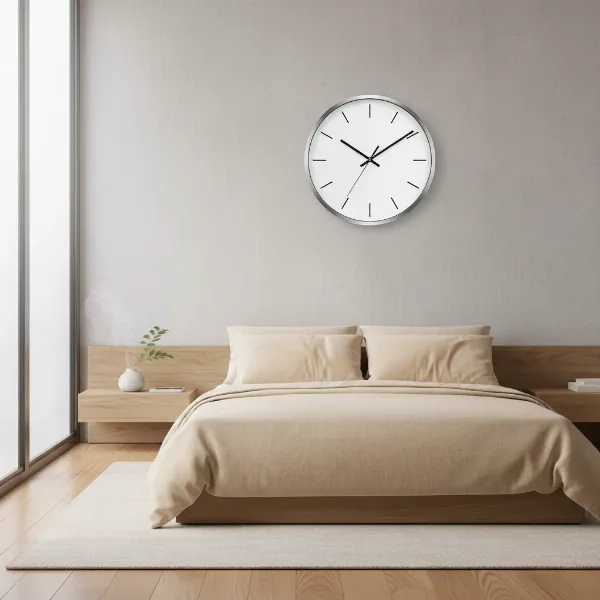 Elegant minimalist silent wall clock in a modern bedroom, promoting a peaceful atmosphere.
Bảng So Sánh Các Mẫu Đồng Hồ Treo Tường Bán Chạy Nhất
| Feature | Silent Sweep Quartz Clock | Traditional Ticking Quartz Clock |
|---|---|---|
| Second Hand Motion | Smooth, continuous glide | Stepping motion, one tick per second |
| Noise Level | Very quiet (subtle, almost imperceptible hum close up) | Audible “tick-tock” sound |
| Battery Life (AA) | Shorter (approx. 3-4 months) | Longer (approx. 12+ months) |
| Cost | Generally higher | Generally lower |
| Aesthetic | Modern, elegant, fluid | Classic, utilitarian |
| Best For | Bedrooms, offices, quiet spaces | General areas where ticking is not an issue |
Maintaining Your Silent Wall Clock
Maintaining a silent wall clock is generally straightforward, but a few considerations can help maximize its lifespan and ensure continuous quiet operation.
The most frequent maintenance task will be battery replacement. Due to their higher power consumption, silent sweep clocks typically require new batteries every 3-4 months if using standard AA cells. Always use high-quality alkaline batteries for optimal performance. Regularly clean the clock’s face and hands with a soft, dry cloth to prevent dust buildup, which can sometimes interfere with hand movement over time.
If you notice your previously silent clock beginning to make unexpected noises, first check the battery. A low battery can sometimes cause erratic or louder operation. Ensure the clock is securely mounted to the wall; a loose clock can vibrate and create unwanted sounds. Lastly, verify that the hands are not bent or touching each other or the clock face, as this friction can produce noise and impede movement. For any persistent issues, consulting the manufacturer’s guide or a professional clock repair technician is advisable.
Decorating with Silent Wall Clocks
Integrating a silent wall clock into your home decor offers both functionality and enhanced ambiance. Their quiet operation makes them incredibly versatile, fitting seamlessly into various room types without adding auditory clutter.
For bedrooms and nurseries, a silent clock is a sanctuary, providing timekeeping without disturbing sleep. In a home office or study, it helps maintain focus, allowing you to concentrate without the constant interruption of ticking. Visually, the smooth sweep of the second hand adds a sophisticated touch, making these clocks suitable for minimalist, modern, or even traditional interiors.
Consider the clock as a subtle focal point. A large, elegantly designed silent wall clock can anchor a living room wall, drawing the eye without assaulting the ear. Choose materials and colors that complement your existing decor – a sleek metallic finish for a contemporary look, or a warm wooden frame for a more classic feel. Combining the clock with other decorative elements like artwork, plants, or shelving can create a cohesive and inviting display that serves both aesthetic and practical purposes.
Buying Guide: Key Considerations for Your Next Silent Clock
When you’re ready to invest in a silent wall clock, keeping a few key points in mind will help you make an informed decision.
First, establish your budget. Silent sweep movements are often more expensive, so knowing your price range will narrow down your options. Next, prioritize reputable brands like Seiko, Howard Miller, Citizen, or Rhythm. These manufacturers are known for their quality movements and often offer better reliability and customer support. Always look for a good warranty and clear return policies. This protects your investment should any issues arise.
Before purchasing, read the technical specifications carefully. Pay close attention to the recommended battery type (AA, C, or D) and any estimates for battery life. Also, check the clock’s dimensions and the movement’s torque capabilities to ensure it’s suitable for your desired clock size and hand length. Finally, compare prices from different retailers. Online and in-store options can vary, so a bit of research can often lead to a better deal.
Conclusion
Silent sweep movements have revolutionized how we experience time in our homes and workspaces. By replacing the intrusive “tick” with a smooth, continuous glide, these clocks offer a significant upgrade in tranquility and aesthetic appeal. While not entirely devoid of sound upon very close inspection—a subtle hum or whir may be present—they are remarkably quiet from a practical distance, fulfilling their promise of serene timekeeping. The trade-offs, such as increased battery consumption and potentially higher cost, are often well worth it for the peace they bring. For anyone seeking to eliminate auditory distractions and embrace a more refined approach to time, a wall clock with a silent sweep movement is an excellent choice.
What quiet moments could a silent sweep wall clock bring to your space?
Frequently Asked Questions
Do silent sweep movements really make no sound?
Silent sweep movements are designed to eliminate the audible “tick” of traditional clocks. While they are significantly quieter, some high-frequency operational hums or a faint whirring sound might be detected if your ear is very close to the mechanism, particularly in extremely quiet environments. From a normal viewing distance, they are effectively silent.
Why do silent sweep clocks use more battery?
Silent sweep movements consume more power because their internal motor operates at a much higher frequency, making multiple tiny steps per second to create the continuous motion. This contrasts with traditional quartz clocks that make one discrete step per second, requiring less energy and thus offering longer battery life.
Can I convert my ticking clock to a silent sweep?
Yes, it is often possible to convert a ticking quartz clock to a silent sweep by replacing the existing movement with a continuous sweep quartz movement. These replacement movements are widely available for DIY clock projects, but ensuring the correct shaft length and hand fittings is crucial for a successful conversion.
Are silent sweep movements less accurate?
No, silent sweep movements are generally as accurate as, or in some cases even more accurate than, standard ticking quartz movements. They still rely on a quartz crystal for timekeeping, known for its precision. The difference lies in how the second hand is advanced, not in the underlying timekeeping mechanism.