In today’s interconnected business world, where teams span continents and clients operate in diverse markets, keeping track of time zones is no longer a luxury but a fundamental necessity. Missing critical calls, misinterpreting deadlines, or interrupting a colleague’s deep work because of time zone confusion can hinder productivity and strain global relationships. A well-designed multi-time zone display on your office wall serves as a constant, clear reference, transforming potential scheduling headaches into seamless global collaboration. This guide will walk you through the various options, from classic analog setups to cutting-edge digital solutions, helping you select and implement the perfect time zone display for your workspace.
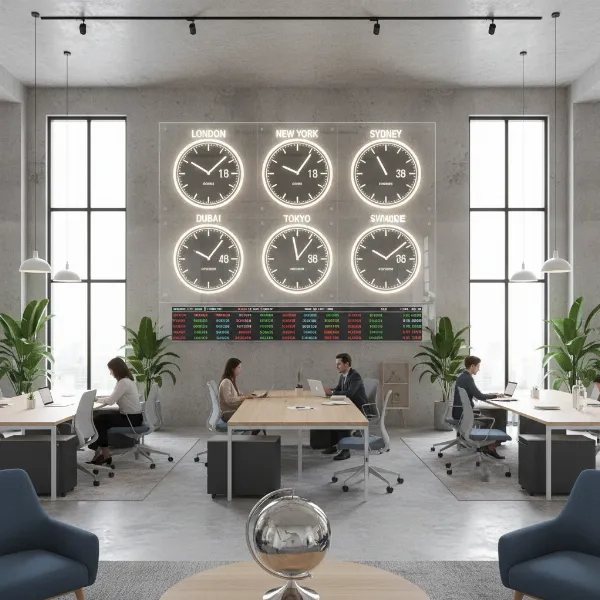 A sleek multi-time zone display on an office wall facilitating global team collaboration.
The Indispensable Value of Multi-Time Zone Displays in a Global Office
The benefits of clearly displaying multiple time zones in your office extend far beyond simple timekeeping. They foster a more efficient, aware, and globally competent work environment.
Firstly, such displays enhance communication and collaboration within dispersed teams. When you can instantly see the current time in London, New York, Tokyo, or any other key location, you can strategically schedule meetings, send emails, and make calls, ensuring you connect with colleagues and clients at convenient times for everyone. This immediate visual cue prevents the common frustration of missed connections and fosters a sense of unity across geographical divides.
Secondly, these displays improve time management and reduce errors. Constantly calculating time differences mentally or relying on online converters can be time-consuming and prone to mistakes. A dedicated wall display eliminates this guesswork, streamlining scheduling processes and minimizing the risk of costly miscommunications or missed deadlines. For businesses operating with international partners, this accuracy is paramount.
Moreover, a sophisticated time zone wall display projects an image of professionalism and global reach. It subtly reinforces your organization’s international presence and commitment to seamless worldwide operations, impressing visitors and motivating employees. This visual representation can also act as a conversation starter, highlighting the global nature of your business network. Ultimately, it contributes to increased productivity by ensuring everyone is on the same page regarding global schedules, allowing for more focused work and fewer interruptions.
 Diverse team members collaborating around a meeting room with a prominent world clock display.
Unveiling Diverse Multi-Time Zone Wall Display Solutions
The market offers a rich tapestry of options for displaying multiple time zones, each with its unique aesthetic and functional advantages. Choosing the right one depends on your office style, technological preferences, and the specific needs of your team.
Analog Clock Arrangements: Classic Elegance Meets Practicality
Analog multi-time zone displays offer a timeless appeal and a clear, at-a-glance understanding of global times.
- Individual Analog Clocks: This is perhaps the most iconic and customizable approach. It involves mounting several individual analog clocks side-by-side, each set to a different time zone and clearly labeled with the city or region name. This method allows for immense flexibility in design, allowing you to choose clocks that perfectly match your office décor, whether modern, minimalist, or traditional. You can select clocks of varying sizes or uniform designs, arranging them in a linear, grid, or even more artistic pattern.
- Integrated Analog World Clocks: For a more consolidated look, some manufacturers offer single-unit analog clocks that feature multiple smaller dials within one larger frame. These often come pre-labeled with major global cities. While offering less customization than individual clocks, they present a cohesive and elegant solution that simplifies installation. Many premium models feature silent “sweep” movements, ensuring a tranquil office environment.
|
Our Picks for the Best Wall clock in 2026
As an Amazon Associate I earn from qualifying purchases.
|
||
| Num | Product | Action |
|---|---|---|
| 1 | AKCISOT Wall Clock, Modern Small Wall Clocks Battery Operated 8 Inch, Silent Non-Ticking Analog Classic for Office, Home, Bathroom, Kitchen, Bedroom, School(White) |

|
| 2 | AKCISOT Wall Clock 10 Inch Silent Non-Ticking Modern Clocks Battery Operated - Analog Small Classic for Office, Home, Bathroom, Kitchen, Bedroom, School, Living Room(Black) |
|
| 3 | AKCISOT Atomic 10 Inch Wall Clock Analog Clocks for Indoor Kitchen, Battery Operated Clock for Bedroom Office Classroom Living Room(Silver) |
|
| 4 | HIIXHC Wall Clock, Modern Digital Wall Clocks Battery Operated 10 Inch, Silent Non-Ticking Kitchen Clock, Small Classic Analog Clock Decorative for Living Room Decor, Bedroom,Office, Classroom |
|
| 5 | AKCISOT Wall Clock, Modern Small Wall Clocks Battery Operated 8 Inch, Silent Non-Ticking Analog Classic for Office, Home, Bathroom, Kitchen, Bedroom, School(Black) |
|
| 6 | AKCISOT Wall Clock 10 Inch Silent Wall Clocks Battery Operated Non Ticking - Modern Silver Clock Decorative for Kitchen, Bathroom, Bedroom, Living Room, Office, Home(Silver) |
|
| 7 | AKCISOT Wall Clock,Boho Kitchen 10 Inch Wall Clocks Battery Operated Non Ticking,Silent Modern Clock Decorative for Bedroom,Office,Bathroom,Living Room,Home (Wood Grain) |
|
| 8 | WallarGe 14.5'' Large Digital Wall Clock Battery Operated with Jumbo Numbers, Temperature and Date - Easy to Read and Set, Auto DST |
|
| 9 | AKCISOT Wall Clock, Modern Small Wall Clocks Battery Operated 8 Inch, Silent Non-Ticking Analog Classic for Office, Home, Bathroom, Kitchen, Bedroom, School(Silver) |
|
| 10 | AKCISOT Atomic 10 Inch Wall Clock Analog Clocks for Indoor Kitchen, Battery Operated Clock for Bedroom Office Classroom Living Room(Black) |
|
Digital Time Zone Displays: Precision and Modern Functionality
Digital solutions bring a sleek, contemporary edge and often advanced features to time zone tracking.
- LED and Dot Matrix Displays: These dynamic displays utilize light-emitting diodes (LEDs) or dot matrix technology to show times and location names. They are highly legible, often offering adjustable brightness levels, and can be programmed to display a wide range of cities. Many commercial-grade digital clocks automatically synchronize with atomic time signals, ensuring unparalleled accuracy and often auto-adjust for Daylight Saving Time. Some sophisticated models can also display additional information like Julian dates, sunrise/sunset times, or temperature.
- Modular Digital Displays: For ultimate flexibility, modular digital time zone systems consist of individual digital panels that can be configured and expanded as needed. This allows businesses to start with a few essential time zones and easily add more as their global operations grow. Their compact footprint minimizes wall space while offering clear viewing.
- Digital Signage Solutions: Leveraging existing office screens or dedicated monitors, digital signage software can transform any display into a vibrant, customizable multi-time zone hub. This option offers dynamic content capabilities, allowing for the integration of live data, news feeds, company announcements, alongside time zone information. It provides a highly versatile and scalable solution for modern offices.
DIY Time Zone Walls: Personal Touch on a Budget
For those who enjoy a hands-on approach, creating a DIY time zone wall can be a rewarding and cost-effective project. This typically involves purchasing inexpensive analog clocks, custom vinyl lettering or stencils for city names, and a mounting board or directly labeling the wall. This method provides complete creative control over aesthetics, making it possible to design a display that truly reflects your brand’s personality or office vibe. With careful planning and execution, a DIY display can be both functional and a unique decorative element.
Navigating the Selection Process: Choosing Your Ideal Wall Display
Selecting the perfect multi-time zone display for your office requires a thoughtful consideration of several factors.
Defining Your Needs and Aesthetic Preferences
Begin by assessing your specific requirements. How many time zones do you need to track? Which specific cities or regions are most crucial for your daily operations? Consider the overall aesthetic of your office. Do you prefer a classic, traditional look, or is your space more modern and minimalist? The display should complement, not clash with, your existing interior design. Think about the available wall space and the desired visual impact.
Analog Versus Digital: A Core Decision
The choice between analog and digital displays often comes down to a balance of style, features, and maintenance.
- Analog clocks offer a classic, elegant, and often quieter presence. They are generally simpler in function, but may require manual adjustment for Daylight Saving Time or if power is lost. They are excellent for creating a sophisticated or custom aesthetic.
- Digital clocks, particularly commercial-grade ones, excel in precision and low maintenance. Features like automatic synchronization, DST adjustments, and custom programmability make them highly convenient. They provide clear, easy-to-read numeric displays, ideal for fast-paced environments where quick time checks are essential.
Material and Design Considerations
The materials and overall design play a significant role in the display’s durability and visual integration. Options range from wood for a traditional or natural feel, metal for a modern industrial look, to acrylic or glass for a sleek, minimalist aesthetic. Consider the finish, color, and font choices for labels to ensure they are both legible and harmonious with your office décor. For a seamless look, choose styles that echo your room’s existing use of color and material.
Essential Features to Look For
Beyond basic timekeeping, several features can enhance the functionality and longevity of your multi-time zone display:
- Accuracy: For critical business operations, atomic-synchronized or internet-connected digital clocks offer the highest level of precision.
- Daylight Saving Time (DST) Automation: Many digital models automatically adjust for DST, saving you the hassle of manual changes twice a year.
- Customization: The ability to customize city names or labels is vital for tailoring the display to your specific global contacts. Some systems allow for interchangeable labels, offering future flexibility.
- Readability: Ensure the clock faces or digital digits are large and clear enough to be read from a distance. Adjustable brightness on digital displays can be a useful feature.
- Power Source: Most clocks are battery-operated, offering flexibility in placement, while some digital units may require an AC power supply.
Streamlining Installation and Ensuring Longevity
Proper installation and routine maintenance are crucial for the optimal performance and aesthetic appeal of your multi-time zone display.
Strategic Placement and Layout
When installing, consider both aesthetics and functionality. Choose a prominent wall that is easily visible from key areas of your office, such as meeting rooms or collaborative workspaces. Ensure the height is comfortable for viewing, avoiding positions that are too high or too low. For multiple clocks, a balanced and symmetrical layout often works best, but a more dynamic, staggered arrangement can also create visual interest. For rentals, utilize removable mounting strips or drywall anchors designed to prevent wall damage.
Setting and Adjusting Your Clocks
For analog clocks, manually set each one to its designated time zone. It’s a good practice to use an accurate online world clock as your reference. Remember to account for Daylight Saving Time changes if your chosen time zones observe them, adjusting clocks forward or backward accordingly. For digital clocks, many modern systems offer automatic synchronization via radio signals (atomic clocks) or internet connection, eliminating the need for manual adjustments, including for DST. If manual setting is required, most digital models feature intuitive controls for easy setup.
Powering Your Display
The majority of individual analog clocks are battery-operated, typically using AA batteries. Digital multi-zone displays might be battery-powered, but larger or more feature-rich units often require an AC power supply. Consider the accessibility of power outlets during your planning phase to ensure a clean installation with minimal visible wires.
Keeping Your Clocks in Pristine Condition
Regular cleaning will maintain the clarity and appearance of your display. For most clock faces and digital screens, a soft, dry, or slightly damp cloth is sufficient. Avoid abrasive cleaners that could damage surfaces. For mechanical analog clocks, minimal maintenance is typically required; however, consulting the manufacturer’s guidelines for any specific care instructions is always advisable.
Integrating Time Zone Displays with Your Office Decor
A multi-time zone display should not only be functional but also a harmonious part of your office environment.
Harmonizing with Your Style
Whether your office exudes a minimalist vibe, a rustic charm, or a contemporary flair, there’s a time zone display that can seamlessly blend in. For minimalist spaces, consider sleek, frameless digital displays or simple, monochrome analog clocks. A traditional office might benefit from wooden-framed analog clocks with classic Roman numerals. Custom labels and accent colors can further personalize the installation, ensuring it aligns perfectly with your brand identity and interior design scheme.
Crafting a Striking Focal Point
Positioning your time zone display strategically can turn it into a captivating focal point. Arranging multiple clocks in an artful composition, perhaps around a world map decal or a company logo, can draw the eye and underscore your global reach. Large digital displays can serve as dynamic centerpieces in collaborative areas, showcasing real-time information with impact. The key is to make it a statement piece that is both informative and visually engaging.
Prioritizing Ergonomics and Visibility
While aesthetics are important, functionality must remain paramount. Ensure the display is positioned at an ergonomic viewing height and is free from glare or obstructions. The chosen font and digit size should be easily readable from various distances within the office. Thoughtful placement ensures that the display is genuinely useful for everyone, making quick time checks effortless and intuitive.
Comparison Table: Popular Multi-Time Zone Display Solutions
| Feature/Type | Analog Multi-Dial Clocks | Digital Multi-Zone Displays | Digital Signage Solutions | DIY Time Zone Walls |
|---|---|---|---|---|
| Aesthetics | Classic, versatile, wide range of styles | Modern, sleek, high-tech | Highly customizable, dynamic, media-rich | Personalized, unique, budget-friendly |
| Accuracy | Good (dependent on movement quality) | Excellent (often atomic/internet synchronized) | Excellent (internet-synchronized) | Good (dependent on individual clock mechanisms) |
| DST Adjustment | Manual | Often automatic | Automatic | Manual |
| Customization | High (choose individual clocks, labels, layout) | Moderate (programmable cities, display formats, colors) | Very High (custom content, branding, dynamic layouts) | Very High (choose clocks, materials, fonts, labels, layout) |
| Installation | Moderate (multiple hang points) | Simple to Moderate (single unit or modular, power required) | Moderate to Complex (hardware, software setup, network) | Moderate (requires precision for alignment, labels) |
| Maintenance | Battery replacement, occasional setting | Minimal (auto-sync, occasional cleaning) | Software updates, content management, hardware checks | Battery replacement, occasional setting, cleaning |
| Cost | Low to Moderate (depending on quality/quantity) | Moderate to High (depending on features and size) | High (initial hardware/software investment, ongoing licenses) | Low |
| Best For | Traditional offices, customized aesthetics | Modern offices, precision, low maintenance, high legibility | Dynamic offices, interactive displays, integrated content | Unique office styles, budget-conscious, creative expression |
“In an increasingly remote and globalized workforce, clear visual time zone references are not just a convenience, but a strategic tool for fostering seamless communication and preventing costly scheduling errors.” – Dr. Anya Sharma, Organizational Productivity Consultant
Conclusion
Displaying multiple time zones on your office wall is a powerful strategy to enhance communication, reduce errors, and foster a globally aware culture within your organization. From the classic charm of analog clock arrangements to the cutting-edge precision of digital displays and the personalized touch of DIY projects, there’s a perfect solution to meet every office’s unique needs and aesthetic. By carefully considering factors such as the number of time zones, desired features, and integration with your office decor, you can implement a system that not only keeps everyone punctual but also reinforces your company’s international vision.
Ready to transform your office into a hub of global connectivity? What innovative time zone display will you choose to empower your team and streamline your worldwide operations?
Frequently Asked Questions
What is the most accurate way to display multiple time zones in an office?
Digital multi-zone clocks that automatically synchronize with atomic time signals or internet time servers typically offer the highest level of accuracy, often including automatic adjustments for Daylight Saving Time. These systems minimize the need for manual intervention and ensure consistent precision across all displayed zones.
Can I customize the cities shown on a multi-time zone wall clock?
Yes, many multi-time zone wall clocks, especially commercial digital displays and DIY setups, allow for customization of city names or labels. This feature is crucial for tailoring the display to the specific global locations relevant to your business operations or key stakeholders.
Are multi-time zone clocks suitable for small office spaces?
Absolutely. There are numerous compact and vertical multi-time zone clock designs, including vertical mount stacks and linear bar clocks, specifically optimized for small spaces. Modular digital displays also offer flexibility, allowing you to create an effective time zone display without overwhelming limited wall area.
How do multi-time zone clocks handle Daylight Saving Time (DST)?
Many modern digital multi-time zone clocks come equipped with automatic Daylight Saving Time (DST) adjustment capabilities. These systems detect and apply the correct time shifts for each displayed time zone, eliminating the need for manual changes and ensuring continuous accuracy throughout the year.
What are the benefits of a DIY multi-time zone clock?
A DIY multi-time zone clock offers significant benefits such as cost-effectiveness and complete creative control over the design, materials, and layout. It allows for a highly personalized display that can perfectly match unique office aesthetics or branding, turning a functional item into a distinct decorative feature.